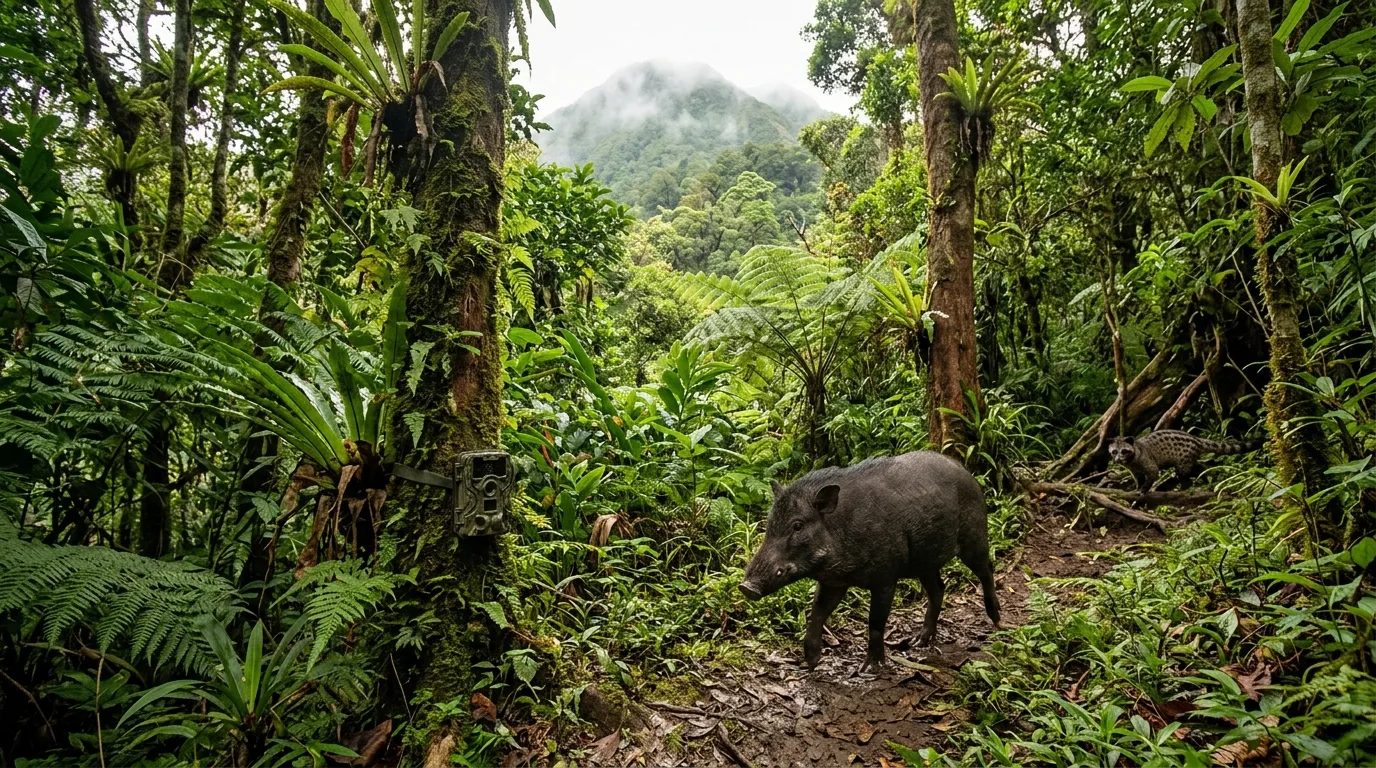
Davao — In a major victory for biodiversity conservation, the Department of Environment and Natural Resources-Davao Region (DENR-Davao) has successfully captured rare, high-definition footage of elusive wildlife deep within the Mount Apo Natural Park (MANP). By deploying eight sophisticated camera traps across the summit trails, officials have pulled back the curtain on creatures that rarely interact with humans, providing a breathtaking glimpse into the vibrant ecosystem of the country’s highest peak. This technological breakthrough marks a significant milestone in MANP’s ongoing efforts to protect its rich heritage while bolstering its bid to be declared a UNESCO Global Geopark.
A Digital Window into the Wild
The camera traps were strategically placed along the park's forest trails and left in the field for 204 nights, effectively acting as silent observers in one of the Philippines' most protected environments. This unmanned monitoring technology captured stunning visuals of shy, endemic species, including the Philippine warty pig (Sus philippensis), the Philippine palm civet (Paradoxurus philippinensis), the Mindanao tree shrew (Tupaia everetti), and the vibrant red junglefowl. According to Clint Michael B. Cleofe, officer-in-charge of the MANP Protected Area, these animals are masters of avoidance, typically retreating at the slightest hint of human movement. By removing the presence of rangers, the traps provided the most accurate population and behavioral data in the park's history, allowing scientists to see the forest as it truly is when left undisturbed.
Building a Foundation for Science-Based Protection
Beyond the excitement of capturing these images, the data collected serves a vital purpose in shaping the park’s future conservation strategies. The DENR-Davao aims to expand the camera trap network to build a comprehensive wildlife database, which will guide managers in identifying specific threats to habitats and pinpointing critical zones for habitat restoration. This move toward digital-led monitoring aligns MANP with the broader Asian Heritage Parks (AHP) initiative, positioning Davao as a pioneer in modernizing biodiversity management in Southeast Asia. As climate change and human encroachment continue to pressure mountain ecosystems, these science-based insights are essential for ensuring that the delicate balance of Mt. Apo’s flora and fauna is maintained for years to come.
A Resilient Ecosystem in the Spotlight
This successful monitoring initiative comes on the heels of another extraordinary scientific discovery in the park: the rediscovery of the Ophiorrhiza biflora, a rare flower that hadn't been documented in Mt. Apo for 122 years. The fact that the park is simultaneously rediscovering lost plant species and uncovering thriving populations of elusive mammals speaks to the enduring resilience of the MANP forest. As the mountain moves closer to its UNESCO Global Geopark aspirations, these findings provide undeniable proof of the area's global ecological significance. By championing both advanced technology and traditional field patrols, the Philippines is demonstrating a model of conservation that honors the past while utilizing the most modern tools available to protect our natural future.