Davao — The Davao Region, long recognized as the banana capital of the Philippines, is finding creative and sustainable value in what was once considered mere agricultural debris. Every year, millions of banana pseudostems—the trunk-like structures that remain after a single harvest—are discarded or left to rot in vast plantations. Rather than letting these millions of tons of plant material go to waste, local artisans and social entrepreneurs have launched a pioneering movement to transform these fibrous stalks into a unique, high-quality textile known as "Musa fabric." This transformation represents a shift toward a circular economy, turning agricultural byproducts into a medium for both artistic expression and community-driven livelihood.
A Second Life for the Harvest
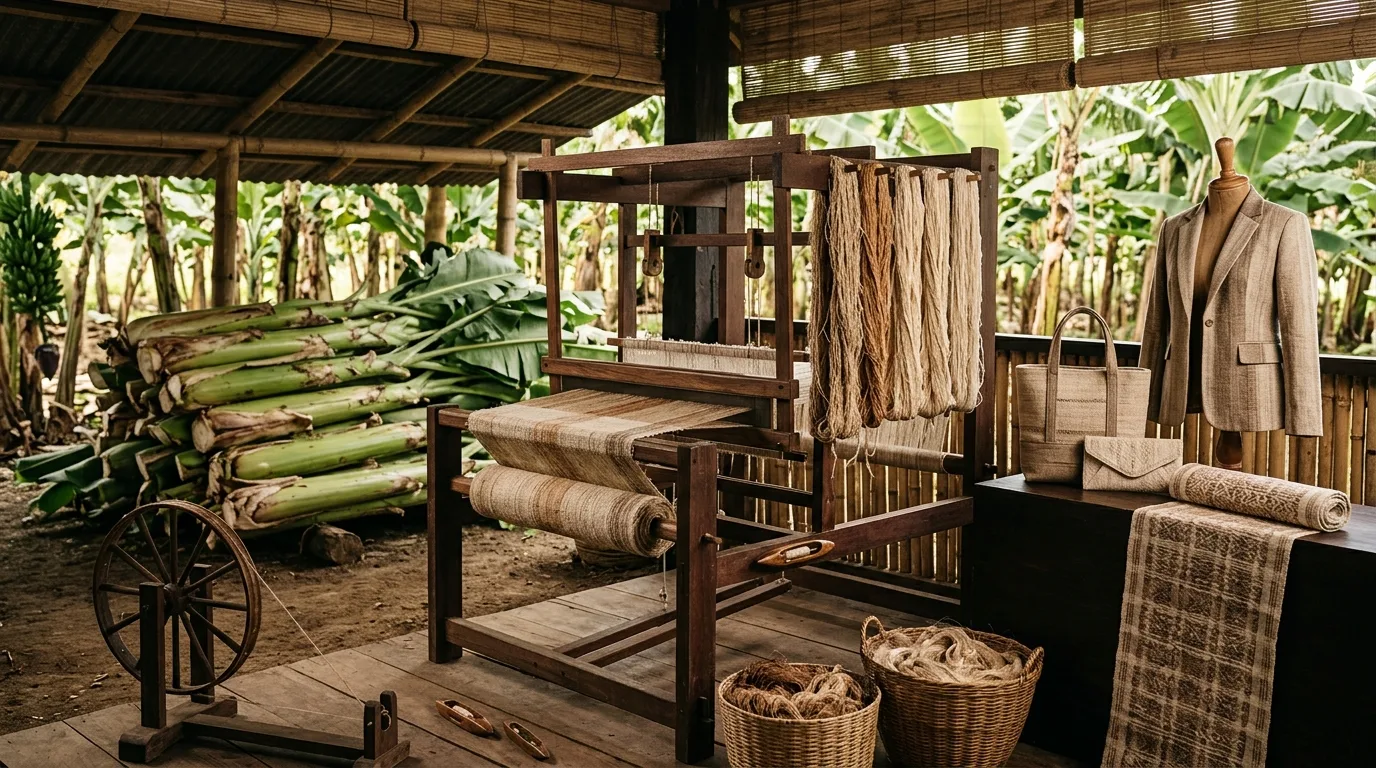
The process of creating Musa fabric is a testament to both ingenuity and environmental stewardship. After the heavy fruit bunches are harvested, the leftover pseudostems are stripped, dried, and spun into durable natural fibers. This arduous manual process, championed by House of Musa founder Joy Soo, has revitalized local interest in weaving and fiber extraction. What began as a local initiative has blossomed into a sophisticated supply chain involving fiber extractors, artisans, and seamstresses—many of whom are persons deprived of liberty (PDL) working in Davao’s correctional facilities. By providing these individuals with a marketable skill, the project does more than just produce fabric; it builds a "fabric of hope" that offers economic dignity and a second chance at a productive life.
From Mindanao Workshops to Global Runways
The impact of this advocacy has transcended local borders, proving that sustainable Filipino innovation can compete on the international stage. Musa fabric, once considered a rough or unfinished material, has been refined into elegant garments, bags, and accessories that have graced major international platforms, including New York Fashion Week in 2026. This transition from "waste to wealth" highlights the untapped potential of Philippine agricultural resources when paired with design and market-ready innovation. As the global fashion industry shifts toward more ethical and biodegradable materials, Musa textiles are carving out a niche that combines high-fashion aesthetics with a clear, positive environmental and social footprint.
The Economic Ripple Effect
Beyond the fashion-forward headlines, the movement is sparking a broader conversation about how Davao can maximize its primary agricultural resource. With over 4.4 million banana stems discarded annually, there is immense potential for industrial-scale upcycling beyond textiles, such as paper production and natural fiber composite boards. Research into these industrial applications suggests that banana fiber is not only eco-friendly but often outperforms traditional materials in tensile strength and durability. As the region continues to experiment with these "second harvests," the collaborative effort between the government, the private sector, and local communities serves as a model for how to transform an agricultural liability into a source of long-term regional economic resilience.