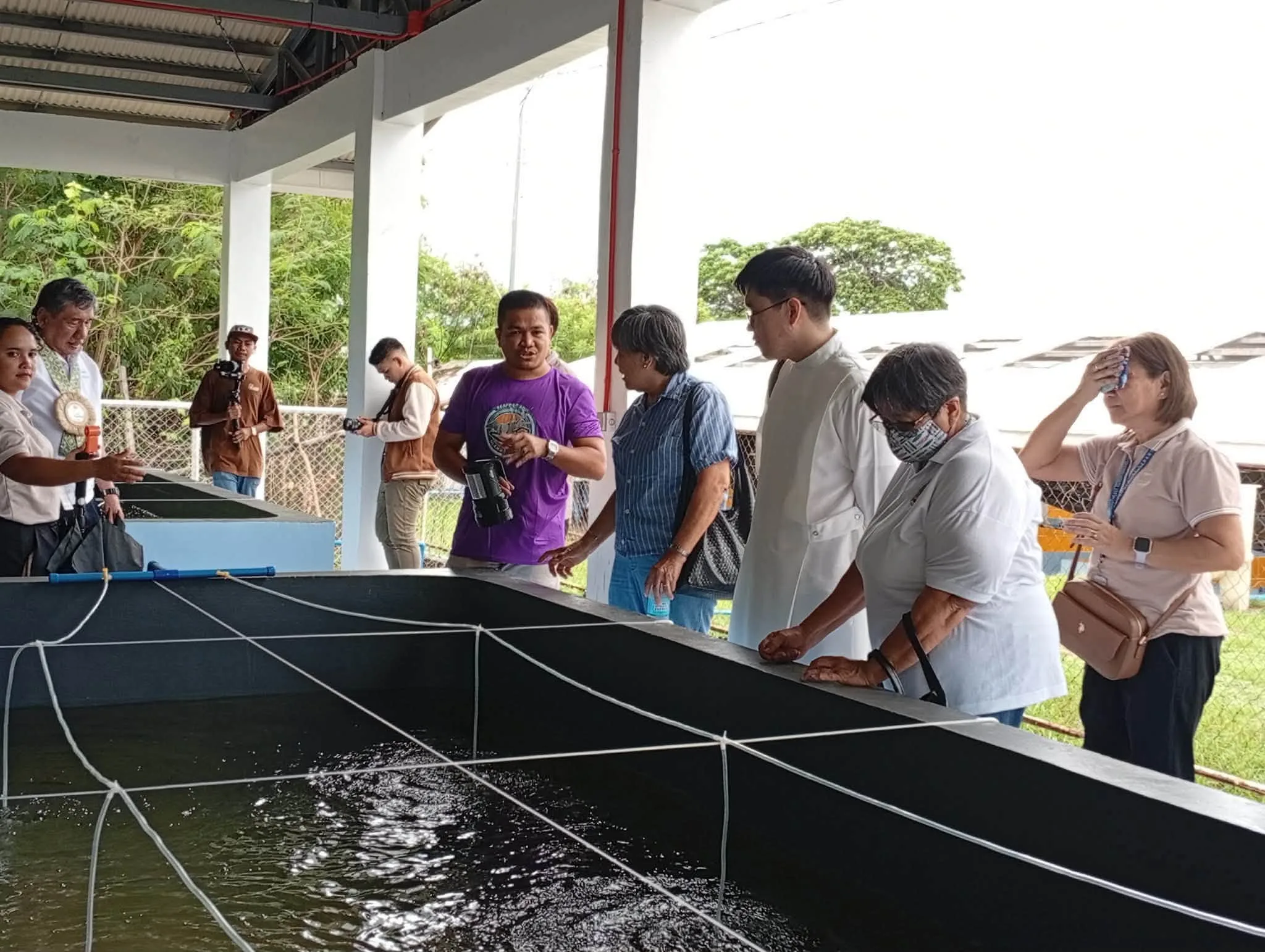
TIGBAUAN, Iloilo — The Southeast Asian Fisheries Development Center Aquaculture Department (SEAFDEC/AQD) inaugurated three new hatchery facilities on July 9, 2026, marking its 53rd anniversary with a decisive investment in the country’s food production capacity. The launch promises to stabilize seed supply and drive economic growth for thousands of fish farmers.
A Strategic Investment in Food Security
The newly opened facilities target high‑value species: whiteleg shrimp, giant freshwater prawn, and mangrove crab. The shrimp hatchery alone is engineered to produce 18 million postlarvae and 36 metric tons of market‑sized shrimp annually. The freshwater prawn facility is projected to yield 2.4 million postlarvae each year.
These hatcheries address a chronic shortage of healthy, consistent fingerlings that has long constrained aquaculture productivity. By providing disease‑resilient seeds, SEAFDEC directly reduces production risks for farm operators. The result is a more predictable harvest cycle that can attract larger investments in the sector.
Boosting Rural Livelihoods and Incomes
Reliable seed supply enables small‑scale farmers to plan multiple cropping cycles without fear of stock failure. Increased production volumes lower the per‑unit cost, making Philippine aquaculture more competitive in both local and international markets. This competitiveness translates into higher incomes for rural households dependent on fish farming.
The mangrove crab hatchery, set to produce 1.5 million crab instars per year, supports the lucrative crab‑fattening industry. Coastal communities, often among the poorest, stand to gain the most. By providing steady access to juvenile crabs, the facility can transform small‑scale gathering into a structured, income‑generating enterprise.
A Hub for Research and Technology Transfer
Beyond seed production, the facilities serve as training centers for hatchery operators, extension workers, and local government personnel. SEAFDEC/AQD Chief Dan Baliao noted that the agency has built or rehabilitated nine specialized facilities since April 2026 alone. This expansion reflects a deliberate push to modernize the country’s aquatic research infrastructure.
DA Undersecretary for Fisheries Drusila Esther Bayate, who delivered the keynote address, described the hatcheries as strategic investments in the future of Philippine aquaculture. She emphasized that they will advance breeding techniques, biosecurity, and science‑based technologies. The knowledge gained here is expected to ripple across Southeast Asia.
Aligning with Local Economic Development
The Iloilo City Government, represented by the Office of the City Agriculturist, attended the inauguration, signaling strong local support. Urban and peri‑urban fish farming can now tap into these seed stocks, diversifying income sources for city residents. The partnership between national research institutions and local governments creates a seamless pipeline from laboratory to farm.
This collaboration also opens opportunities for ancillary businesses such as feed production, equipment supply, and logistics. As the aquaculture sector matures, it generates demand for skilled labor and support services. The economic multiplier effect of a robust hatchery system extends well beyond the farm gate, benefiting entire communities.