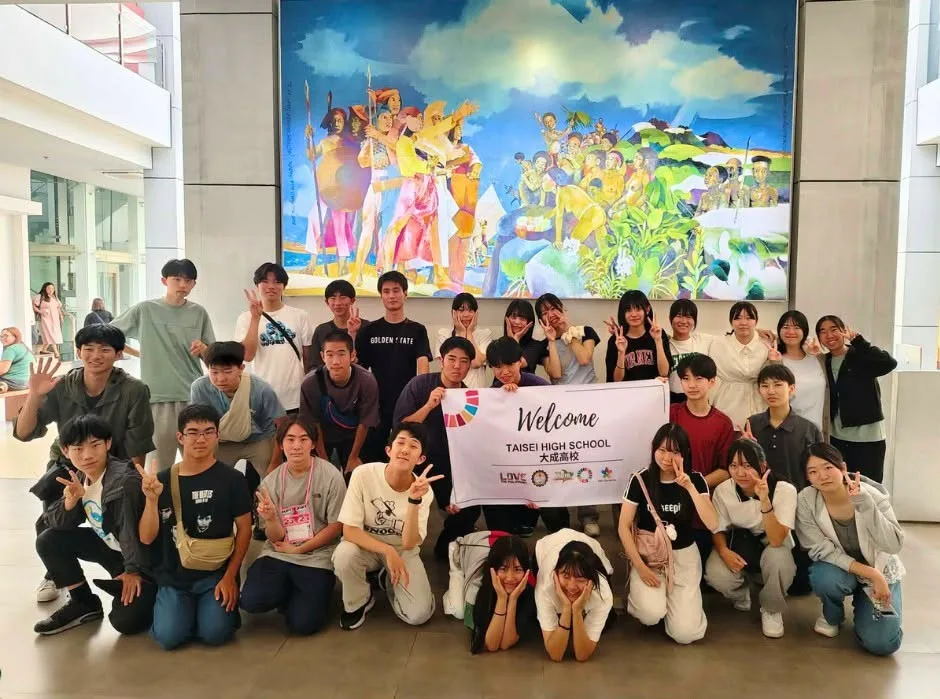
ILOILO — A delegation of Japanese high school students immersed themselves in Filipino culture and history during a recent visit to the National Museum of the Philippines – Iloilo, facilitated by the non‑profit organization LOOB Philippines. The visit offered a hands‑on journey through Western Visayas’ geology, traditional dress, and indigenous games.
A Living Classroom for Cross‑Cultural Learning
The students explored the museum’s galleries, where exhibits trace the formation of Western Visayas over millions of years. They examined fossils of prehistoric elephants and stegodons that once roamed Panay, making the region’s ancient past tangible. This geological storytelling provided a dramatic introduction to the island’s natural heritage and sparked curiosity among the young visitors.
The museum itself is a historic landmark, housed in the beautifully restored Old Iloilo Provincial Jail built in 1911. Its transformation from a place of confinement to a center of art and anthropology mirrors the adaptive reuse that defines Iloilo’s approach to heritage. For the Japanese students, walking through the old prison corridors was a lesson in architectural conservation.
Wearing Tradition: The Patadyong Experience
One of the most memorable moments came when the students learned the Visayan way of wearing the patadyong, a tubular wrap‑around skirt known for its vibrant checkered patterns. Museum staff demonstrated how to fold and secure the fabric, and the students eagerly tried it on over their clothes. The activity brought history to life in a playful and personal way.
The patadyong has long been a symbol of Panay’s weaving tradition, used by women for everyday wear, as a shawl, or even as a protective cover from the sun. By draping themselves in this textile, the Japanese teenagers gained a tactile appreciation for a living craft. The experience fostered a deeper understanding of how clothing carries cultural identity.
Games That Bridge Generations and Cultures
Beyond textiles, the students dove into the world of traditional Filipino board games. They challenged each other to rounds of sungka, a game of strategy played with shells and a carved wooden board. Laughter and friendly competition filled the gallery as the students grasped the rules and began plotting their moves.
Other games like dama and patintero (adapted for an indoor setting) introduced the visitors to the playful side of Filipino childhood. Museum staff explained that these games are more than entertainment; they teach counting, strategy, and social interaction. The shared activity created an instant bond between the Japanese guests and their Ilonggo hosts.
The Role of LOOB Philippines
LOOB Philippines, an Iloilo‑based non‑profit founded in 2001, organized the visit as part of its international youth exchange program. The organization regularly welcomes students from Taisei High School and Osaka High School, among others, for immersive field studies. Their programs focus on the United Nations Sustainable Development Goals, English practice, and community engagement.
The museum tour aligns with LOOB’s mission to promote global citizenship and cross‑cultural understanding. For the Japanese participants, the visit was a rare chance to step beyond textbooks and experience Filipino heritage through direct interaction. The partnership between LOOB and the National Museum ensures that such exchanges continue to flourish.
Iloilo as a Destination for Cultural Tourism
The visit underscores Iloilo City’s growing reputation as a hub for educational and cultural tourism. The UNESCO Creative City of Gastronomy designation has already drawn international attention to its culinary scene, but its museums and heritage sites offer equally compelling draws. Students from abroad are discovering that Iloilo is a place where learning feels like an adventure.