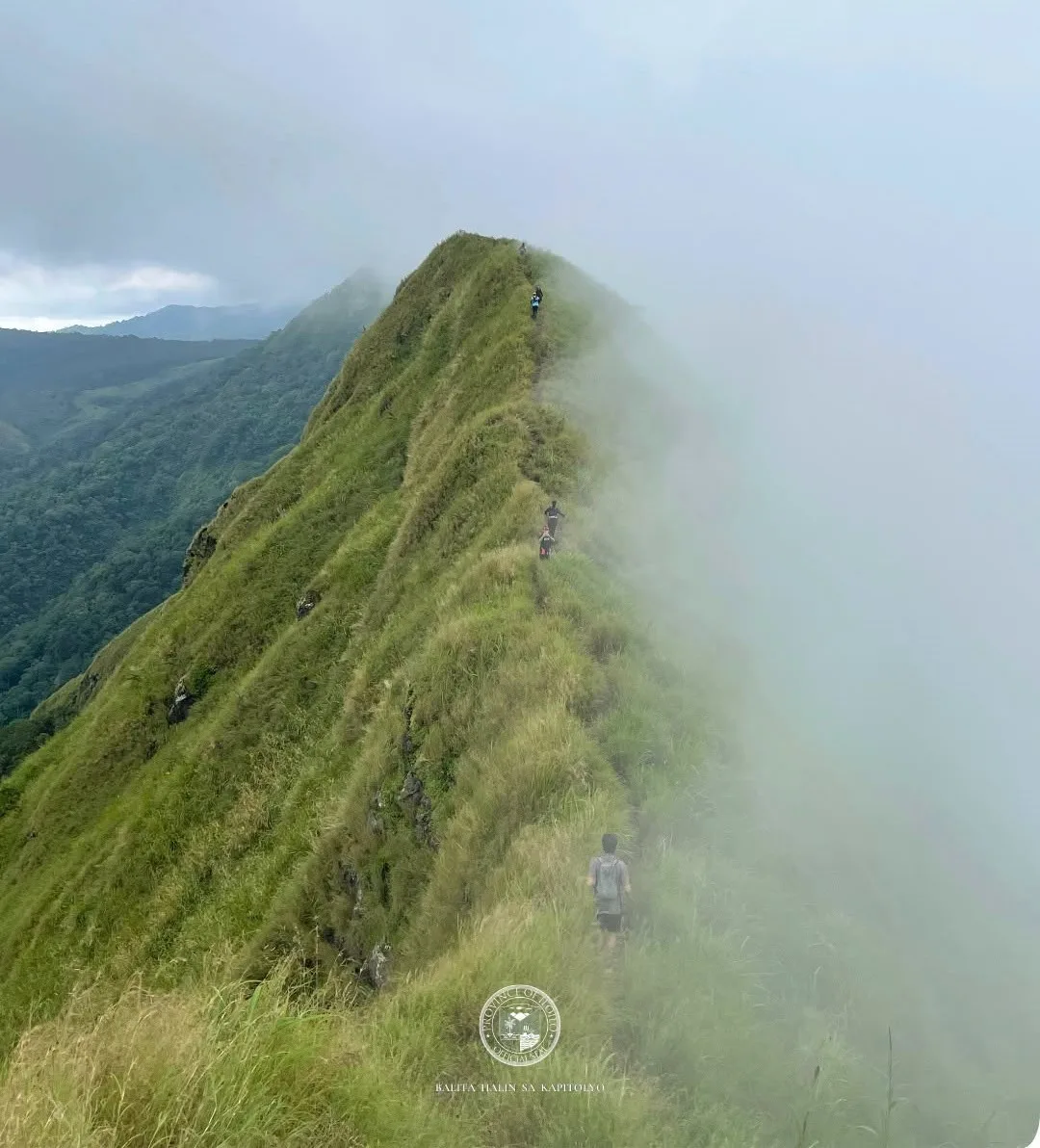
ILOILO — Rising 1,120 meters above sea level, Mt. Igatmon in Igbaras offers hikers a challenging trail and rewarding views of Panay Island's rugged interior. Known for its demanding terrain, the mountain has become a favorite among adventure seekers exploring Iloilo's growing outdoor tourism destinations.
A Challenging Trail Through Diverse Landscapes
The trek to Mt. Igatmon spans roughly nine kilometers from the jump-off point in Barangay Tigbanaba. The trail constantly shifts character, taking hikers through slippery paths, river crossings, open grassy areas, and dense tree lines. Every section demands a different technique and absolute concentration.
The journey begins in cool morning air, winding through lower elevations with refreshing river crossings and lush agricultural clearings. As the gradient steepens, the easy warm-up yields to slick mud paths and tangled root networks. Breaking through the canopy reveals exposed ridges lined with tall cogon grass whipping in the mountain breeze.
Signature Obstacles: Kiss the Wall and Knife Edge
Mt. Igatmon boasts two distinct challenges that have earned legendary status among Filipino mountaineers. The "Kiss the Wall" section forces hikers to traverse a narrow, exposed cliffside rock ledge where they must literally face the rock as they side-step carefully across. With a steep drop on one side, it provides an exhilarating rush of adrenaline.
Following the cliffside traverse, the path tapers into the Knife Edge Ridge, a razor-thin ridge linking the mountain's shoulders to its upper peaks. Walking along this spine feels like balancing on a sleeping dragon. Dramatic drop-offs tumble down into deep green valleys on either side, requiring steady feet and respect for heights.
Summit Rewards and Camping Options
Standing at the summit, hikers are treated to an unobstructed 360-degree vista of Panay Island's most rugged topography. Neighboring peaks like Mt. Napulak, Mt. Taripis, and Mt. Tigurang stand sentinel over the Iloilo-Antique border. On clear mornings, a magical sea of clouds rolls gently through the valleys below.
Hikers have two main options for experiencing the summit. Experienced mountaineers often tackle the mountain in a single, rigorous eight-to-ten-hour day hike. Alternatively, overnight camping at designated pitch sites allows visitors to watch sunset cast purple and orange hues over the ridges, followed by stargazing free from urban light pollution.
Practical Planning for Trekkers
From Iloilo City, travelers can board a jeepney or van bound for Igbaras, about one to one-and-a-half hours away. Upon arriving at the Municipal Hall, hikers register with the local tourism office and pay the environmental fee. Habal-habal motorcycles are available to take visitors directly to the jump-off point.
Hiking with an accredited local guide is mandatory and supports community eco-tourism. Guides are indispensable for navigating technical sections and sharing local history. Essential gear includes durable trail shoes with deep lugs, long-sleeve shirts, trail gloves, and at least two to three liters of water.
Leave No Trace and Responsible Trekking
Mt. Igatmon remains pristine because of strict adherence to Leave No Trace principles. Hikers must pack out all trash, respect local wildlife, and preserve the peace of the mountain. Beginners are encouraged to prepare well, know their limits, and hike with proper guidance.
For local Ilonggos reconnecting with their province's natural heritage, Filipino travelers exploring the Visayas, and international backpackers seeking authentic wilderness, Mt. Igatmon offers a story worth remembering. It embodies the wild, resilient spirit of Panay, challenging visitors with every step toward its breathtaking summit.