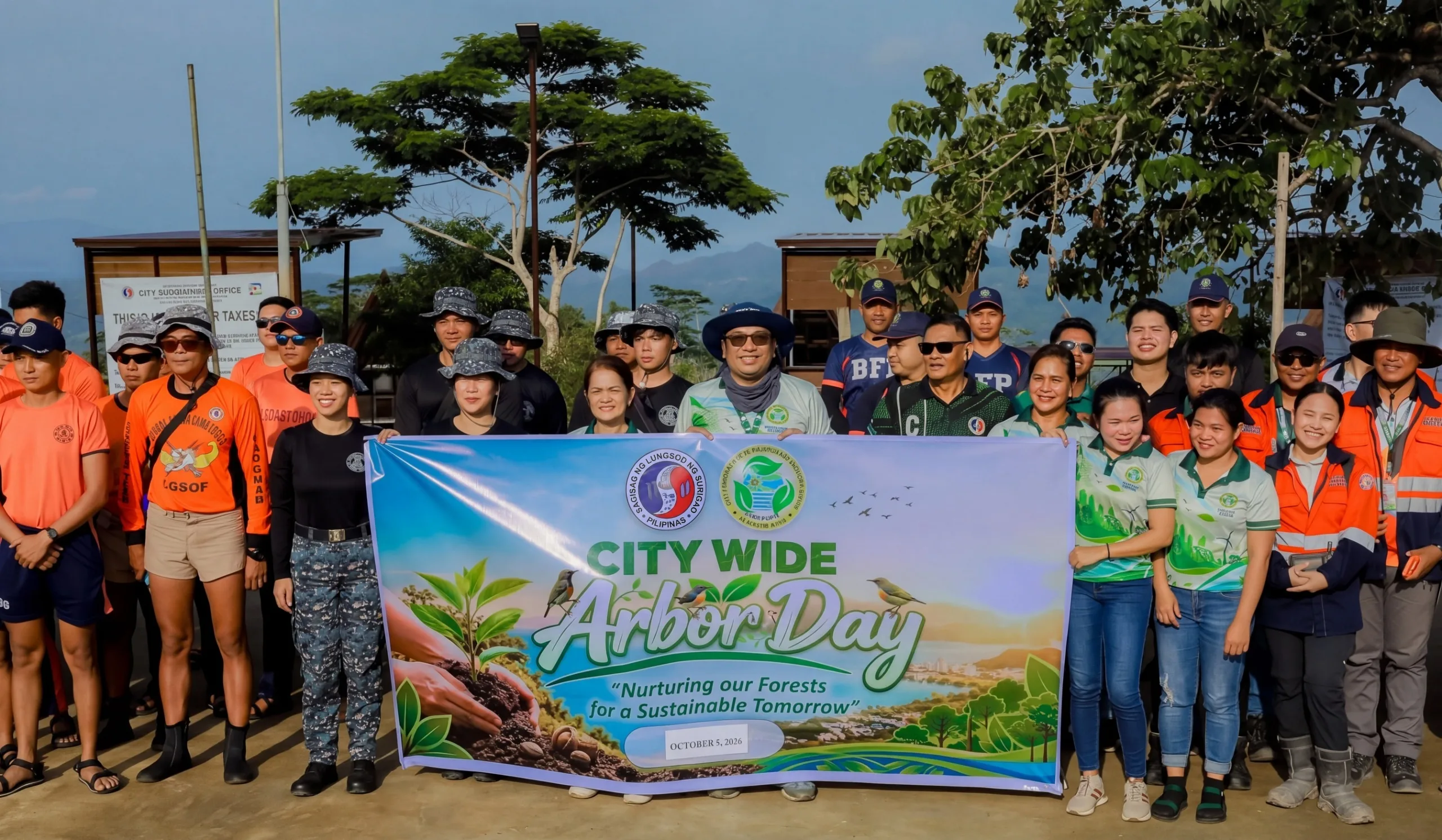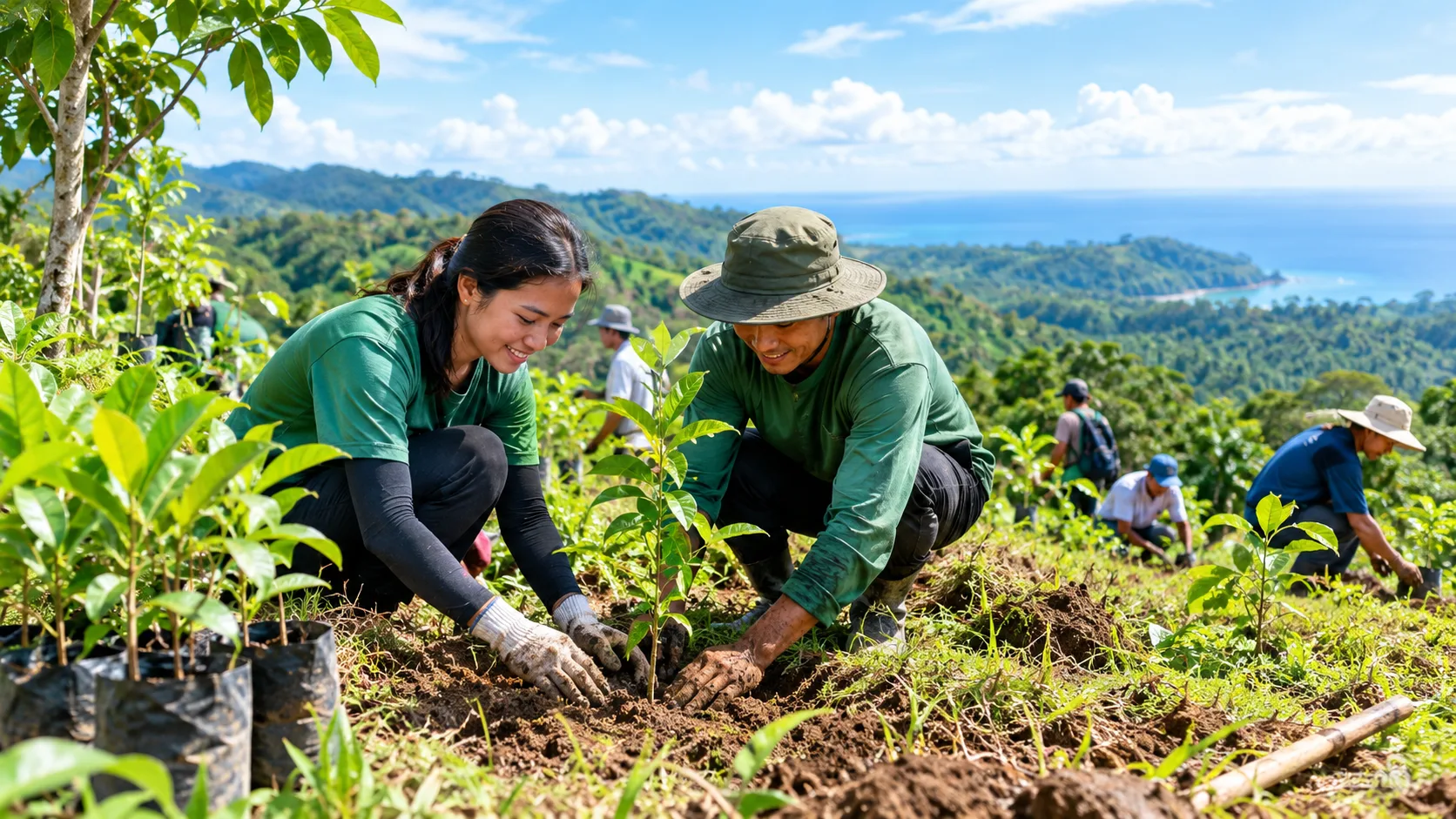
CAPOOCAN, LEYTE — Stepping up environmental conservation efforts across Eastern Visayas, a massive three-year forest rehabilitation project is officially underway in Capoocan, Leyte. Targeting the restoration of 60 hectares of degraded forestland, the initiative aims to plant and nurture 45,000 indigenous trees while heavily strengthening community-led stewardship.
A Tri-Partite Alliance for Regional Greening
The vital environmental undertaking was formalized through a memorandum of agreement uniting the Energy Development Corporation (EDC)—acting through its flagship BINHI environmental program—the Department of Environment and Natural Resources in Eastern Visayas (DENR-8), and the Visares and Sto. Niño Farmers Association (Visfa).
Covering critical forest zones within Barangays Visares and Sto. Niño, the project directly feeds into the national agenda of the DENR’s Forests for Life: 5 Million Trees by 2028 Program. Rather than opting for imported or fast-growing commercial species, project planners selected indigenous trees native to the locality and finely attuned to local soil and environmental conditions. These include prime Philippine species such as hindang (Ficus callosa), yakal (Shorea astylosa), and various lauan varieties (Shorea spp.).
Beyond Planting: Ensuring Long-Term Survival and Protection
To maximize ecological recovery across grassland and brushland segments, the project combines strategic seedling cultivation with Assisted Natural Regeneration (ANR), protecting and nurturing pioneer indigenous trees that are already naturally sprouting on-site.
Emphasizing that reforestation success relies on maturation rather than just initial planting numbers, Allan Barcena, EDC assistant vice president and head of corporate support functions, noted that the end goal is the development of robust, lasting forest canopies.
"Our goal isn't just to plant Philippine native trees, but to ensure they survive and mature into strong forest canopies," Barcena stressed.
To safeguard the 60-hectare site against threats like illegal logging, kaingin, soil erosion, and pests, local farmers from Visfa will spearhead comprehensive on-the-ground interventions. These include continuous maintenance, replacement planting, fireline construction, and regular patrols. Through unified monitoring by local government units, DENR, and community partners, the initiative is expected to heavily boost local biodiversity, improve watershed resilience, and empower Leyte's grassroots communities as lifelong guardians of their natural environment.