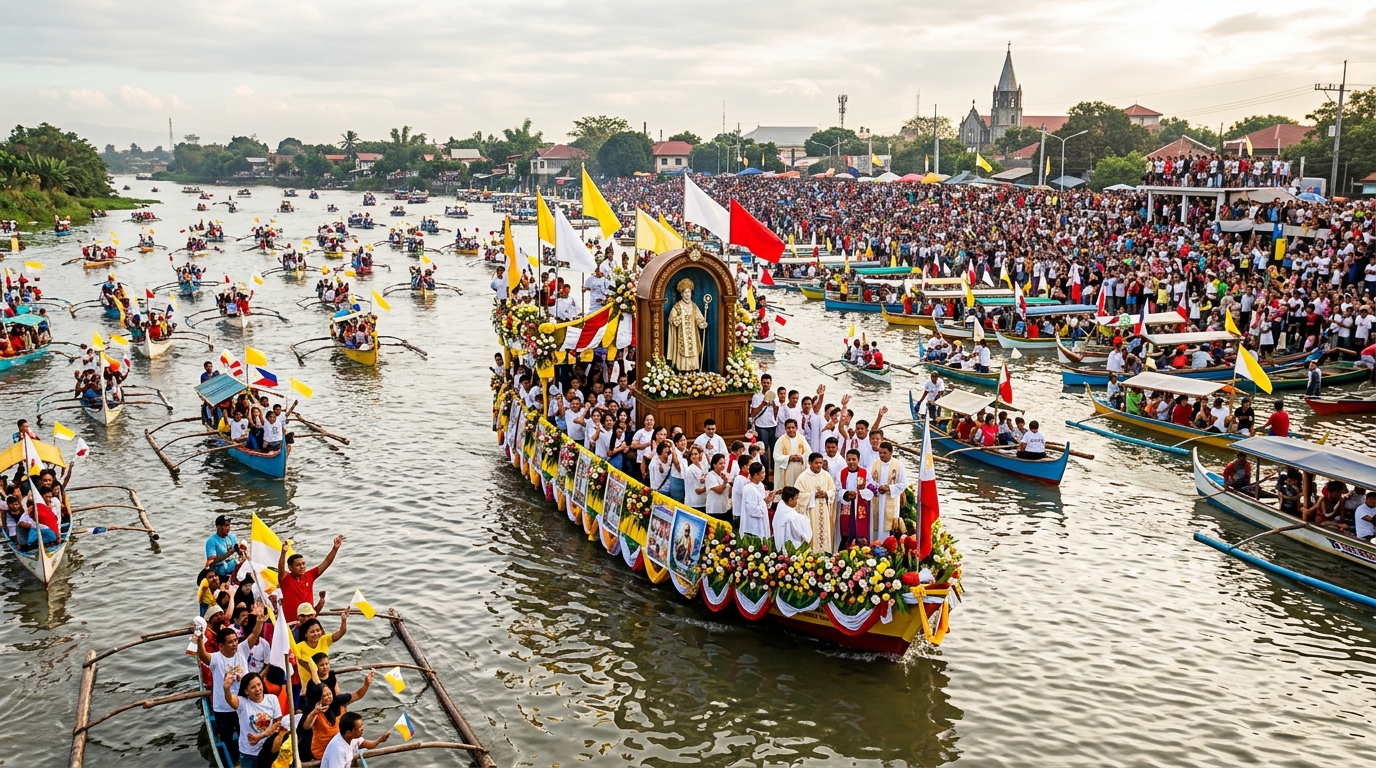
The town of Apalit in Pampanga is celebrating its annual three-day festival from June 28 to 30 in honor of its patron saint, St. Peter the Apostle, known to devotees as "Apung Iru" or "Grandfather Peter." The highlight of the festivities is the famous "Libad" or fluvial procession along the Pampanga River, where the beloved 300-year-old ivory image of the saint is paraded on a colorfully decorated barge.
A 180-Year-Old Fluvial Tradition
The "Libad" is considered the Kapampangan equivalent of the Black Nazarene procession of Quiapo and is the most widely recognized religious procession in the province . The image of "Apung Iru" has long been considered miraculous, drawing devotees from all over the Philippines . The first fluvial procession of the image was held in 1844, making this year's celebration the 182nd year of this cherished tradition . Hundreds of motorized boats, barges, and bancas join the parade, sailing along the Pampanga River as devotees line the riverbanks to watch, wave, and receive blessings.
The Festivities and Devotion
The three-day celebration follows a structured schedule of activities steeped in religious devotion. On the first day, the image of Apung Iru is taken from its home in Barangay Capalangan to the St. Peter the Apostle Parish Church in Barangay San Juan . The second day features the grand fluvial parade along the Pampanga River, where the image is escorted by hundreds of vessels . On the final day, the image is brought back to its home shrine in Barangay Capalangan . The image is an heirloom of the Armayan-Espiritu y Macam clan of sitio Alauli, San Vicente, Apalit, with ivory face and hands dating from the last quarter of the 1700s.
A Faithful Celebration and the Return to the Church
After the river procession, the sacred image is brought in a motorcade back to the St. Peter and St. John Cathedral for a solemn mass and festivities. Notably, the Apalit church is officially named St. Peter and St. Paul Parish, as Archbishop Florentino Lavarias celebrated a Mass in 2018 to formally establish this name . The parish also received bone relics of the two saints that year, deepening the spiritual significance of the celebration.