


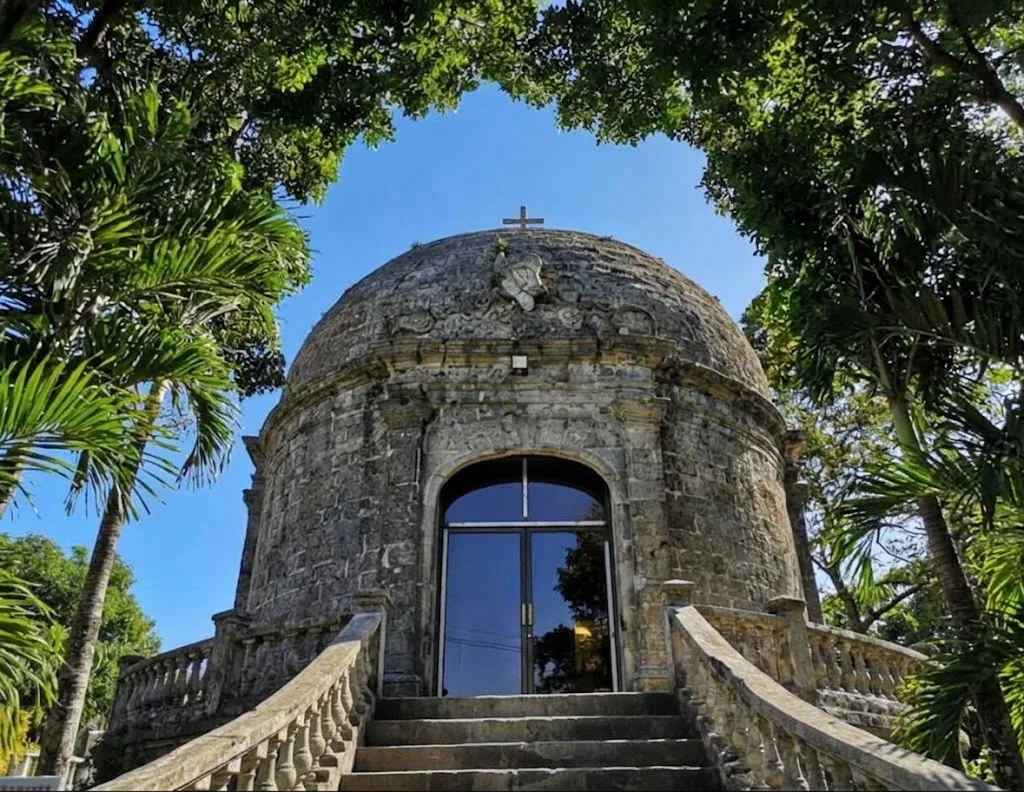
Tucked away in Barangay Tuktukan, Taguig City, the Simboryo ng Taguig offers visitors a glimpse into a much older side of the city. Located within the Sta. Ana Catholic Cemetery, the distinctive dome-shaped structure stands as an important reminder of Taguig’s religious, architectural, and historical heritage.
A Landmark From Taguig’s Past
The Simboryo is an elevated mortuary chapel with a distinctive dome measuring about 12 meters in diameter. Historical accounts trace the structure to Taguig’s Spanish colonial period, when it was built under the supervision of Spanish friars and local labor. Its stone construction and unusual circular form make it particularly noticeable among the surrounding cemetery structures. The site was associated with the final rites and resting places of the departed, reflecting the important role of faith and burial traditions in earlier Filipino communities.
A Witness to History
The Simboryo's story extends beyond its religious purpose. According to Taguig's historical records, the structure witnessed important periods in the city's past, including the Philippine-American War and World War II. The City of Taguig also notes that it served as a base station for Filipino soldiers during the Philippine-American War. The structure was damaged by an 1882 earthquake and later repaired. More restoration work was carried out during the 20th century, helping preserve its distinctive form.
Recognized as an Important Cultural Property
The Simboryo is part of the Sta. Ana Church Complex, which was declared an Important Cultural Property by the National Museum of the Philippines in 2017. More recently, the National Historical Commission of the Philippines unveiled a historical marker for the Simboryo in November 2025, further recognizing its historical significance. These recognitions highlight why preserving the structure matters—not only for Taguig but also for understanding the architectural and cultural history of the Philippines.
