


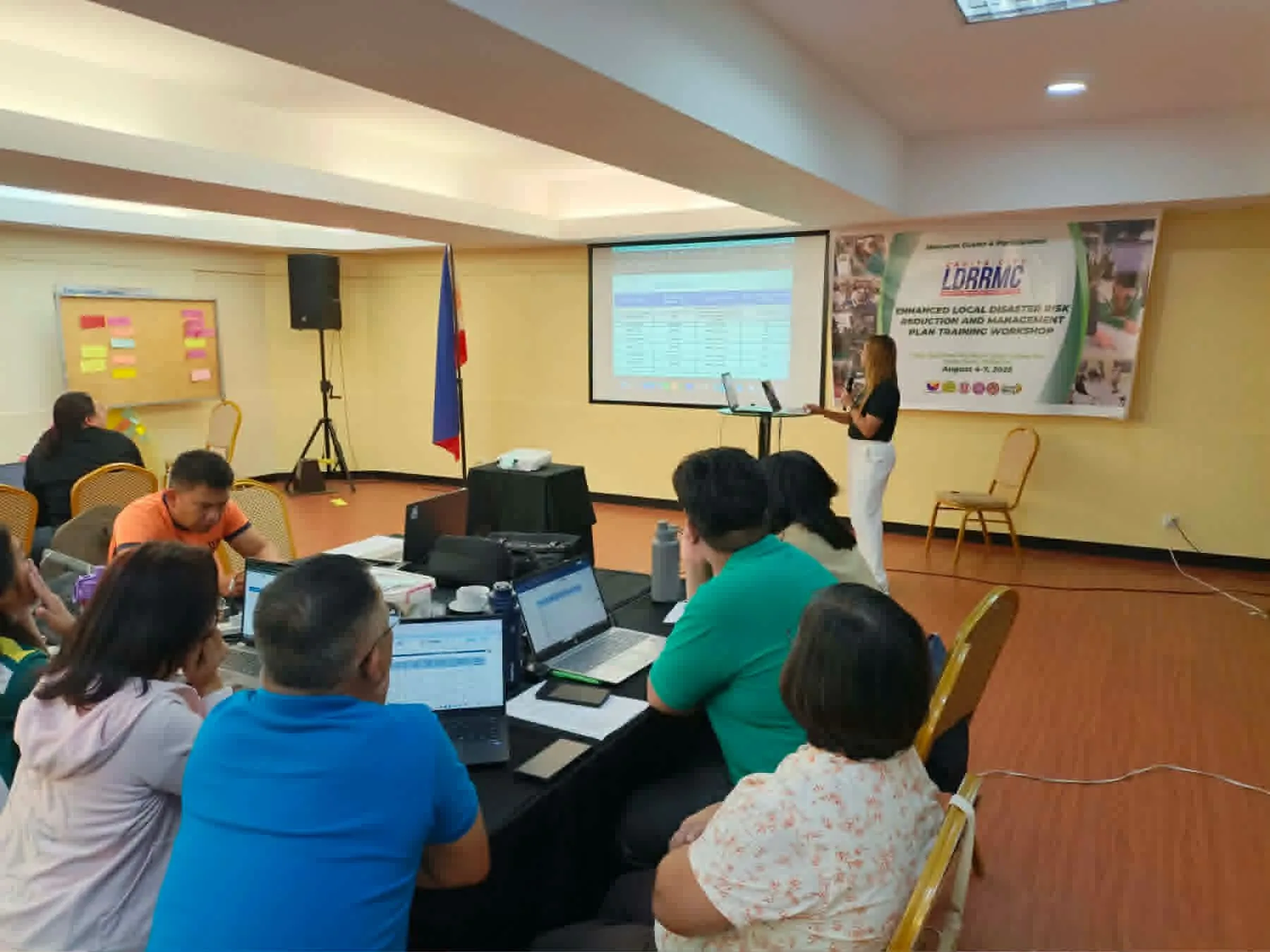
The second day of Cavite City's capacity-building workshop focused on developing the Local Disaster Risk Reduction and Management Plan (LDRRMP), setting strategic visions, and establishing key safety goals through cross-sector collaboration.
Strategic Planning for Comprehensive Disaster Response
The workshop's second day centered on creating actionable frameworks for comprehensive disaster response. The Local Disaster Risk Reduction and Management Plan (LDRRMP) realizes the requirement of RA No. 10121 of 2010, which provides the legal basis for policies, plans and programs to deal with disasters . The LDRRMP covers four thematic areas: Disaster Prevention and Mitigation, Disaster Preparedness, Disaster Response, and Disaster Rehabilitation and Recovery . These areas correspond to the structure of local disaster risk reduction and management councils, ensuring a coordinated approach to safeguarding communities.
Setting strategic visions and establishing key safety goals are essential steps in developing an effective LDRRMP. Goals are broad statements of a desired end condition or outcome, while objectives are specific, measurable statements that support the achievement of a goal . The workshop emphasized the importance of defining resilience within Cavite City's unique geographic context, including its assets, hazards, and changing future conditions.
Multi-Sector Collaboration for Community Safety
The workshop united local government, national agencies, and community sectors in a shared commitment to strengthening disaster preparedness. This collaborative approach reflects the national government's push for proactive disaster risk reduction, with the Office of Civil Defense calling for closer coordination among government agencies, local disaster risk reduction and management offices, and communities . The workshop commended the continuous dedication of resource speakers and participants in strengthening city-wide preparedness to ensure the safety of all Caviteños.
Cavite City's location as a peninsula bounded by Manila Bay, Cañacao Bay, and Bacoor Bay makes it particularly vulnerable to storm surges and flooding . This geographic reality underscores the importance of the city's efforts to develop a comprehensive, science-based LDRRMP. The National Disaster Risk Reduction and Management Council has been empowering local government units across the country in updating their disaster plans through integration of accurate data, hazard maps, and risk assessments .
