


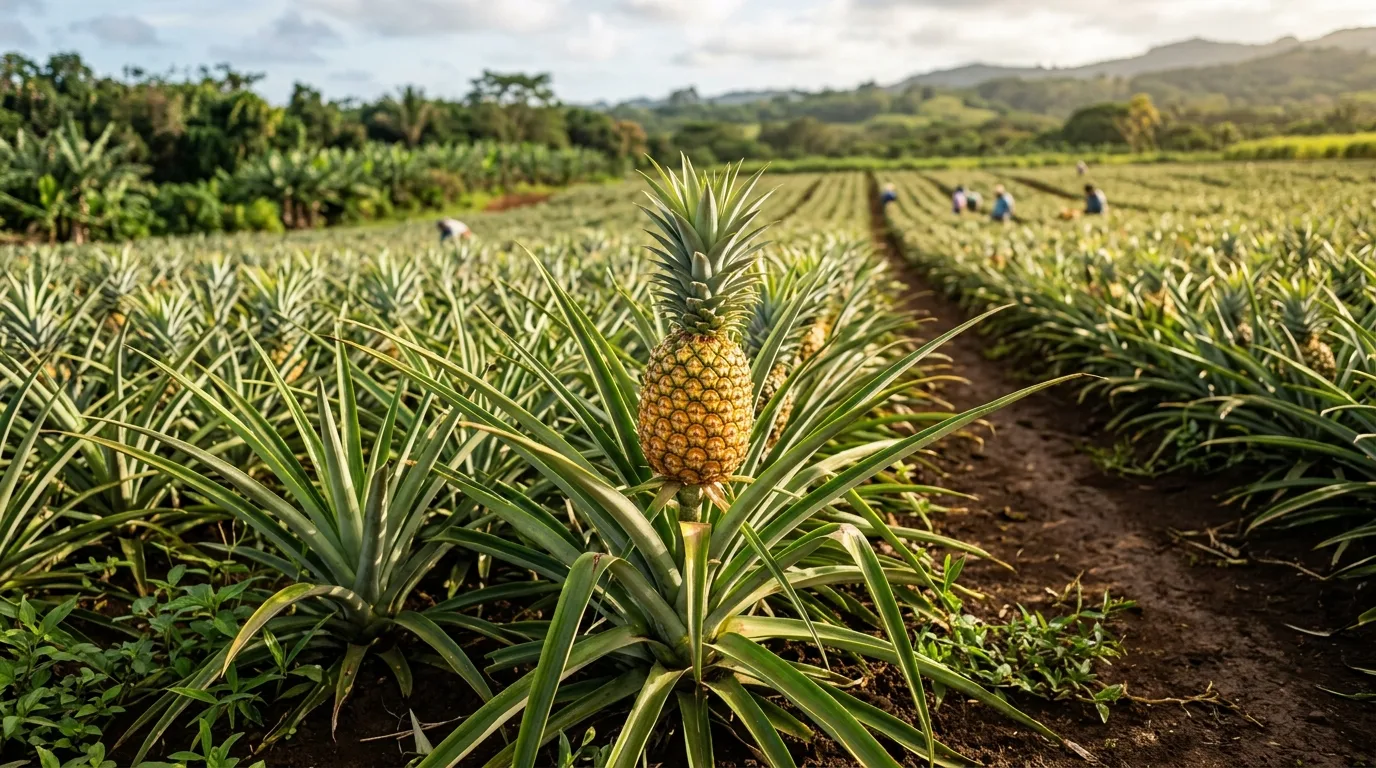
The Department of Agriculture (DA) recently led training seminars on Pineapple Production and Post-Harvest Management in Tagaytay City. These programs are designed to equip local farmers with modern technologies, mitigate crop losses, and enhance the overall value of the Cavite pineapple industry.
Modernizing Cavite's Pineapple Industry Through Training
The DA CALABARZON training, held on July 1, 2026, as part of the High Value Crops Development Program (HVCDP), provided local farmers with a comprehensive understanding of modern pineapple production practices . The program aimed to address the challenges faced by the industry by introducing farmers to updated technologies and methods. The training covered a wide range of topics, including Pineapple Production and Post-Harvest Management, Pests and Diseases Identification and Management, Soil Fertility Management, and Creating Healthy Soil Through Soil Rejuvenation and Safe Pest Management .
Known for its cool climate, Tagaytay City is a major pineapple producer in Luzon, making it a key location for these capacity-building efforts . This initiative is part of a series of ongoing training programs organized by the DA for pineapple farmers, including previous sessions held in Silang and Magallanes, Cavite, in June 2024 , and consultations aimed at empowering farmers and boosting the industry . Similar training on post-harvest handling was also conducted by the DA's Agricultural Training Institute (ATI) CALABARZON from June 1-4, 2026, further reinforcing the government's commitment to the sector.
Supporting Sustainable Practices and Alternative Livelihoods
The DA's training complements other ongoing efforts to support the Cavite pineapple industry. Farmers are also being taught to turn agricultural waste into income through pineapple leaf fiber (PALF) extraction training led by the Department of Science and Technology (DOST), which empowers local farmers to transform by-products into high-value materials for the textile and handicraft industries . This is part of a broader push toward promoting circular economy practices within farming communities.
In line with these initiatives, the DA CALABARZON has emphasized that the knowledge shared during the training will serve as a guide to further improve pineapple production and strengthen the situation of farmers in the region through the use of modern and appropriate technology.
