


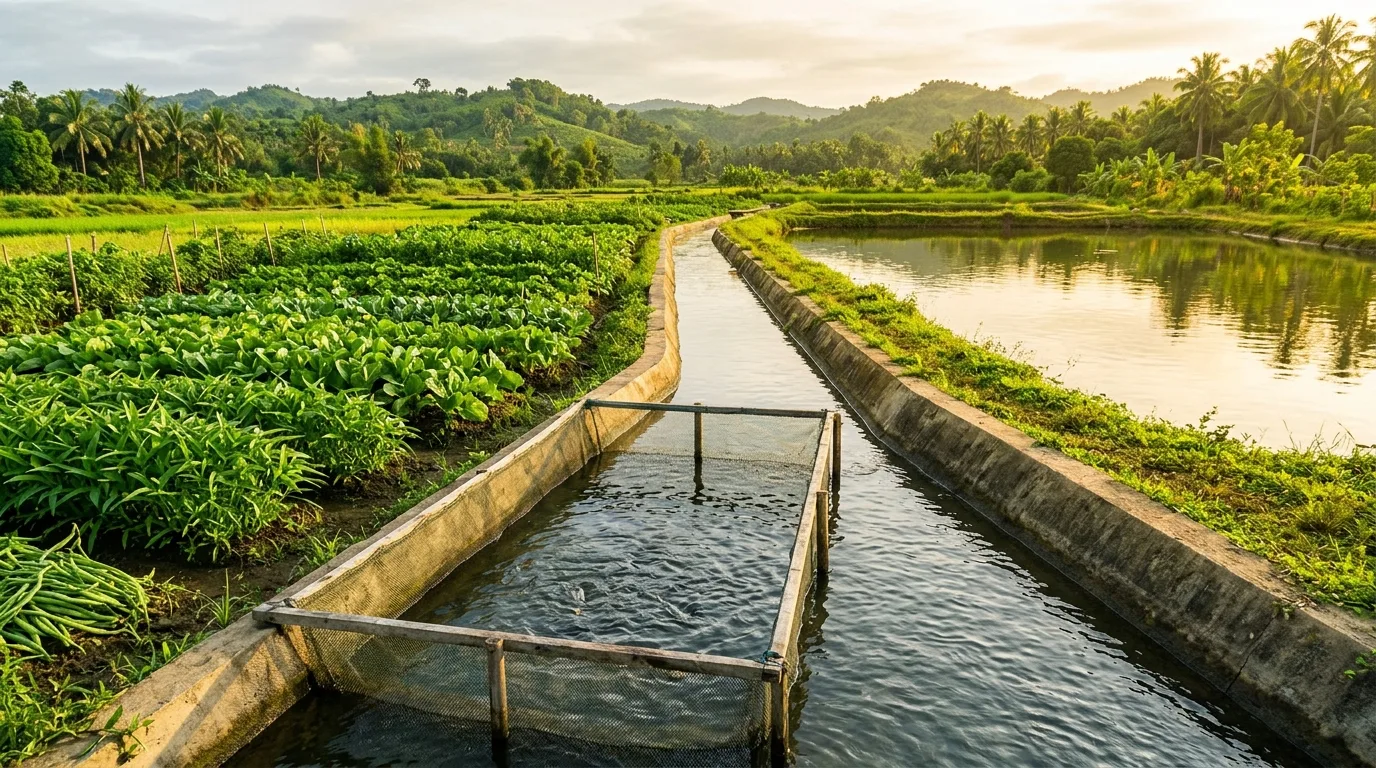
Davao — Farmers across the Davao Region are seeing tangible financial gains thanks to a collaborative effort between the Department of Social Welfare and Development (DSWD) and the National Irrigation Administration (NIA-11). Through the "Project LAWA at BINHI" (Local Adaptation to Water Access and Breaking Insufficiency through Nutritious Harvest for the Impoverished), nineteen irrigators' associations have successfully generated over ₱500,000 from the sale of tilapia and vegetables produced as of June 2026. This initiative is transforming traditional irrigation communities into productive hubs, providing farmers with a reliable secondary income stream that strengthens their economic resilience against climate-related challenges.
Empowering Communities Through Productive Partnerships
The project operates as a strategic alliance where NIA-11 acts as a key implementing partner by identifying and endorsing qualified irrigators' associations. Beyond mere financial assistance, NIA provides essential technical support on irrigation and water management, ensuring that the farmers have the expertise required to maintain sustainable production cycles. This hands-on approach has proven highly effective, allowing farmers to cultivate vegetables and harvest tilapia within their existing agricultural infrastructure. For participants like Teofisto Abraham, president of Beducasia Inc., the project represents more than just a source of revenue; it offers renewed hope and a viable path toward long-term livelihood improvement.
Scaling Impact for Regional Farmers
Since its launch in 2025, the partnership has reached a significant milestone by benefiting nearly 1,000 farmer-members across the Davao Region. By integrating climate-resilient farming techniques with accessible market opportunities, the project addresses the dual needs of food security and poverty reduction. The success of the initial harvest demonstrates the potential for scaling similar irrigation-based livelihood programs in other agricultural sectors. Ongoing monitoring by the DSWD and NIA ensures that these associations remain well-supported, effectively turning water management systems into multi-purpose tools for both irrigation and commercial production.
Future Outlook for Sustainable Livelihoods
Following a successful benchmarking visit from national officials between July 13 and 16, 2026, the DSWD and NIA-11 are focused on sustaining these gains for the upcoming harvest seasons. The project serves as a cornerstone for local agricultural development, aiming to shield small-scale farmers from the economic shocks of volatile market prices and environmental stressors. As these nineteen associations continue to refine their production methods, the provincial government remains committed to supporting such collaborative models that prioritize self-sufficiency. By providing farmers with the tools and training to diversify their output, the region is taking a significant step toward a more secure and prosperous future for its agricultural workforce.
