


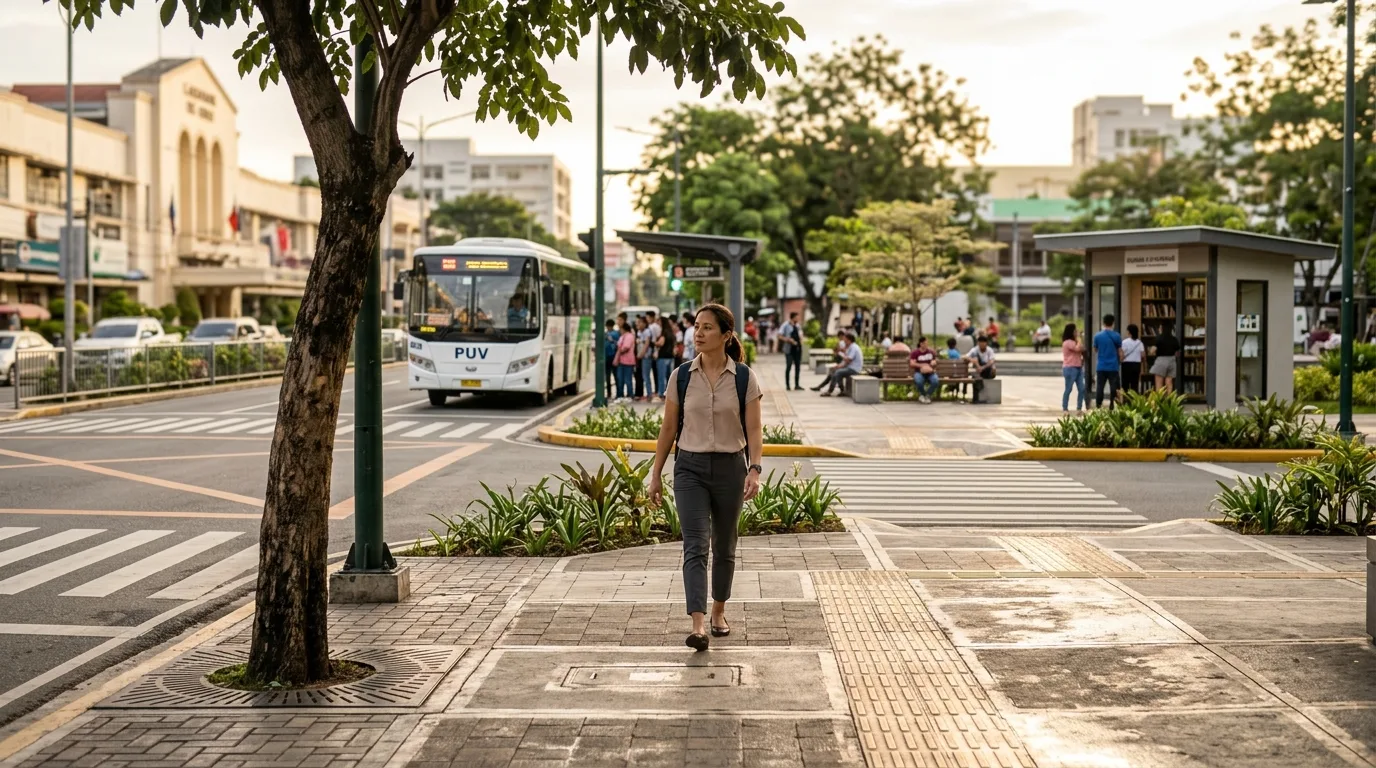
Cagayan De Oro — Before committing to a new mortgage or signing a long-term lease, taking a quiet walk down a city's main thoroughfares yields far more insight than any promotional real estate brochure. The physical anatomy of an urban center serves as a direct mirror of its values, priorities, and everyday quality of life. From sidewalk widths to public transport integration, every structural choice shapes how residents interact, commute, and experience daily stress. By learning to read an environment through an urban planning lens, prospective movers can accurately judge whether a city’s daily rhythm aligns with their lifestyle goals.
Sidewalks, Streetscapes, and the Pace of Human Speed
How a city treats its pedestrians provides immediate clues about its underlying human scale and civic priorities. Metropolitan areas designed around a "5 km/h experience"—featuring wide, protected walkways, eye-level shopfronts, and ample tree canopies—naturally foster community interaction and lower stress levels. Research published on urban design and psychology shows that pedestrian-first streetscapes significantly boost mental well-being compared to sprawling, automobile-dominated corridors. When a city forces residents to rely strictly on personal vehicles for basic errands, it signals a fragmented social environment where casual neighborhood encounters rarely happen organically.
Transit Integration and the Cost of Daily Friction
The seamlessness of a city’s public transit network reveals how much value local governance places on equity and personal time. High-performing cities treat public transportation as a vital connective tissue, linking residential zones directly to commercial hubs, public parks, and cultural centers. Examining multimodal connectivity through comprehensive urban guides like Urban Livability Frameworks helps highlight whether a city minimizes daily commuting stress or amplifies it. Efficient bus rapid transit systems, dedicated cycle lanes, and reliable train lines indicate a forward-thinking administration dedicated to sustainable, low-friction mobility.
Public Spaces as Indicators of Civic Health
The quality, accessibility, and maintenance of shared public spaces serve as the ultimate test of a city's social fabric. Vibrant urban environments prioritize "third places"—such as public parks, plazas, community gardens, and open-air libraries—where people of all backgrounds can gather without a financial barrier. According to research on urban design and mental health, access to contemplative green infrastructure directly counteracts urban burnout and fosters strong local identity. When a city invests heavily in welcoming, well-maintained public realms, it promises prospective residents a deeply connected, restorative place to call home.
