


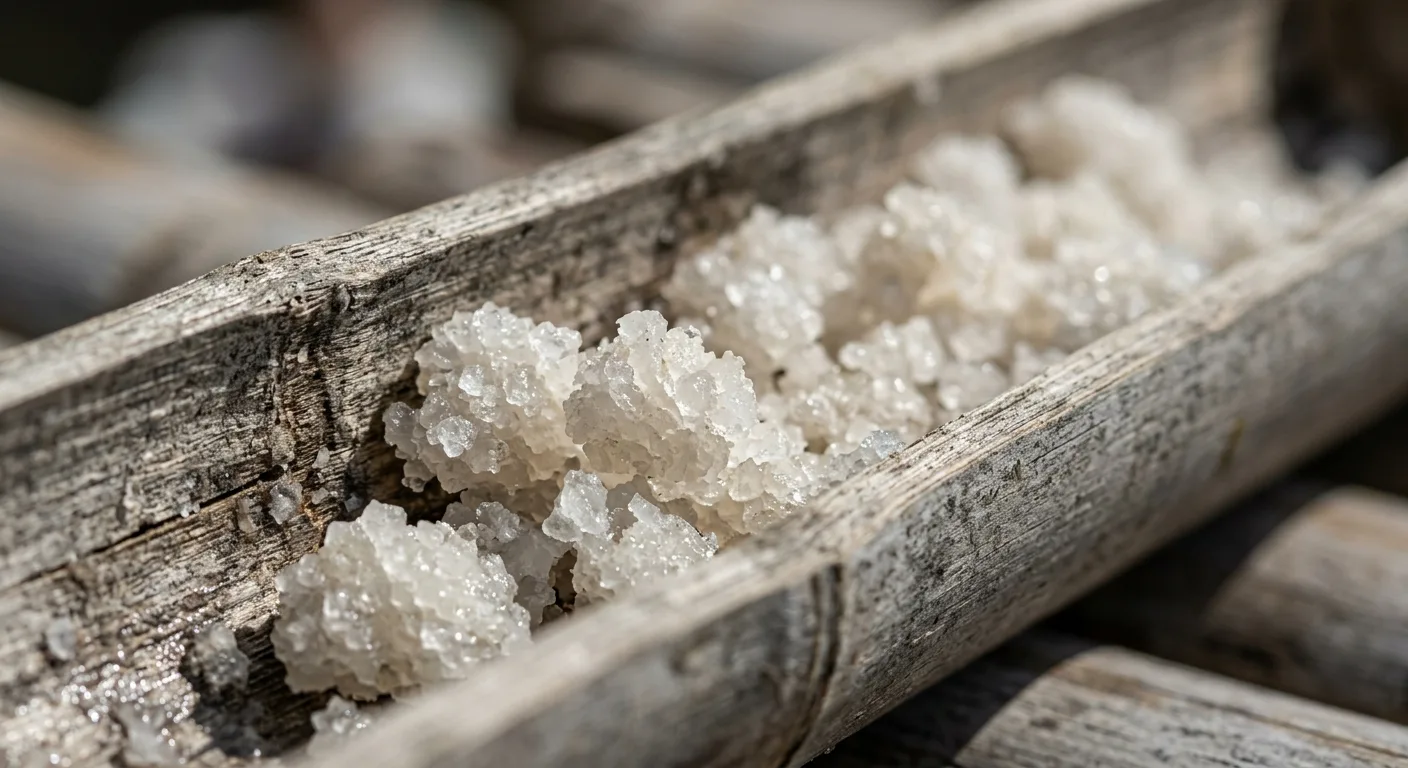
ILOILO CITY — Before mass-produced salt lined supermarket shelves, the coastal towns of Iloilo relied on a delicate, handcrafted tradition known as Budbud Asin. This rare artisanal sea salt, once on the brink of extinction, is experiencing a quiet renaissance.
A Name That Means ‘To Sprinkle’
In the local Kiniray-a dialect, “budbud” translates to “to sprinkle.” This name describes the laborious process where salt makers, called asinderos, rhythmically scatter seawater over sun-baked sand beds. Dating back to at least 1823, this technique has been passed down through generations along the shores of Miagao.
The process is a masterclass in ancient engineering. Seawater is repeatedly splashed onto the sand using long bamboo poles. After the sand becomes saturated, it is gathered into woven baskets and placed into clay filters. More seawater is poured over it, creating a concentrated brine called “tuma.”
The Secret Ingredient: Balunos Vine
What truly sets Miagao’s budbud salt apart from all others in the world is a local botanical secret. During production, salt makers add an extract from a mountain vine known as balunos. Recent scientific verification has identified this plant as Momordica cochinchinensis.
This vine extract plays a crucial role in the salt’s creation. It helps the brine caramelize properly, aiding in crystallization and giving the final product its distinctive, complex flavor profile. This unique integration of ethnobotanical knowledge makes budbud asin a completely unique product found nowhere else.
A Revival Led by Women
For years, budbud salt faced extinction due to climate change, habitat loss, and competition from cheap commercial salt. However, a powerful revival is underway, led by dedicated artisans like Lorlie Noblezada. Known as the “Asindera ng Miagao,” she has spent the past eight years reviving this dying craft.
Noblezada, a former social worker, broke gender norms to lead the industry. Working with her husband, a fourth-generation salt maker, she established De Paul Artisanal Salt Manufacturing. Today, she champions the tradition, involving local women and youth in the production process to create sustainable livelihoods.
From Heritage to High-End Kitchens
The renaissance of budbud salt is also being driven by Iloilo’s dynamic culinary scene. Chefs are increasingly drawn to its large, flaky crystals and mineral-rich punch. It has become a prized finishing salt, elevating dishes like grilled seafood and farm-to-table salads.
Government agencies are stepping up support. The Department of Agriculture and the Bureau of Fisheries and Aquatic Resources are providing livelihood inputs to asinderos. Through the Salt Industry Development Act, they aim to boost rural incomes and promote this heritage product in local and global markets.
Preserving an Edible Archive
Budbud asin is an edible archive of Iloilo’s tides, winds, and resilient people. Every golden crystal represents hours of patient labor under the tropical sun. By choosing this artisanal salt, diners connect directly to a centuries-old tradition, ensuring this “vanishing gold” continues to shine for generations.
