


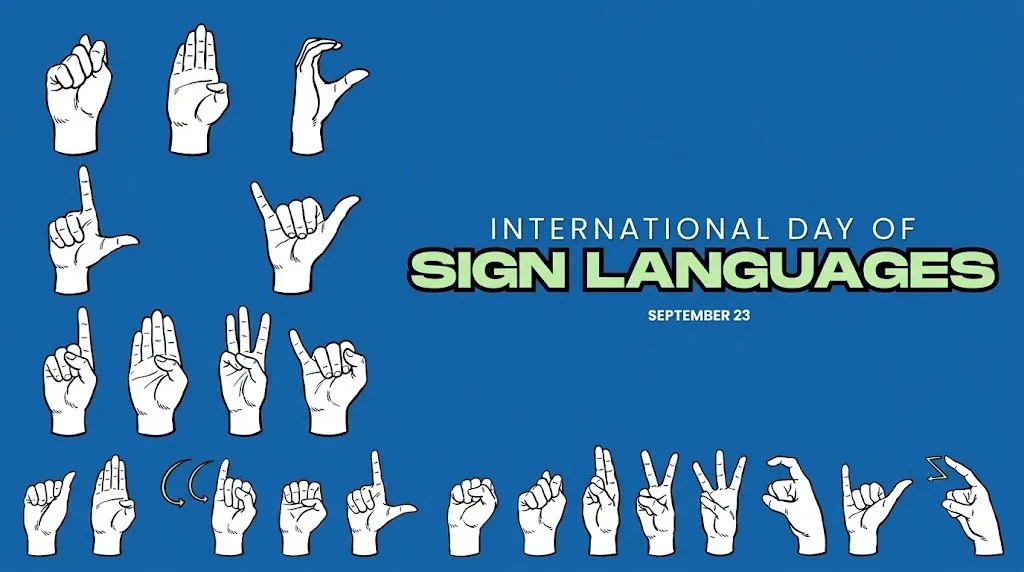
Dumaguete City joins communities around the world in recognizing the International Day of Sign Languages, observed every September 23, highlighting the importance of sign languages in protecting linguistic identity, cultural diversity, communication, and the human rights of deaf people and other sign language users. The occasion was highlighted by Dumaguete City of Literature, which noted the global significance of the observance and its role in supporting the linguistic identity and cultural diversity of deaf communities.
The United Nations established September 23 as the International Day of Sign Languages through General Assembly Resolution A/RES/72/161. The date commemorates the founding of the World Federation of the Deaf (WFD) in 1951.
A Day Celebrating Sign Languages Around the World
The International Day of Sign Languages provides an opportunity to recognize sign languages as important forms of communication and as part of the cultural and linguistic identity of deaf communities. The United Nations describes sign languages as fully developed natural languages with their own structures, distinct from spoken languages. The UN also notes that there are more than 70 million deaf people worldwide who collectively use more than 300 different sign languages. This diversity means that sign language is not simply a universal collection of gestures. Different communities have their own national and local sign languages, each with linguistic structures and cultural significance.
Dumaguete Highlights Linguistic and Cultural Diversity
Dumaguete's observance adds a local perspective to an international celebration. Known for its literary and cultural activities, the city continues to highlight different forms of language, storytelling, and creative expression. Recognizing sign languages expands this conversation by emphasizing that communication and culture can be expressed through visual languages as well. The celebration also provides an opportunity to think about how communities can become more accessible to people who use sign language, from education and public information to cultural activities and everyday services.
Sign Language and Human Rights
The 2026 International Day of Sign Languages carries the theme “Declaring Deaf People’s Human Rights.” The United Nations says the theme calls for action to make the human rights of deaf people a reality across different areas of life, including full access through national sign languages. The observance is particularly significant in 2026 because it coincides with the 20th anniversary of the UN Convention on the Rights of Persons with Disabilities and the 75th anniversary of the World Federation of the Deaf. The UN Convention recognizes and promotes the use of sign languages and emphasizes the importance of facilitating sign-language learning and promoting the linguistic identity of deaf communities.
