


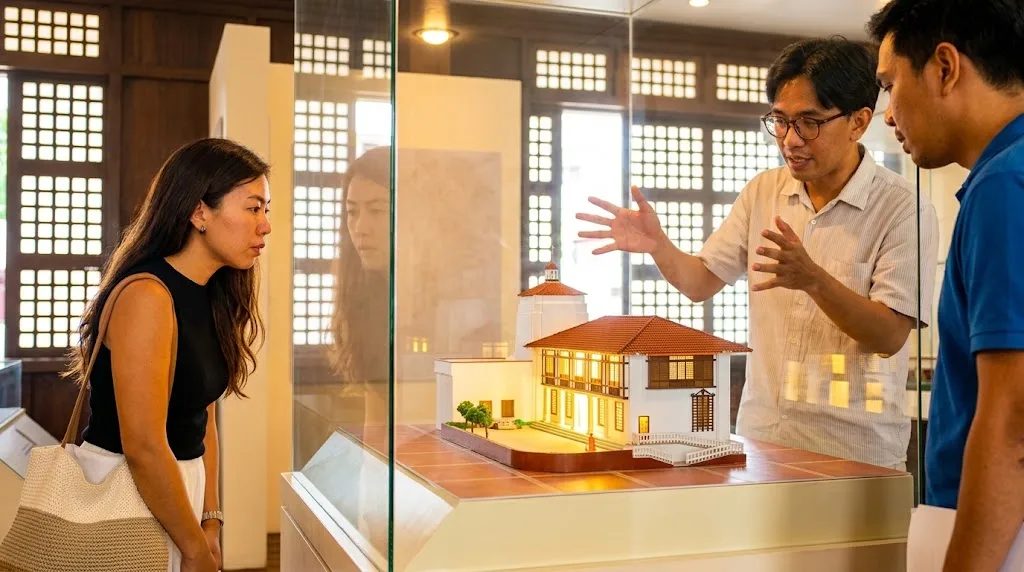
Dumaguete is a city known not only for its welcoming atmosphere but also for its deep connection to literature, culture, and creative expression. This side of the city was recently highlighted as participants of Project Lakbay (Learning Actively through Knowledge-Based Appreciation for Youth) explored Dumaguete through a cultural and literary experience. The immersion camp, organized by the Edu-Connect Southeast Asia Association, Bayanihan Lab Network, and Estorya Collective, brought together participants from Taiwan and local government units across the Philippines. The program focused on global sustainability and community development while giving participants an opportunity to discover the cultural stories of the communities they visited.
A Literary Journey Through Dumaguete
As part of the experience, Dumaguete UNESCO Creative City of Literature focal point Ian Rosales Casocot and writer Renz Torres guided the participants on a literary tour of the city.
The tour offered a different way of experiencing Dumaguete. Instead of simply visiting places, participants were introduced to the stories, writers, and creative works that contribute to the city's identity as a UNESCO Creative City of Literature.
Stories Found Inside the Museum
The National Museum of the Philippines – Dumaguete became one of the highlights of the visit, where the participants experienced a special reading of In the Foothills of Talinis by F. Jordan Carnice. Carnice, a Museum Researcher II and three-time Nick Joaquin Literary Awards Poet of the Year, brought literature into the museum setting through the reading. The experience was followed by a tour of the museum's galleries and temporary exhibitions, allowing the visitors to explore Dumaguete's cultural heritage alongside its literary traditions.
A City That Continues to Inspire
Experiences like Project Lakbay show how Dumaguete's cultural identity extends beyond its familiar tourist attractions. Its museums, writers, literary spaces, and creative communities contribute to a city where stories remain an important part of everyday life. For visitors, discovering Dumaguete can therefore mean more than seeing its landmarks. It can also mean listening to the voices of its writers, exploring its cultural spaces, and understanding the stories that have shaped the city. From a poem inspired by Talinis to conversations inside a museum, Dumaguete continues to demonstrate why its creative heritage deserves to be shared.
