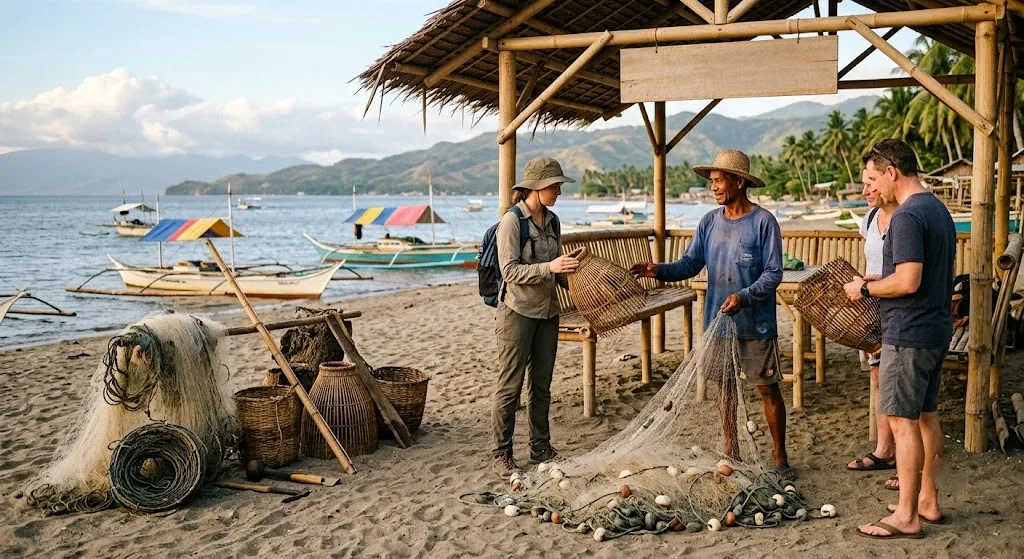
Negros Oriental is a province where coastal communities maintain strong connections with fishing, agriculture, and natural resources. Alongside larger tourism attractions, small-scale fishing practices provide visitors with opportunities to understand the everyday traditions that shape local communities. Among these practices is the creation of handmade fishing lures, which reflects practical knowledge, creativity, and craftsmanship developed within fishing communities. Although often overlooked as a tourism resource, handmade fishing lures can contribute to the preservation of local skills and the development of authentic cultural and maritime tourism in Negros Oriental.
Understanding Handmade Fishing Lures
Handmade fishing lures are fishing tools or bait devices created manually using locally available or accessible materials. Depending on the fishing method and target species, artisans or fishers may use materials such as wood, fibers, metal, shells, feathers, recycled objects, or other suitable materials. The design of each lure reflects practical knowledge about local waters, fish behavior, and fishing techniques.
Preserving Traditional Fishing Knowledge
Fishing knowledge is often transferred from experienced fishers to younger generations through observation and hands-on practice. Creating fishing lures requires an understanding of how different shapes, movements, colors, and materials can attract fish. Preserving these techniques helps maintain valuable maritime knowledge within coastal communities.
Showcasing Local Craftsmanship
Handmade fishing lures demonstrate that craftsmanship is not limited to decorative arts. Practical objects used in everyday livelihoods can also represent creativity and technical skill. Each lure may involve shaping, cutting, tying, painting, polishing, or assembling materials according to the needs of the fisher.