


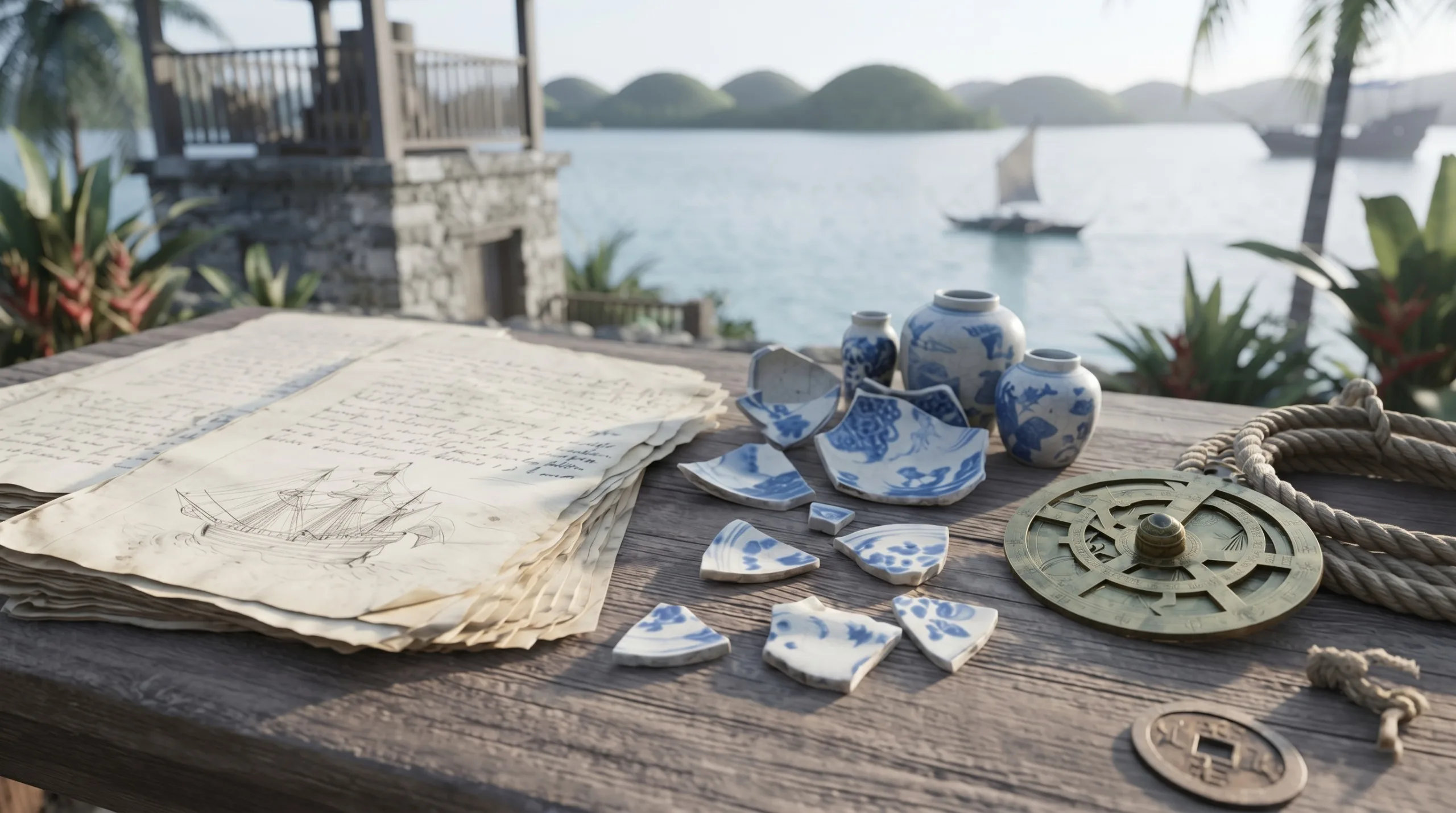
Tracing Trade Through Historical Documents
BOHOL - Bohol’s coastal location has long connected its communities to the movement of people, goods, and ideas across the Central Visayas. Historic maritime records, including shipping registers, port documents, maps, and travel accounts, can help researchers understand how these connections developed. Such materials may contain information about vessels, destinations, cargoes, and commercial activities that linked Bohol with neighboring islands. When studied alongside local histories and surviving records, these documents can provide a clearer picture of how coastal communities participated in regional exchange.
Understanding the Role of Coastal Towns
Towns along Bohol’s shoreline developed within a wider maritime environment where fishing, transport, trade, and inter-island travel contributed to community life. Historical records can help explain how ports and landing places connected residents with markets beyond their immediate surroundings. Tagbilaran, for example, became an important center for administration and commerce, while other coastal towns maintained their own connections through fishing, local production, and sea travel. Examining these places through historical documents can help residents appreciate how the island’s economy and settlement patterns evolved over time, while recognizing that individual trading routes must be supported by specific historical evidence.
Preserving Maritime Heritage for Future Generations
Maritime history becomes more accessible when documents are preserved, catalogued, and interpreted alongside photographs, family papers, oral histories, and museum collections. Institutions such as the National Archives of the Philippines and the National Museum of the Philippines can serve as starting points for people interested in historical documents and cultural heritage. Local researchers and families may also hold records that help explain the experiences of merchants, seafarers, fishers, and coastal residents. By protecting these materials and connecting them with the history of Bohol’s towns, communities can preserve a richer understanding of the island’s relationship with the sea and its place within the wider history of Philippine trade.
