


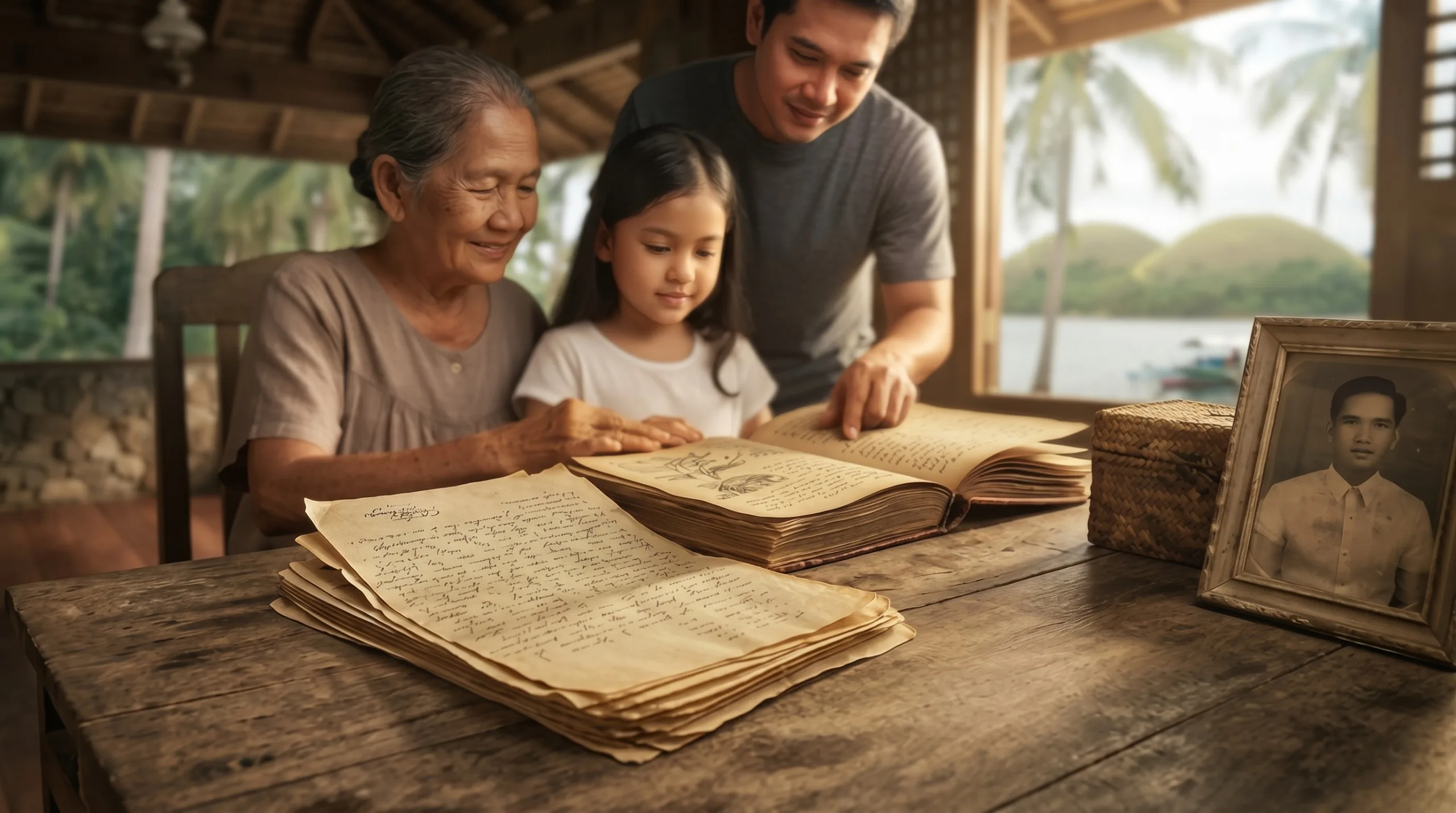
Old Documents Can Tell Stories Beyond the Family
BOHOL - A faded photograph, handwritten letter, baptismal certificate, or old land document can reveal details about Bohol’s past that may not appear in textbooks. Family collections often preserve information about ancestors, occupations, traditional celebrations, migration between municipalities, and the development of neighborhoods over time. In communities such as Tagbilaran City, older records may help families understand how relatives lived, worked, traveled, and maintained connections with other parts of the province. When several families share their photographs and memories, these personal accounts can contribute to a broader picture of local history. Preserving such materials helps ensure that everyday experiences, not only major historical events, remain part of Bohol’s collective memory.
Connecting Personal Memories With Historical Records
Family documents become more valuable when their details can be compared with other historical sources. Old photographs may identify buildings that have changed, letters may mention community events, and property records may help explain how a neighborhood developed. The National Archives of the Philippines maintains historical documents, including civil records, notarial records, maps, plans, and other materials that can support genealogical and historical research. Its online Erección de los Pueblos collection also provides access to catalog information about the historical formation of municipalities, barrios, and parishes across the country. These resources can help Boholano families investigate their heritage while checking names, dates, locations, and other details against documentary evidence. Comparing sources carefully is important because handwritten records may contain incomplete information, spelling variations, or details remembered differently across generations.
Simple Ways to Protect Family Archives
Preserving family history does not require a large collection or a professional archive. Families can begin by organizing photographs, identifying the people and locations shown, recording approximate dates, and writing down stories shared by older relatives. Paper documents should be kept in a cool, dry location away from direct sunlight, moisture, pests, and unnecessary handling. Digitizing important materials can provide an additional copy, although the original documents should still be protected. Families can also consider sharing selected records with local historians, schools, cultural organizations, or museums when appropriate and with the owners’ permission. The National Museum of the Philippines–Bohol Area Museum in Tagbilaran City provides a local example of how historical research and documentation can support the preservation of built heritage. By safeguarding family records today, Boholanos can help future generations understand their roots and appreciate the personal stories that form part of the province’s wider history.
