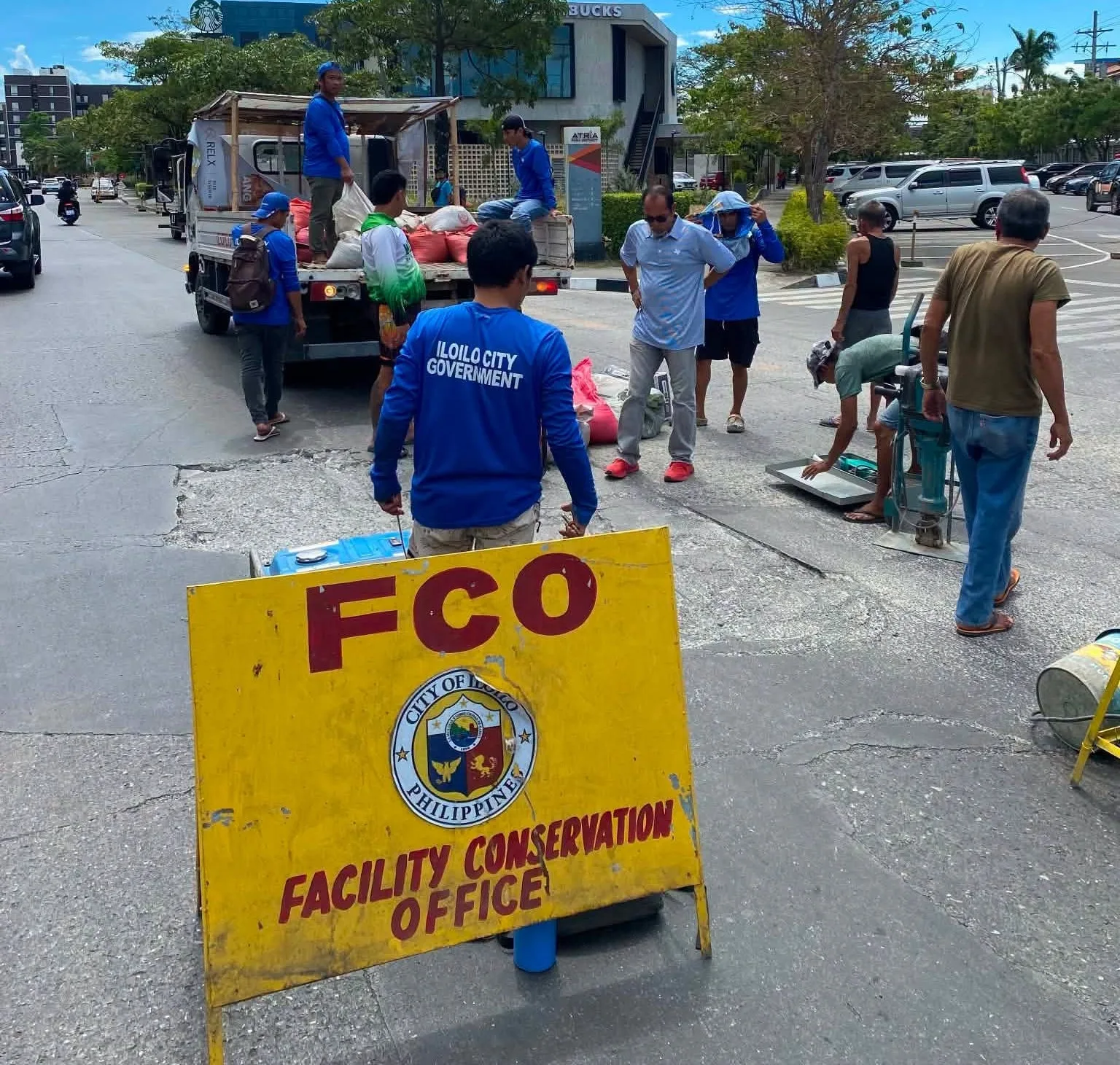
ILOILO CITY — The Office of the Facility Conservation Officer (FCO) has deployed maintenance crews across Iloilo City to repair roadway drainage and clear clogged waterways, ensuring the safety of workers and residents alike. The ongoing operations protect vital infrastructure while sustaining the livelihoods tied to the city’s fishing port and local businesses.
Field Teams Tackle Critical Drainage Sites
FCO personnel recently repaired a fractured drainage system at Barangay San Rafael in Mandurriao, a key intervention to prevent street flooding that disrupts commutes and local commerce. Workers replaced broken concrete sections and realigned channels to ensure rainwater flows smoothly into main canals.
At the Fishing Port Complex, crews conducted heavy declogging to remove sediment and garbage that had accumulated in the drainage network. Clearing these blockages safeguards the port’s operations, where hundreds of workers depend on unimpeded access to landing sites and cold storage facilities.
Simultaneously, declogging operations in Zone 5, Barangay Nabitasan in La Paz targeted a topographically low area prone to water retention. The work reduces the risk of stagnant water that can halt economic activity and damage small enterprises in the neighborhood.
Workforce Effort Protects Economic Flow
Every drainage channel cleared and every roadway repaired directly supports the city’s economic rhythm. Street vendors, delivery riders, and public utility drivers all rely on passable roads and flood‑free routes to earn their daily income. The FCO’s maintenance work ensures these essential workers face fewer disruptions.
The fishing port serves as a commercial lifeline, supplying seafood to markets across the city. By preventing flooding at the port complex, the FCO helps preserve the jobs of fishmongers, truckers, and ice plant employees whose earnings depend on a functioning facility.
Mayor Raisa Treñas emphasized that these infrastructure efforts are inseparable from the city’s commitment to protecting livelihoods. She stressed that government maintenance translates directly into economic resilience for the families who depend on safe, accessible streets and operational public facilities.
Civic Cooperation as a Job Multiplier
Mayor Treñas called on residents to practice proper waste disposal, noting that garbage thrown into canals quickly undermines the FCO’s work. Blocked drains force crews to repeat expensive cleaning operations, diverting public funds and labor away from other productive maintenance tasks.
When citizens dispose of trash responsibly, FCO personnel can focus their skills on preventive repairs and infrastructure upgrades rather than emergency declogging. This shift in labor deployment improves overall productivity and extends the lifespan of drainage systems, reducing long‑term costs.
The city views every Ilonggo as a partner in maintaining a clean, flood‑resilient environment. By aligning individual behavior with the efforts of maintenance workers, the entire community contributes to safeguarding employment and keeping the city’s economic arteries open.
Linking to the Broader Anti‑Flood Campaign
These localized FCO operations complement the city’s larger flood mitigation program, Oplan Kontra Baha, which previously cleared major waterways like the Jaro River. The combination of large‑scale river clearing and barangay‑level drainage repairs forms a layered defense against extreme weather.
This integrated strategy ensures that small neighborhood channels remain functional while main water arteries are kept free of obstructions. The coordinated effort protects business districts, residential areas, and critical infrastructure from the kind of flooding that interrupts daily wage earners and large employers alike.