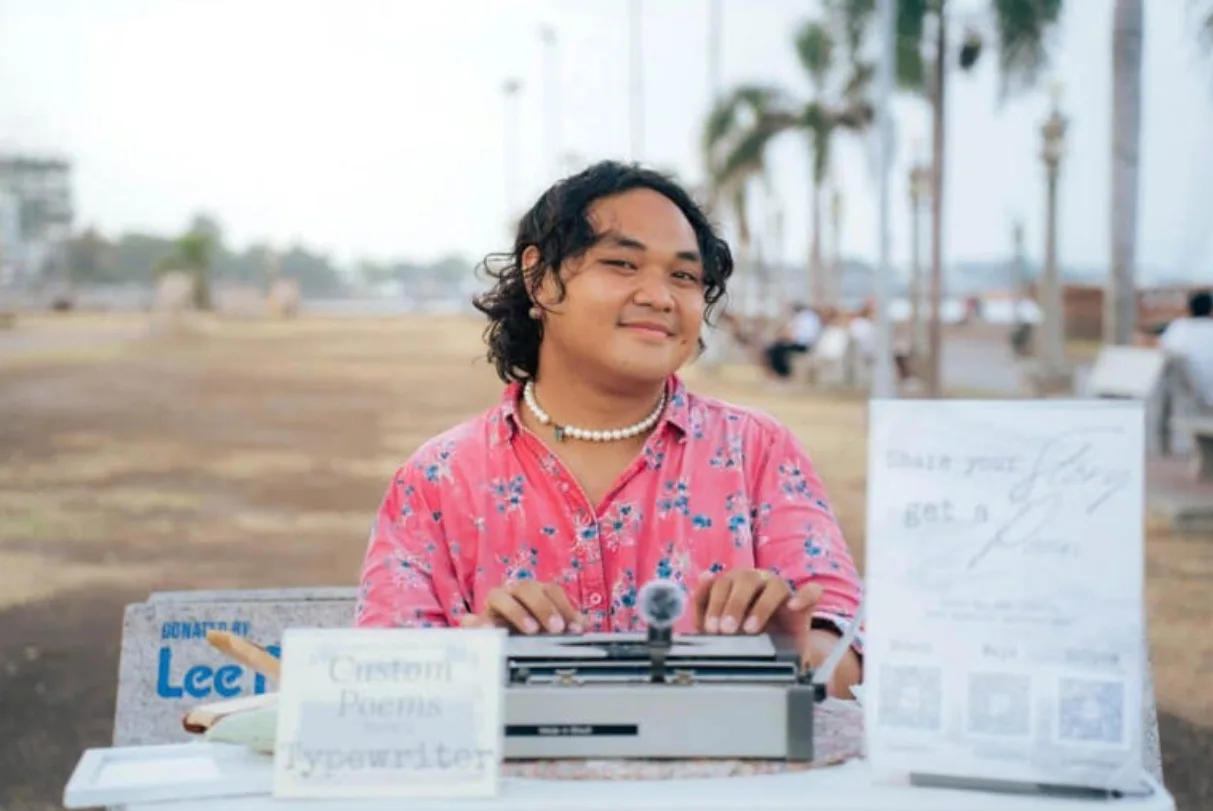
In a city known for its literary culture, one young poet is giving strangers a unique way to turn their personal experiences into art. In Dumaguete City, poet Jecho Adrian Ponce sits behind a typewriter in public spaces, inviting passersby to share a story, memory, feeling, or idea. In just a few minutes, he transforms what he hears into a poem written specifically for that person. There are no drafts, delete keys, or second attempts. Once the keys begin clicking, the poem takes shape directly on the page.
A Typewriter, a Story, and a Blank Page
Jecho's setup may look simple: a typewriter, paper, and a person sitting across from him.
But what happens at the table is more personal. Rather than asking strangers to provide a polished idea or a particular poem topic, he listens to whatever they choose to share. Their stories become the starting point for his writing. Jecho explained that he first connects with the person before turning what they say into images and figurative language. The result is a poem that belongs to a specific moment and a specific stranger.
Poetry Written on the Spot
One of the most distinctive parts of Jecho's craft is its immediacy. He writes each poem on the spot, meaning there is no opportunity to go back and revise a line once it has been typed. Every word has to come from the conversation and his interpretation of the person's story in that moment. The practice began in September 2024, when Jecho borrowed a typewriter for his first café session. Three months later, he purchased his own machine and continued developing the concept through pop-ups and videos that documented his one-of-a-kind poems. Since then, sidewalks, cafés, campuses, and other public spaces have become places where strangers can sit down and leave with something written especially for them.
From Childhood Memories to Difficult Stories
Not every story brought to Jecho is lighthearted.
People have approached him with experiences involving grief, uncertainty, bullying, family struggles, and difficult decisions. Others simply want to preserve a childhood memory or turn something meaningful in their lives into a poem. One of the things that makes his work distinctive is that the person does not necessarily need to know what kind of poem they want beforehand. They only need a story. From there, Jecho listens and creates.