


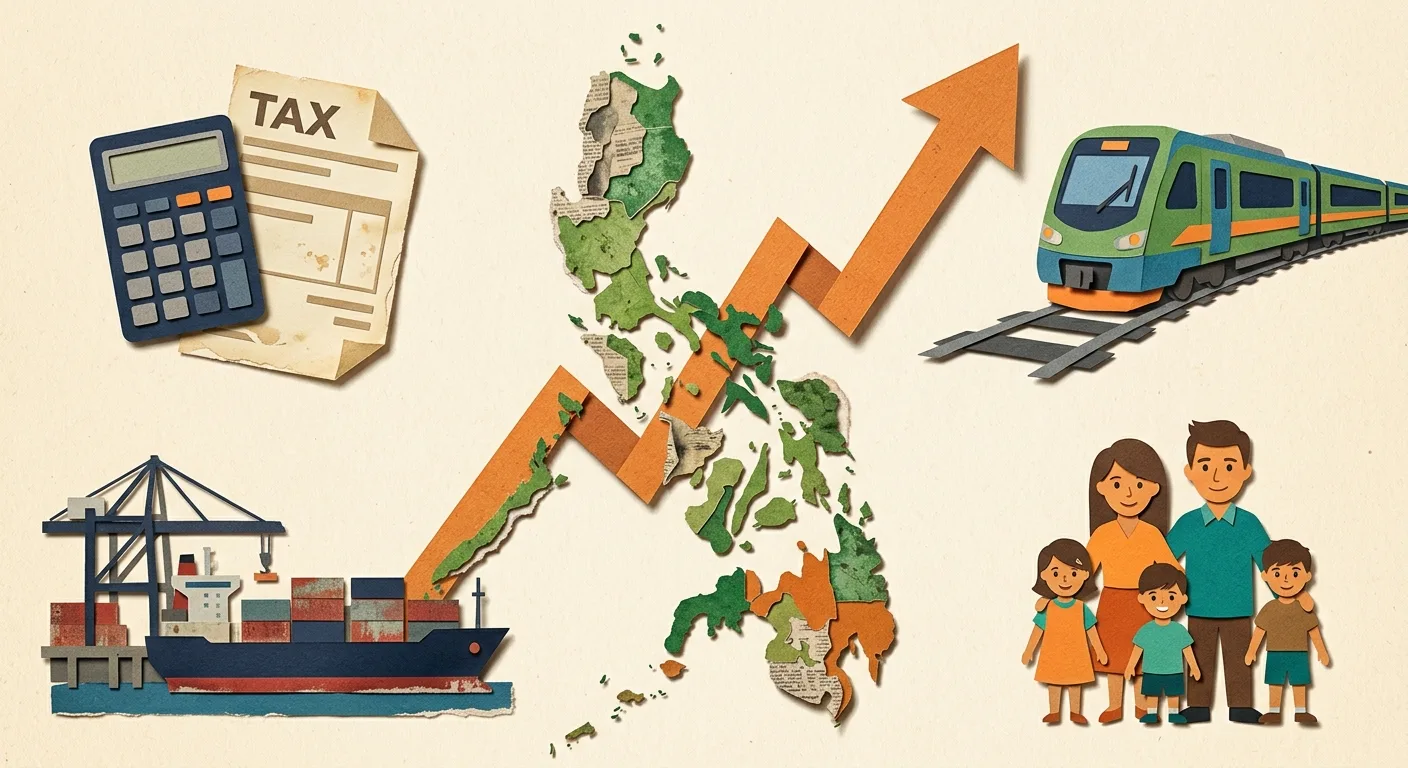
PHILIPPINES — The national government collected ₱2.87 trillion in revenues from January to July 2026, a 5.05 percent increase from the ₱2.73 trillion recorded in the same period last year. But beyond the figures, the real story is how these funds are reaching Filipino homes, schools, and communities.
Revenue Collections Show Steady Growth
Tax revenues accounted for the bulk of collections at ₱2.59 trillion, posting a 5.66 percent year-on-year increase. The Bureau of Internal Revenue contributed ₱1.99 trillion, up 5.31 percent from ₱1.89 trillion, driven by improved taxpayer services that supported compliance. The Bureau of Customs also posted strong growth, with collections rising 7.25 percent to ₱583.4 billion.
The BTr attributed the sustained collection performance to improved customs procedures, intensified border protection measures, and digital transformation initiatives. Closer collaboration with stakeholders also played a key role in boosting revenues. Non-tax revenues amounted to ₱276.1 billion for the seven-month period.
Where the Money Goes
Total expenditures from January to July reached ₱3.76 trillion, exceeding the ₱3.52 trillion recorded during the same period last year by 7.02 percent. In July alone, disbursements rose to ₱588.6 billion, or 19.82 percent faster than the ₱491.2 billion spent a year earlier.
The spending expansion was largely driven by social assistance programs under the Unified Package for Livelihood, Industry, Food, and Transport (UPLIFT) framework. These programs provide direct support to families affected by the Middle East conflict and rising prices. Disbursements for the Revised Armed Forces of the Philippines Modernization Program and foreign-assisted rail transport projects also contributed significantly.
What This Means for You
The higher revenue collections translate into more funding for programs that touch daily life. UPLIFT social assistance helps families cope with economic uncertainty by providing food, livelihood support, and transport assistance. These are not abstract budget lines—they are cash aid, food subsidies, and employment programs that keep households afloat during tough times.
Defense modernization strengthens national security, ensuring that communities remain safe and protected. Rail transport projects promise shorter commutes, less traffic, and better connectivity for workers and students. Every peso collected is meant to return to the people in the form of safer streets, faster trains, and accessible social services.
Faster, Easier Government Services
Improved BIR services mean quicker processing for taxpayers and fewer bureaucratic hurdles. The Bureau's digital transformation allows individuals and businesses to pay taxes online, reducing the time spent in long queues. For small business owners, this means more time running their enterprises and less time dealing with paperwork.
The BOC's modernized procedures reduce delays at ports and lower the risk of corruption. Goods move faster through customs, which can lead to more stable prices for imported products. These improvements may seem technical, but they ultimately make everyday transactions smoother for ordinary Filipinos.
Building a Stronger Foundation
The government remains within its fiscal targets, with a full-year deficit ceiling of ₱1.658 trillion, equivalent to 5.4 percent of GDP. This framework ensures that spending is managed responsibly even as programs expand. The revenue growth demonstrates the government's capacity to fund critical initiatives despite global economic headwinds.
The challenge ahead lies in maintaining this momentum while ensuring that spending continues to deliver measurable benefits. For Filipino families, the promise is simple: higher collections should mean better schools, improved healthcare, and more opportunities for livelihood. The numbers are the foundation; the impact is what truly matters.
