


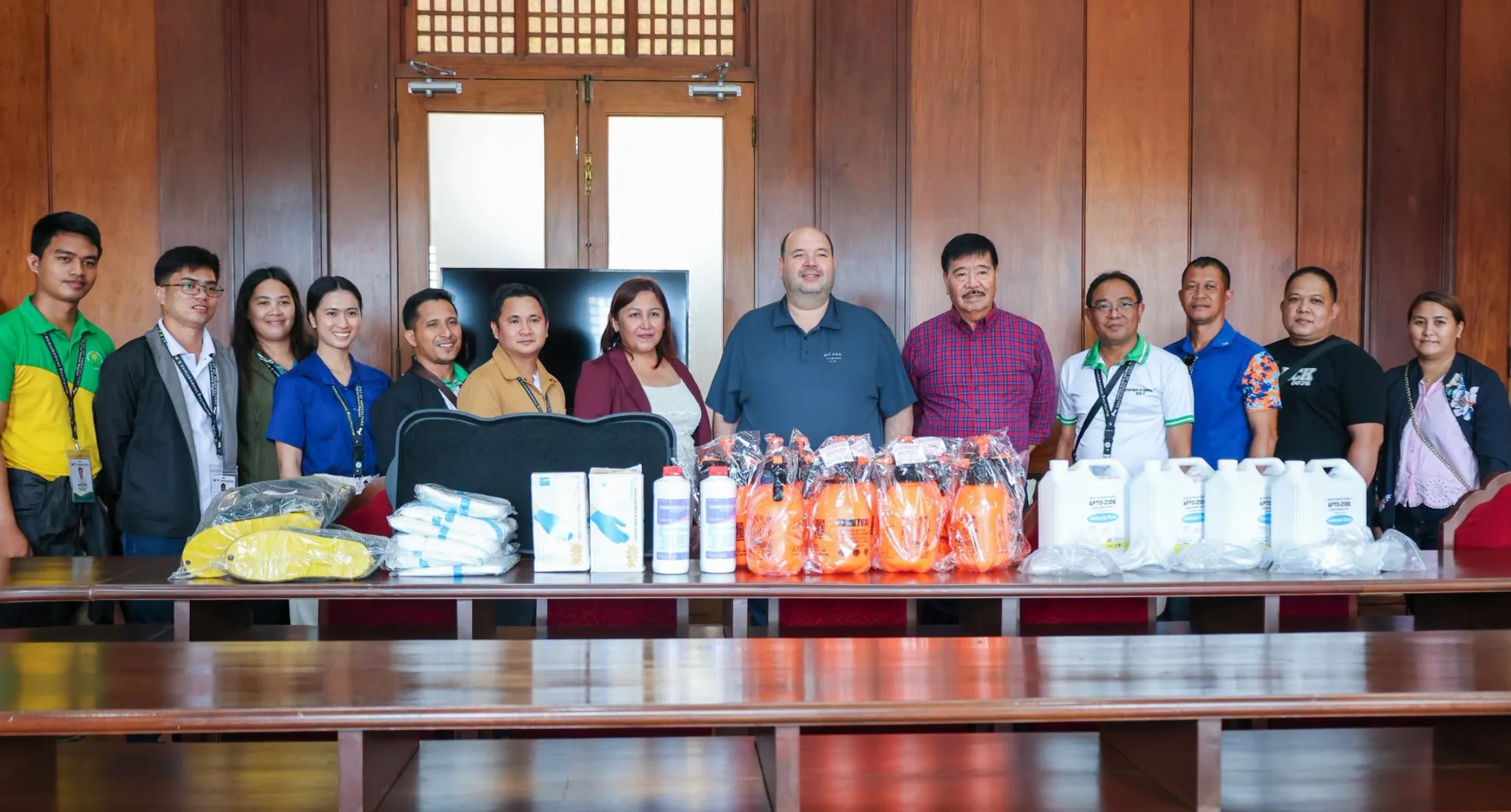
The fight against African Swine Fever (ASF) continues in Negros Oriental as the Department of Agriculture–Negros Island Region (DA-NIR) provided disinfectants and Personal Protective Equipment (PPE) to members of the Negros Oriental Hog Raisers Association (NOHRA). The turnover was held on September 10, 2026, at the Office of the Provincial Governor at the Provincial Capitol in Dumaguete City, bringing together provincial officials, agriculture representatives, and local hog raisers.
Supporting Hog Raisers Through Stronger Biosecurity
The assistance is intended to help hog raisers strengthen preventive measures against ASF and reduce the possibility of transmission among livestock. The government has continued to emphasize biosecurity as one of the most important tools in protecting the country's swine industry. ASF does not infect humans, but it can be highly infectious among pigs and can cause significant losses for farmers and communities dependent on hog production.
The disinfectants and PPE provided through the turnover give local hog raisers additional resources for maintaining cleaner and safer farm environments.
A Partnership Between Government and Hog Raisers
Present during the activity were Governor Manuel “Chaco” L. Sagarbarria, Board Member Woodrow S. Maquiling Sr., chairperson of the Sangguniang Panlalawigan Committee on Agriculture, Agricultural Programs Coordinating Officer Bernard Limbagaz, and members of NOHRA. The activity highlights how government agencies and agricultural organizations can work together to protect local livelihoods. For many hog raisers, preventing disease is not only about protecting animals but also about protecting the income and food-production systems connected to their farms.
Why Biosecurity Matters in the Swine Industry
ASF prevention involves more than responding after cases are detected. Regular cleaning and disinfection, controlling farm access, practicing proper hygiene, and monitoring animal health are among the measures recommended by agricultural authorities. The Department of Agriculture has previously stressed that farms should maintain appropriate biosecurity practices and promptly report unusual animal deaths or signs of disease to veterinary authorities. These measures become particularly important as the country continues working to rebuild its swine industry following the impact of ASF. The DA reported in September 2026 that fears of another outbreak have also influenced hog-raising and pork-market decisions.
