


Despite a challenging economic climate defined by the Middle East crisis and domestic uncertainty, the Philippine real estate sector has demonstrated remarkable resilience halfway through 2026. According to the mid-year report by Lobien Realty Group (LRG), the sector achieved a 6.8 percent year-on-year growth during the first quarter, firmly establishing real estate as the country’s third-highest-growth industry. This performance indicates that the fundamental demand for property remains robust even as the broader economy navigates regional and global slowdowns.
Office Market Sustained by IT-BPM Growth
The office segment remains a cornerstone of the industry, with the Information Technology and Business Process Management (IT-BPM) sector consolidating its role as the primary occupier of prime space. IT-BPM firms increased their share of total leased space in Metro Manila from 45 percent to 52 percent in the first quarter of 2026. While office vacancy rates hover around 19 percent, the resilience of the market is reflected in the steady, marginal increase of average rents to P1,000 per square meter, suggesting that high-quality, strategically located developments continue to attract strong tenant interest.
The Rise of the Greater Manila Area
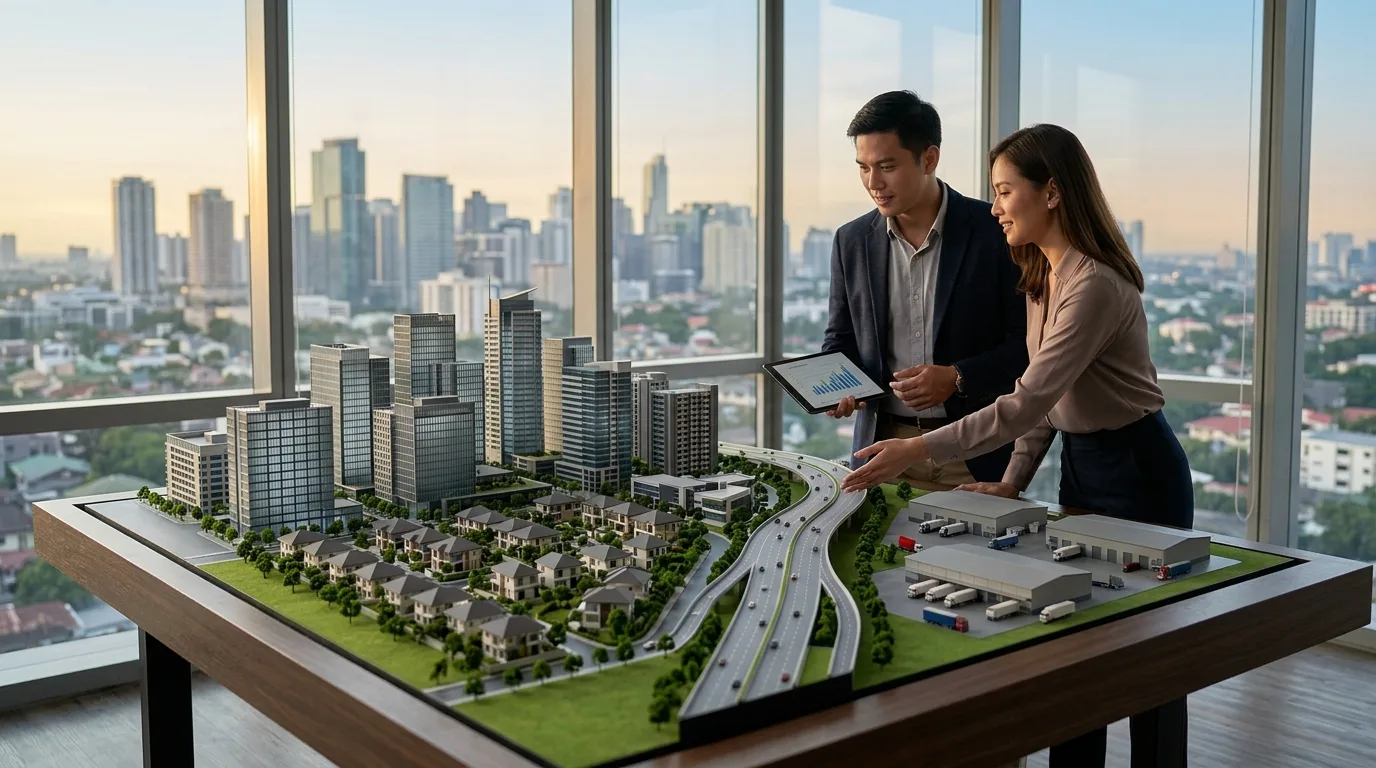
A significant shift in residential demand is currently reshaping the property landscape, with the "Balance Greater Manila Area" (GMA)—covering provinces like CALABARZON and Central Luzon—now outpacing the National Capital Region (NCR) in residential loan grants. Buyers are increasingly opting for horizontal house-and-lot communities, drawn by lower costs, the post-pandemic desire for larger living spaces, and the enhanced connectivity provided by new infrastructure projects like the Luzon Spine Expressway Network. This decentralization is further supported by the provincial expansion of logistics and warehouse investments, which are capitalizing on e-commerce growth and improved access to airports and ports.
Outlook for the Second Half of 2026
Looking ahead, industry experts remain cautiously optimistic, projecting that the real estate sector will perform near 2025 levels through the end of the year. While risks such as inflation and interest rate fluctuations persist, the stability of demand fundamentals—backed by sustained OFW remittances and the continued growth of the outsourcing industry—provides a solid foundation for stability. As developers continue to recalibrate their portfolios to address current inventory and focus on affordable to mid-market housing, the industry is well-positioned to catch the curveballs of the coming months and maintain its upward trajectory.
