
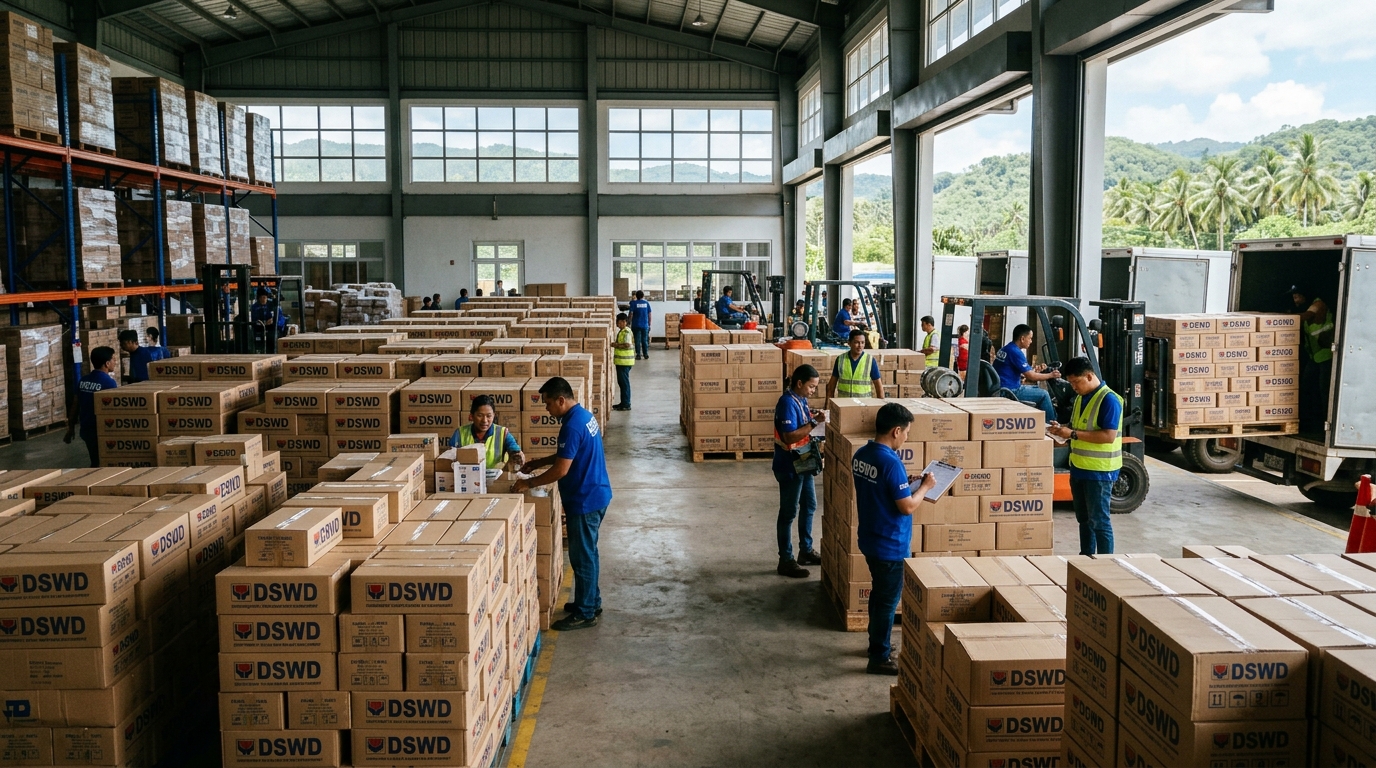
The political landscape of Palawan is currently dominated by a massive logistical operation led by the Department of Social Welfare and Development (DSWD)-MIMAROPA. In a proactive move aimed at strengthening the province's disaster resilience, government agencies have successfully prepositioned over 66,000 family food packs across various strategic hubs. This legislative and administrative focus on "Rapid Response" represents a shift from reactive relief to a sophisticated preparedness model that anticipates the challenges of the upcoming typhoon season
Strategic Distribution Across the Islands
the 66,983 family food packs FFPs ready for deployment, approximately 55,300 have been allocated to the 23 municipalities, while 11,683 are earmarked for Puerto Princesa City. Key tourist hubs like El Nido and Coron have received substantial shares 4,000 and 8,300 packs respectively to account for their high density of both residents and visitors. This granular distribution ensures that even the most remote island barangays have immediate access to life-sustaining supplies without waiting for sea-based transport from the capital. It is a political commitment to decentralized welfare that is being praised by local mayors.
A Multi-Agency Coordination Model
The success of this prepositioning effort relies on a tight-knit partnership between the DSWD and local government units LGUs. By utilizing municipal gymnasiums and regional warehouses as temporary storage hubs, the government is reducing the "bottleneck" effect that often hampers relief efforts in archipelago provinces. This coordination is being treated as a benchmark for other regions in the Philippines, showcasing how political will can translate into tangible safety nets. For the residents of Palawan, this logistical wall offers a sense of security as they enter the middle of the 2026 calendar.
Strengthening the Digital Response
Moving forward, the DSWD-MIMAROPA is integrating digital tracking systems to monitor the shelf-life and movement of these food packs in real time. This tech-driven approach to politics ensures transparency and accountability in the distribution of national resources. Local communities are being encouraged to participate in disaster drills that coincide with these prepositioning cycles, fostering a lifestyle of communal vigilance. This policy shift reflects a broader 2026 trend where the "politics of care" is being measured by the speed and accuracy of government service.