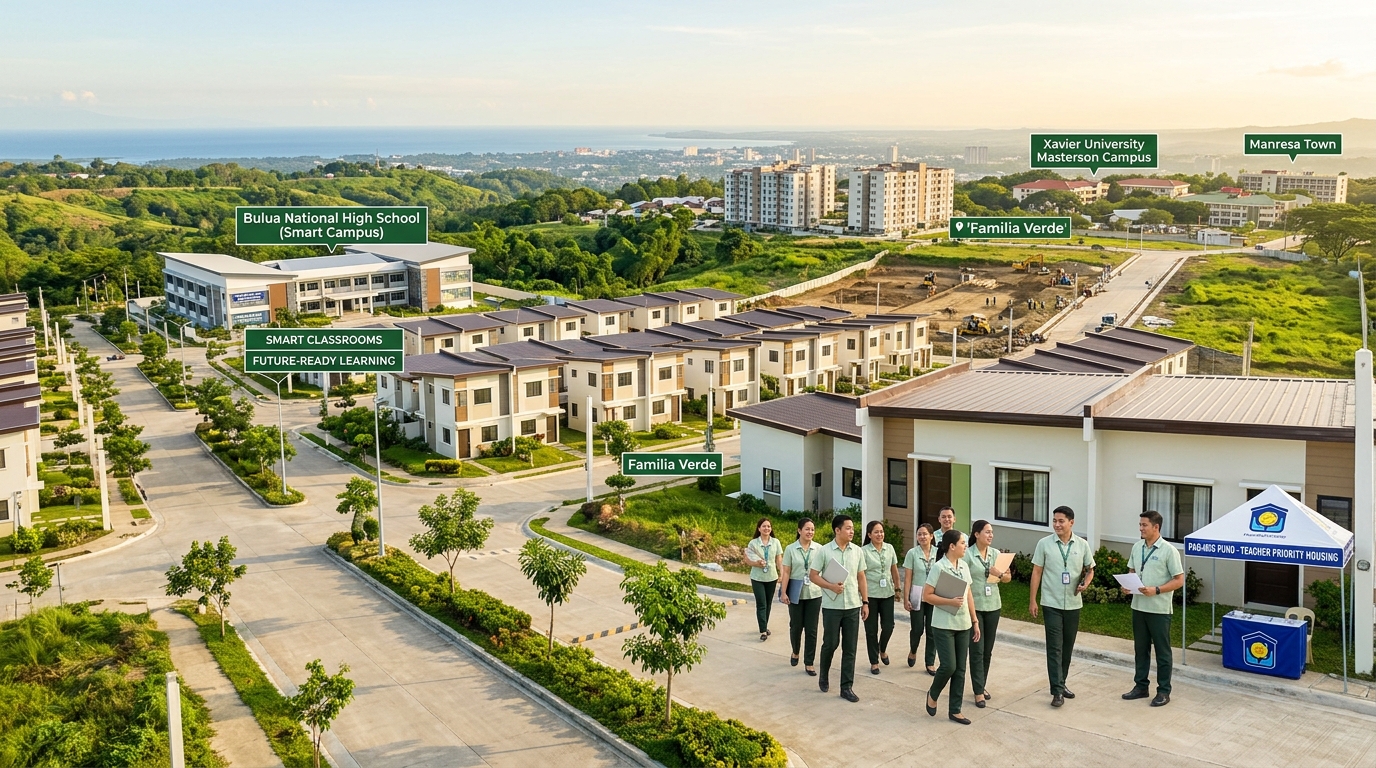
CAGAYAN DE ORO — The Department of Education’s recent promotion of over 1,200 public school teachers in Cagayan de Oro, coupled with an aggressive push to equip classrooms with laptops and smart televisions, is sending powerful ripple effects through the local real estate market. As thousands of educators gain increased financial capacity and the city races to modernize its learning environments, property developers, housing agencies, and young professionals are recalibrating their strategies to serve an emerging class of empowered, tech-savvy homeowners.
Teacher promotions unlock new purchasing power
The Schools Division of Cagayan de Oro confirmed that 1,200 teachers have been reclassified to higher salary grades, a move that raises their monthly compensation and bolsters long-term retirement benefits. This development arrives as the Department of Budget and Management pushes to create over 65,000 teaching and non-teaching positions nationwide, signaling a structural shift in how educators are compensated. For the property sector, the arithmetic is straightforward: hundreds of newly promoted teachers now hold the income documents and job stability that banks and developers require, transforming a demographic once sidelined by strict loan requirements into a bankable market segment.
DepEd and Pag-IBIG open priority housing lanes
To capitalize on this momentum, the DepEd and the Pag-IBIG Fund launched a nationwide partnership in late April 2026 that gives public school teachers and education personnel priority access to housing fairs, on-site loan counseling, and exclusive financing packages. Participating educators receive a Pag-IBIG Loan Value Card that accelerates credit evaluation at developer booths, while some properties are being offered at discounts of up to 45 percent. Although the inaugural fairs were held in Calamba, Laguna and Cebu City, DepEd Secretary Sonny Angara stressed that the program is designed to reach all regions, with shuttle services planned for high-turnout locations. The initiative arrives at a critical moment for Cagayan de Oro, where the backlog of socialized housing is estimated at 30,000 to 35,000 families and annual approvals cover only 10 to 15 percent of applicants.
Smart classrooms and subdivisions reshape Barangay Lumbia
The confluence of education spending and real estate development is most visible in Barangay Lumbia, a formerly quiet upland district that is emerging as Cagayan de Oro’s next residential frontier. On March 9, the 21st City Council approved the Development Permit for Familia Verde Phase 3, a 57,460-square-meter subdivision project by Pueblo de Oro Corporation containing 389 lots. The approval came shortly after the city turned over its first “smart” school building at Bulua National High School—a PHP76.4 million, four-story structure with 16 classrooms fitted with computer sets and multimedia devices. Mayor Rolando Uy, who chairs the Local School Board, framed the facility as a direct investment in youth preparedness, while councilors noted that new subdivisions in Lumbia are being reviewed for their proximity to such upgraded educational infrastructure.
Digital transformation drives demand for connected homes
On the technology front, the DepEd has earmarked PHP10.66 billion in its 2026 budget for 120,000 teacher laptops, 22,000 smart television packages, and 1,000 e-learning cart packages that come with hard drives and internet connectivity. In Cagayan de Oro, this national blueprint is already taking physical form. The first artificial intelligence laboratory in a Philippine public school was inaugurated at Dansolihon National High School in April 2026, with private tech firm Skunkworks training selected teachers on AI tools, drone operations, and digital literacy. Schools Division Superintendent Roy Angelo Gazo also disclosed that 231 new classrooms are being constructed in the city to ease a shortage of 600 units, with many of the structures incorporating smart technology. As every classroom becomes a node in a wider digital network, demand is climbing for residential units that offer reliable broadband, backup power, and home-office corners—features that developers are now marketing as standard inclusions rather than premium upgrades.
The university-town model accelerates Uptown growth
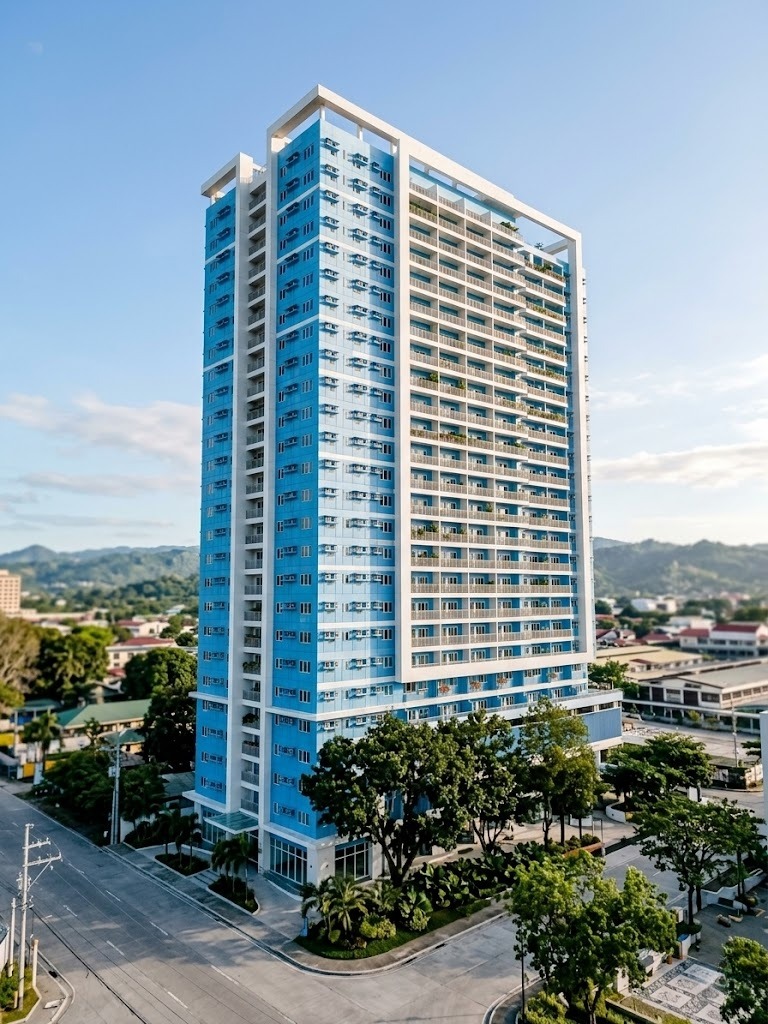
The arrival of the Manresa Town township and the Xavier University Masterson Campus of the Future—a 14.6-hectare mixed-use estate linked to a 21-hectare academic hub—is anchoring long-term investor confidence. Cebu Landmasters, Inc. (CLI) fully funded the PHP120-million Manresa Access Road, a two-kilometer thoroughfare that will connect Masterson Avenue to Balulang Road by the fourth quarter of 2027, easing travel between Uptown and Downtown Cagayan de Oro. CLI’s first residential tower in the township, One Manresa Place, generated PHP4 billion in sales within its first two days and now stands 99 percent sold. Colliers Philippines meanwhile reports that mid-income condominiums accounted for 97 percent of total take-up in the city in 2025, with house-and-lot prices rising an average of six percent per year. As promotions lift teachers’ spending power and smart classrooms multiply across barangays, the intersection of education reform and real estate expansion is set to define Cagayan de Oro’s urban landscape through the remainder of 2026 and beyond.