


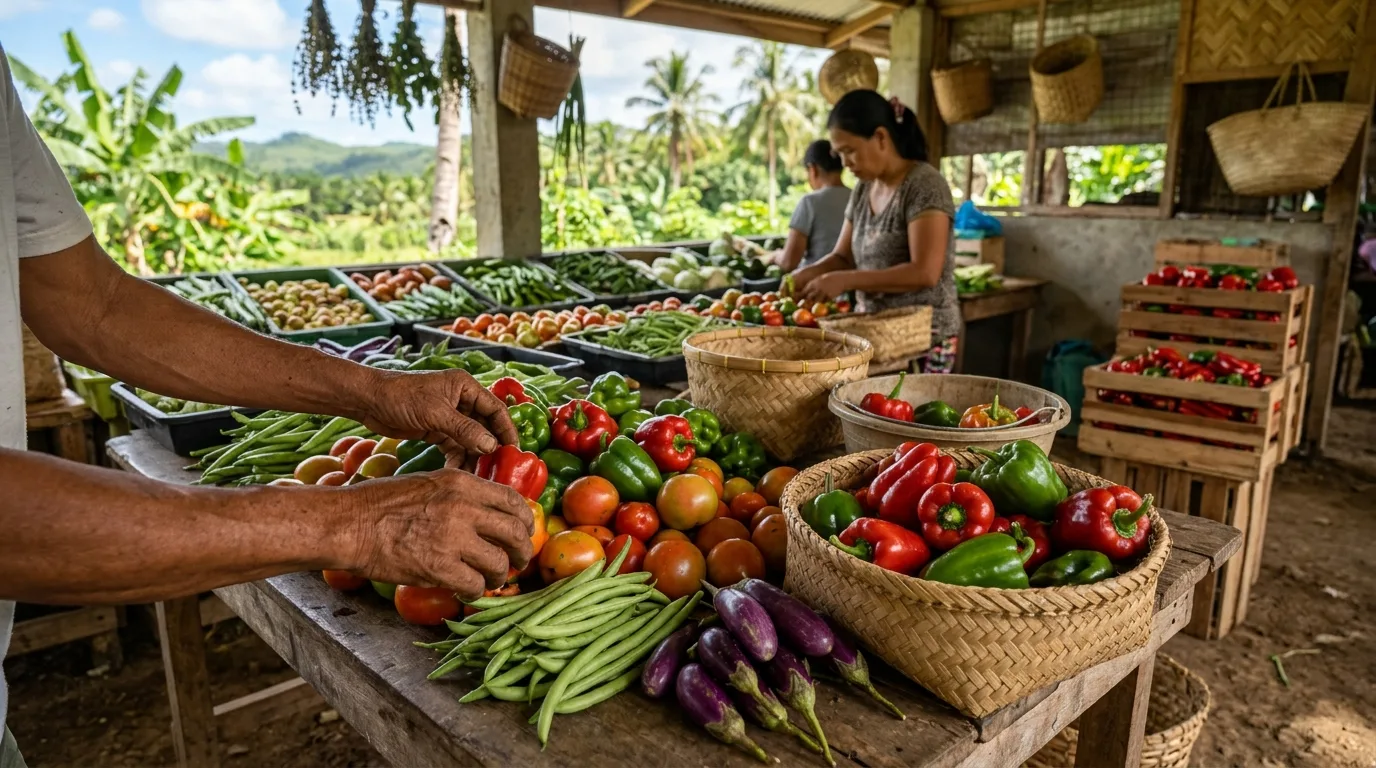
The Careful Process Behind Every Harvest
BOHOL - Sorting begins after crops are harvested and gathered for preparation. Depending on the type of produce, workers may separate items according to size, color, ripeness, freshness, and visible damage. Vegetables, fruits, root crops, and other agricultural products each have different handling requirements, making careful inspection an important part of the process. This work helps farmers identify which products are ready for immediate sale, which may need additional handling, and which should be separated to prevent damaged produce from affecting the rest of the harvest.
How Proper Sorting Helps Farmers and Buyers
Organized sorting makes agricultural products easier to package, transport, and sell. Buyers can identify produce that meets their preferred specifications, while farmers can group their harvest into different quality or size categories. Consistent grading may also help sellers establish clearer pricing arrangements and reduce confusion during transactions. When combined with proper cleaning, packaging, storage, and transportation, sorting can help minimize postharvest losses and preserve the quality of agricultural products as they move from farms to their destinations.
The People Supporting Bohol’s Food Supply
Behind the sorting process are farmers, family members, farm workers, traders, and other people who help prepare agricultural products for distribution. Their work supports the movement of local harvests toward public markets, community retailers, food establishments, and households. As Bohol continues to strengthen its agricultural sector, attention to postharvest practices can help improve product quality and reduce avoidable waste. Recognizing these activities also highlights that successful farming involves more than growing and harvesting crops; it includes the many careful tasks that make local food available to consumers.
