


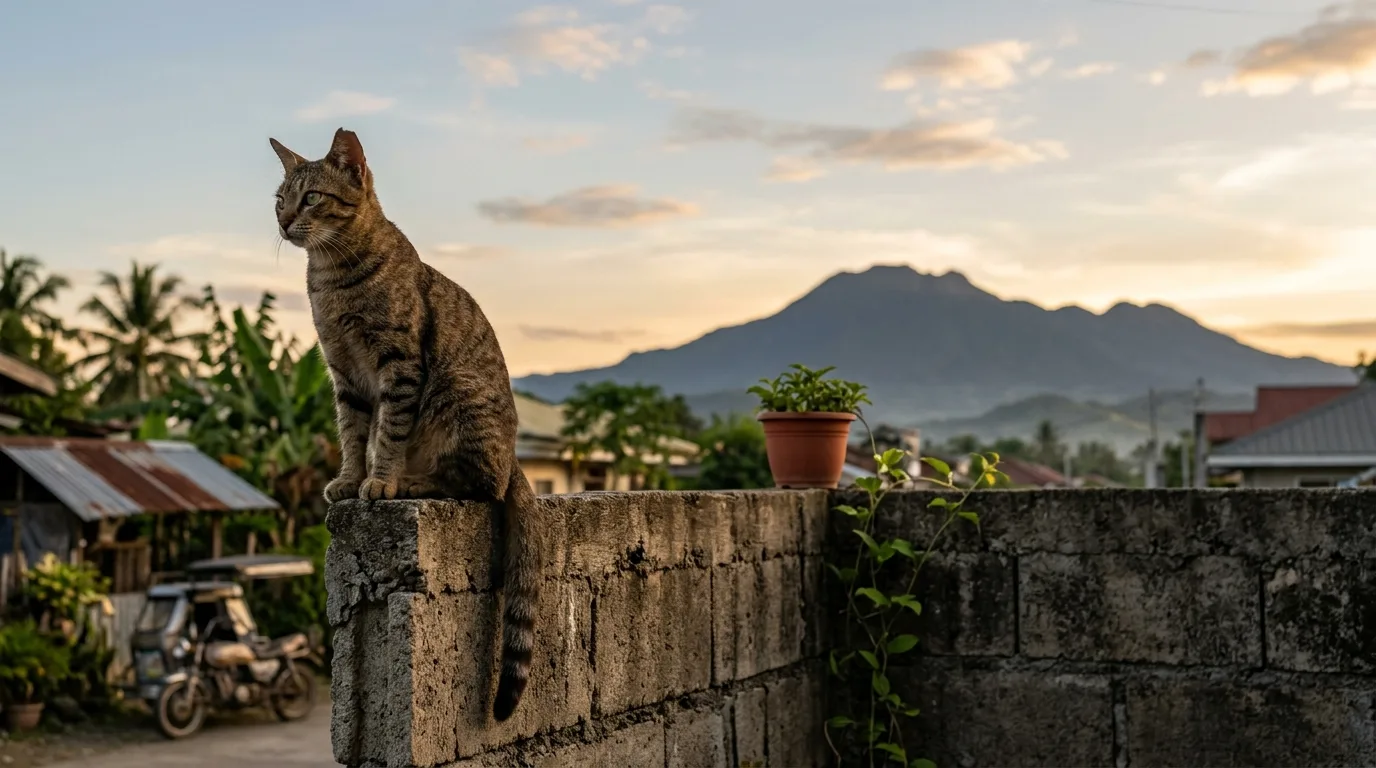
DAVAO — Every October 16, animal advocates worldwide observe Global Cat Day, a movement launched by Alley Cat Allies in 2001 to champion free-roaming felines. Across the Davao Region, the occasion highlights the resilience of community cats and the humane solutions that protect them.
A Familiar Presence Across the Region
Community cats, locally called pusang gala, are permanent fixtures in Davao's daily life. They lounge beneath fruit stands in Bajada, supervise wet markets in Agdao, and nap atop parked tricycles in Matina. Beyond the city, they thrive in agricultural and coastal towns across Davao del Sur, Davao Oriental, Davao del Norte, Davao de Oro, and Davao Occidental.
Many Dabawenyos leave bowls of leftover rice and fish for these feline neighbors. Sari-sari store owners and market vendors often name their regular visitors. Yet despite this casual affection, community cats occupy a precarious space—neither indoor pets nor wild animals, dependent on human areas while vulnerable to neglect.
The Daily Struggles on Davao's Streets
Life on the streets brings relentless challenges. Without intervention, cats multiply rapidly, with a single unspayed female capable of producing hundreds of descendants within years. Overcrowded colonies then compete for scarce food, leading to widespread malnutrition and disease.
Davao's tropical weather adds another threat. Intense downpours, sudden flooding, and summer heatwaves leave outdoor cats scrambling for dry shelter. Busy thoroughfares and territorial stray dogs pose constant physical dangers. Misconceptions and old superstitions sometimes trigger cruel responses from communities lacking education on humane management.
TNR and Kapon Offer Humane Solutions
For generations, catch-and-kill was the default response to overpopulation. Science has proven this method fails due to the vacuum effect: when cats are removed, neighboring felines move in to exploit remaining food, and populations rebound quickly.
Trap-Neuter-Return, locally called kapon, has emerged as the proven solution. Volunteers humanely trap cats, bring them to veterinarians or local government outreach clinics for spaying or neutering, and vaccinate them against rabies. After recovery, the cats return to their original territories.
Each cat receives an ear-tip—a millimeter-long snip on the left ear—marking them as sterilized and vaccinated. TNR halts kitten births and eliminates nuisance behaviors like yowling and spraying. Neutered cats become calmer, quieter, and healthier neighbors.
Local Heroes and Government Support
In Davao, organizations like Animal Rescue Rehabilitation and Fostering Davao, the Happy Animals Club, and independent volunteer networks have worked tirelessly to rescue and rehabilitate strays. The Davao City Veterinarian's Office regularly rolls out free castration and anti-rabies vaccination schedules.
These groups cannot succeed alone. They rely on community participation, donations, and volunteer time. Every sponsored sterilization or bag of cat food makes a tangible difference in the lives of the region's street cats.
How Dabawenyos Can Make a Difference
Individuals can take meaningful action without running a shelter. Establish consistent feeding routines with fresh water, and remove leftovers promptly to avoid pests. Support local rescues by donating or volunteering during clinic days.
Build simple weatherproof shelters using recycled plastic bins lined with old towels. Educate neighbors and barangay officials about TNR benefits. The Animal Welfare Act, as amended, criminalizes cruelty, so report abuse safely to authorities.
A Call for Compassion Under Mount Apo
Global Cat Day reminds us that compassion extends to the quiet, furry residents resting on concrete fences and padding across Mindanao alleyways. In a culture anchored in community solidarity, empathy for street neighbors reflects the best of humanity.
By choosing education over eradication and sterilization over cruelty, Davao can transform its neighborhoods into harmonious spaces where humans and community cats thrive together. This October 16, let us see the pusang gala not as inconveniences but as resilient survivors worthy of protection and kindness.
