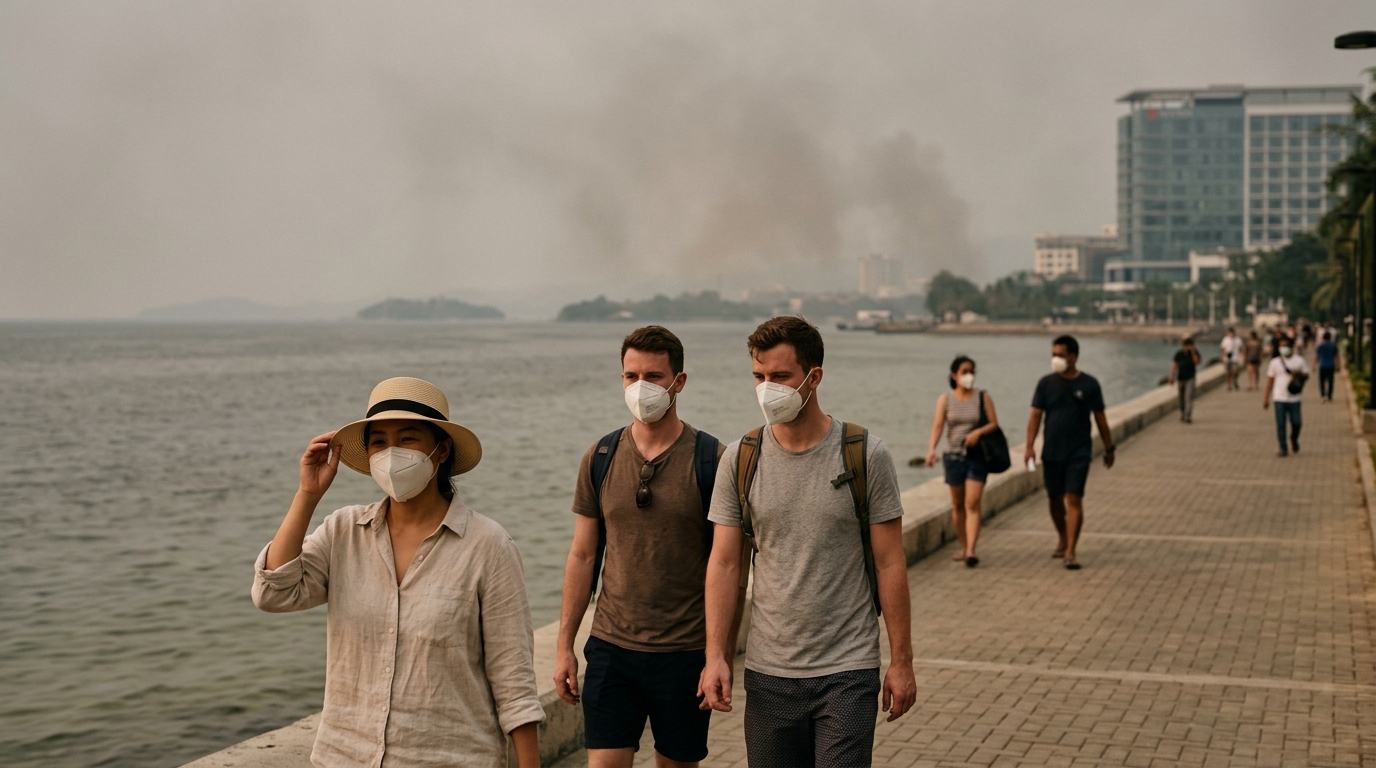
Travelers seeking the crystal-clear horizons of Cebu this weekend are facing a hazardous surprise as air quality has plummeted to unhealthy levels. On April 17, 2026, the Environmental Management Bureau (EMB) issued a warning after haze pushed Metro Cebu’s air quality into categories that are dangerous for "sensitive groups". Combined with a heat index that reached a blistering 34°C by Sunday afternoon, the city’s tourism sector is grappling with a sudden shift in visitor behavior as people retreat into air-conditioned malls and hotels.
The Toxic Mix of Haze and Humidity
The current environmental crisis in Metro Cebu is being driven by a combination of transboundary haze and a "temperature inversion" phenomenon. As of Sunday, April 19, 2026, the Mactan station recorded a heat index of 34°C, which reflects how the human body actually feels the temperature when humidity is accounted for. The Environmental Management Bureau Region 7 has deployed technical staff to monitor particulate matter levels, urging the public and tourists to wear protective masks or limit outdoor exposure. This atmospheric condition has significantly reduced visibility for island-hopping tours and mountain trekking, two staples of the local tourism economy.
Adapting the Tourism Itinerary
In response to the poor air quality, major resorts such as Crimson and Quest Hotel have pivoted their "Hello Summer" 2026 campaigns to focus on indoor amenities and spa services. Travelers are being advised to schedule essential outdoor activities before 10 a.m. or after 4 p.m. to avoid the peak heat and haze density. While standard beach lounging remains popular, many visitors are choosing "malling" as a primary recreational activity to escape the oppressive humidity. This shift has provided a temporary boost to the city’s large shopping complexes, which serve as climate-controlled refuges for thousands of Lenten travelers.
Long-Term Impact on Sustainable Branding
Local officials are concerned that recurring haze events could mar Cebu’s reputation as a "regenerative and values-driven" destination. The Department of Tourism (DOT) in Central Visayas has called on stakeholders to widen their offerings beyond beaches to include more forest wellness and upland experiences that might offer cleaner air. By investing in "Adopt-a-Continuous Ambient Air Quality Monitoring Stations," the region aims to provide more transparent data to future international travel buyers. Maintaining the "ABC" brand—Adventure, Beaches, and Culture—requires proactive management of these climate-induced shocks to ensure long-term tourism resilience.