


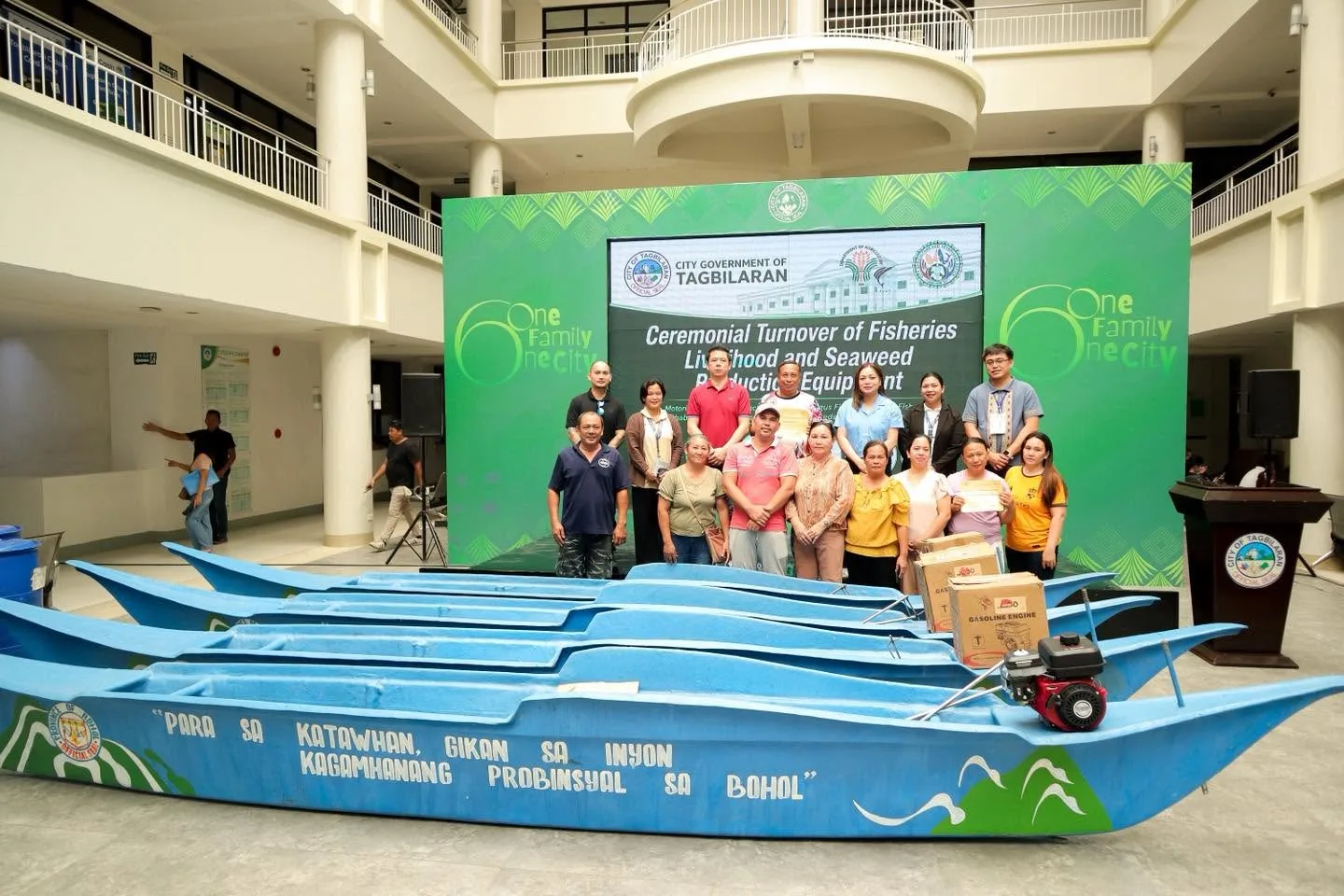
TAGBILARAN CITY, Bohol — Local fisherfolk and seaweed farmers received a major boost on July 15, 2026, as the city and provincial governments handed over fiberglass boats, marine engines, and seaweed farming equipment. The turnover ceremony at the City Hall Atrium marked a significant investment in coastal economic resilience.
A Ceremony of Hope at City Hall
Mayor Jane Yap led the distribution alongside the City Agriculture and Veterinary Office (CAVO), which vetted the beneficiaries to ensure the aid reached those who needed it most. The provincial government, under Governor Aris Aumentado, procured the heavy‑duty equipment. The event reflected a unified vision to lift coastal families out of poverty through direct, practical support.
The atmosphere inside the atrium was one of quiet gratitude. Fisherfolk leaders expressed their appreciation, noting that the new boats would replace aging wooden hulls that had become costly to maintain. For many, the ceremony was not just a handover but a recognition of their role in Bohol’s food security and local economy.
Modern Tools for Coastal Resilience
The fiberglass motorized bancas represent a significant upgrade for small‑scale fishers. Unlike traditional wooden boats, these vessels are lightweight, durable, and require far less maintenance. Paired with reliable marine engines, they allow fishing crews to reach viable grounds safely while reducing fuel costs over time.
The shift to fiberglass also addresses the environmental impact of boat building. With less demand for timber, coastal mangroves and forests are spared. CAVO will conduct follow‑up monitoring to ensure the boats are used responsibly and maintained properly, extending their lifespan and maximizing the return on the government’s investment.
A Dual‑Income Strategy
Alongside the boats, the beneficiaries received complete starter kits for seaweed farming. This deliberate pairing creates a dual‑income stream for coastal households. When fishing seasons are lean or weather conditions prevent trips to sea, families can rely on their seaweed harvests for steady earnings.
Seaweed farming has deep roots in Bohol, which is among the top producing provinces in Central Visayas. By integrating aquaculture with capture fisheries, the program insulates families from market fluctuations and climate shocks. The kits include raw materials and basic training, ensuring that even those new to seaweed cultivation can start productively.
Government Collaboration for Lasting Impact
The initiative demonstrates what aligned leadership can achieve. The provincial government funded the equipment, while CAVO managed beneficiary selection and will oversee post‑turnover support. This division of responsibilities ensures accountability and prevents the aid from becoming a one‑time giveaway.
Mayor Jane Yap emphasized that building economic resilience is a shared mission. She urged the recipients to maximize the opportunity and sustain the gains for future generations. The program is expected to expand to other coastal barangays as part of a broader push to modernize Bohol’s fisheries sector.
