


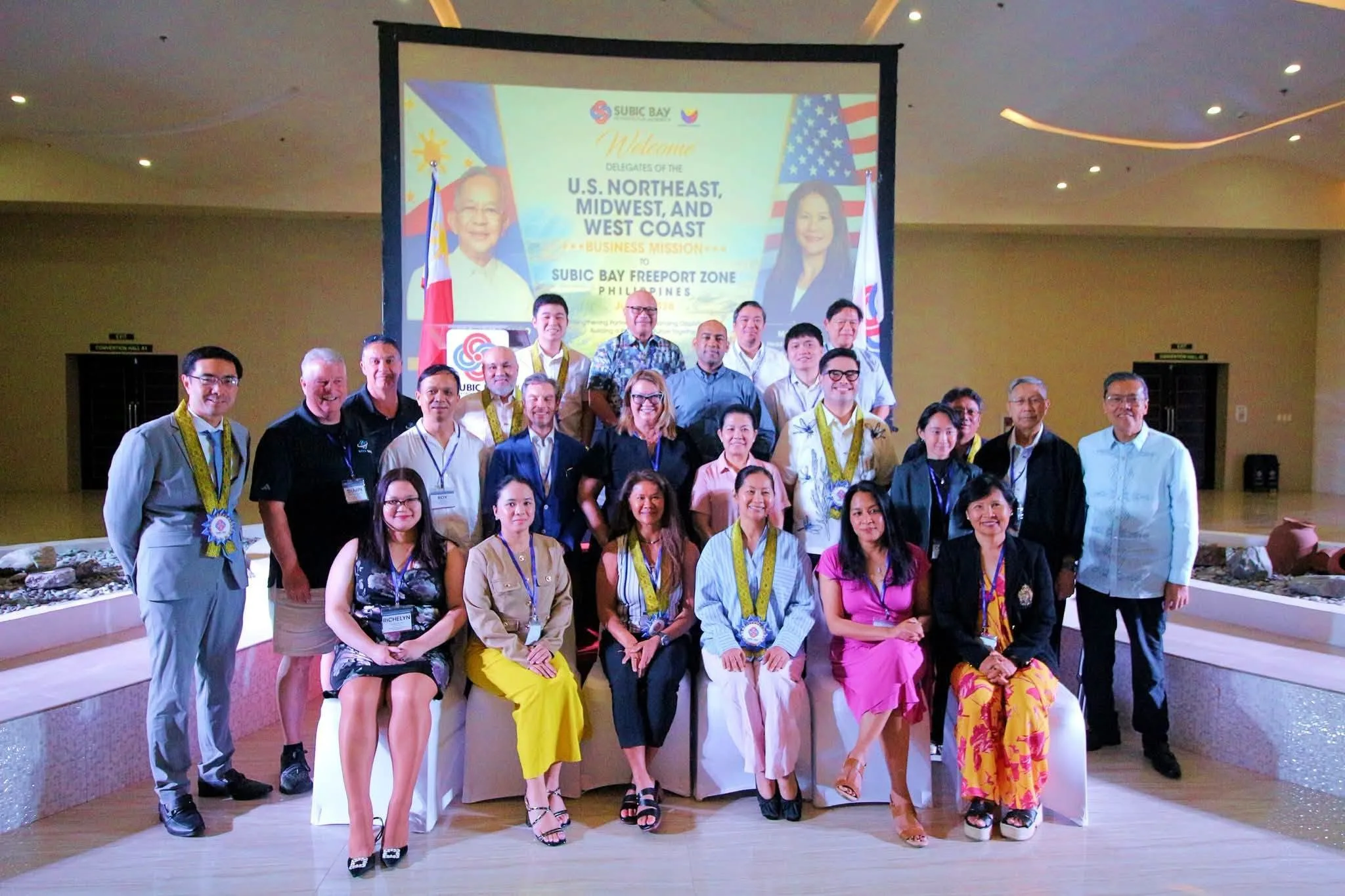
On July 8, 2026, the Subic Bay Metropolitan Authority (SBMA) hosted a delegation of American business leaders at the Subic Bay Freeport Zone, as part of a five-day trade mission aimed at strengthening economic ties between the United States and the Philippines . The delegation, composed of over 25 executives from major US investment firms, met with SBMA officials and leaders of the Subic Bay Freeport Chamber of Commerce to explore fresh opportunities across multiple sectors.
A Strategic Visit Amidst Strengthening Economic Ties
The visit is part of a broader effort to deepen economic cooperation under the Luzon Economic Corridor (LEC)—a multi-billion-dollar partnership designed to enhance infrastructure, logistics, and supply-chain connectivity between key Philippine hubs: Subic Bay, Clark, Manila, and Batangas . The LEC has grown from a trilateral initiative among the Philippines, the US, and Japan into a coalition of 10 nations . During the visit, the US delegation attended briefings and site tours to inspect major infrastructure developments and investment sites in Subic, which is being positioned as a premier logistics and manufacturing hub . The mission was organized by the Philippine Trade and Investment Center in New York and the Philippine Consulates General in New York and Chicago, in partnership with American and Philippine business groups.
Why This Matters for Central Luzon and the Philippines
For Kapampangans and residents of Central Luzon, the growing international interest in Subic and Clark translates into significant economic opportunities. The LEC is expected to generate thousands of jobs and improve regional connectivity through planned projects in railway connectivity, port modernization, clean energy, and semiconductor supply chains . SBMA Chairman Eduardo Jose Aliño noted that the visit is "most timely" as the LEC gains momentum through expanded international partnerships . The trade mission also included a business forum in Manila hosted by the American Chamber of Commerce, covering sectors such as renewable energy, banking, telecommunications, manufacturing, housing, tourism, and shipping . This sustained US engagement signals strong investor confidence in the Philippines' economic trajectory, which recently achieved upper-middle-income status, and positions Central Luzon as a key beneficiary of this growing partnership.
