


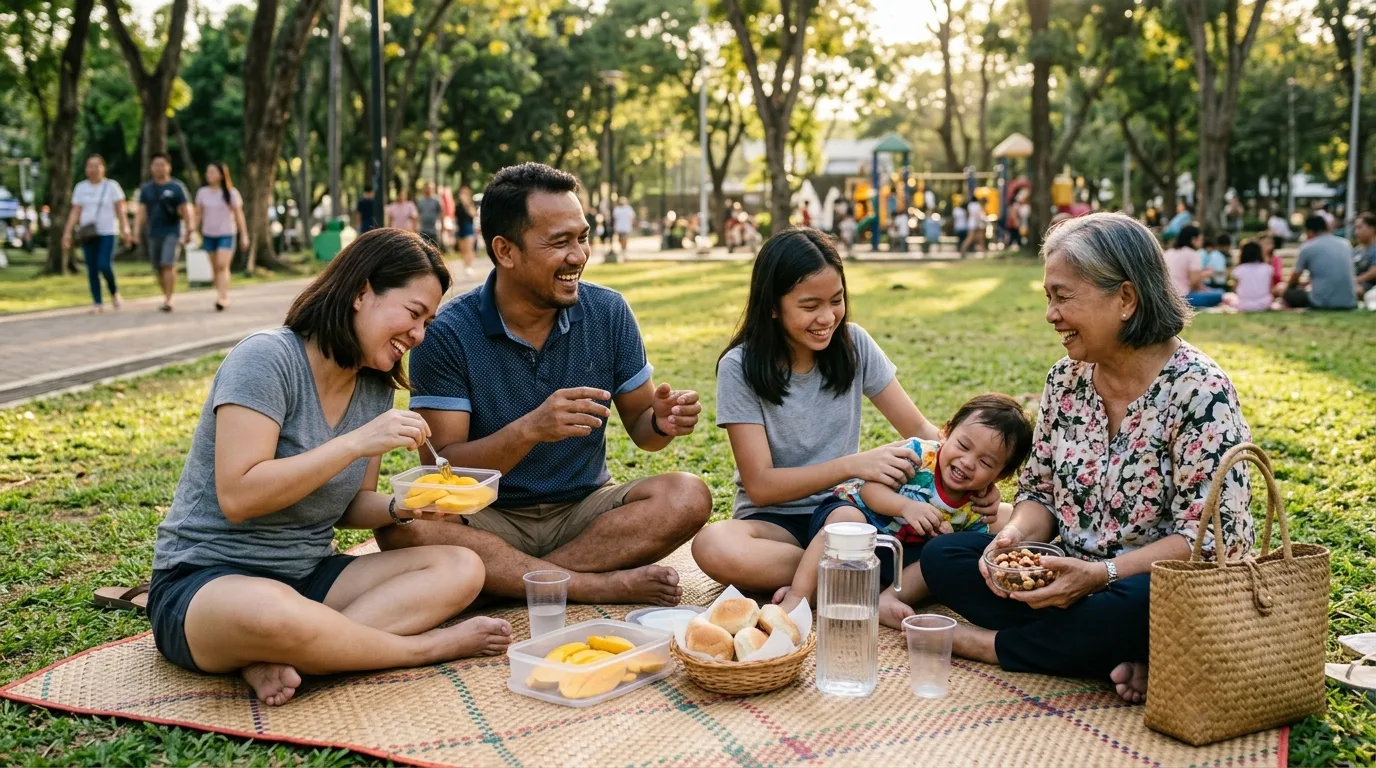
DAVAO — Government offices across the Davao Region suspended operations at 1:00 PM on September 28, 2026, allowing thousands of workers to return home for Kainang Pamilya Mahalaga Day. The observance forms part of the 34th National Family Week, emphasizing the sacred bond of sharing meals and strengthening household ties.
A Unified Regional Pause
The early dismissal followed Malacañang Memorandum Circular No. 136, which encourages government agencies to support family-centered activities. Essential services including health, disaster response, and public safety remained operational, but administrative staff were given the rare gift of an afternoon with loved ones. It was a deliberate policy choice that placed relationships above routine.
Provincial capitols in Tagum, Digos, Mati, Nabunturan, and Malita held brief morning assemblies to honor public employees before releasing them. State universities like the University of Southeastern Philippines and Davao Oriental State University also adjusted schedules. The message from regional leaders was clear: institutional productivity cannot be separated from domestic well-being.
The Cultural Heartbeat of Kainang Pamilya
In Davaoeño culture, the dining table is sacred ground. It is where respect for elders is passed to children, where oral traditions survive, and where daily burdens find relief through conversation. On this day, families across the region gathered for meals that reflected Southern Mindanao's agricultural and coastal abundance.
Coastal communities in Samal, Mati, and Malita feasted on grilled tuna, kinilaw, and fresh seafood from the Davao Gulf. Inland towns in Davao del Norte and Davao de Oro served native chicken tinola, locally grown vegetables, and seasonal fruits like pomelo, mangosteen, and durian. Beyond the food, the act of sitting together restored a collective rhythm often fragmented by modern schedules.
Community Programs Beyond the Government
While the work suspension directly benefited civil servants, community organizations extended the spirit of the day to the broader public. The Department of Social Welfare and Development Field Office XI conducted positive parenting seminars and child protection orientations during the preceding week, reaching beneficiaries of the Pantawid Pamilyang Pilipino Program.
Public parks across the region welcomed families seeking outdoor time together. Davao City's Coastal Road, People's Park, and Magsaysay Park filled with parents strolling alongside children. Tagum's Freedom Park and Mati's Baywalk became lively gathering points. Church parishes also held special masses emphasizing domestic harmony and encouraging families to make shared meals a weekly habit.
Confronting Modern Pressures on Family Life
The celebration arrives at a critical juncture for Mindanawon households. Economic migration sends thousands abroad as Overseas Filipino Workers, leaving split families dependent on video calls for emotional connection. Digital distractions often create physical proximity without true presence. Long commutes and extended work hours reduce face-to-face meal times during ordinary weekdays.
National Family Day serves as an intentional counterweight. By setting aside an afternoon where work yields to home, the government and local communities send a clear message that economic progress must never come at the expense of family cohesion. For digital-heavy households, the occasion acts as a gentle detox, encouraging members to put away devices and engage in genuine conversation.
A Lasting Commitment to Mindanawon Homes
As dusk settled over the Davao Region, the quiet chatter of family dinners filled neighborhoods from urban subdivisions to rural barangays. The success of National Family Day cannot be measured in grand ceremonies or speeches. It lives in the simple warmth of shared meals across thousands of homes.
The challenge moving forward is to ensure that the spirit of Kainang Pamilya Mahalaga Day extends beyond a single Monday afternoon. By embedding regular family meals, open communication, and mutual support into everyday routines, the Davao Region continues to build resilient households capable of nurturing future generations.
