


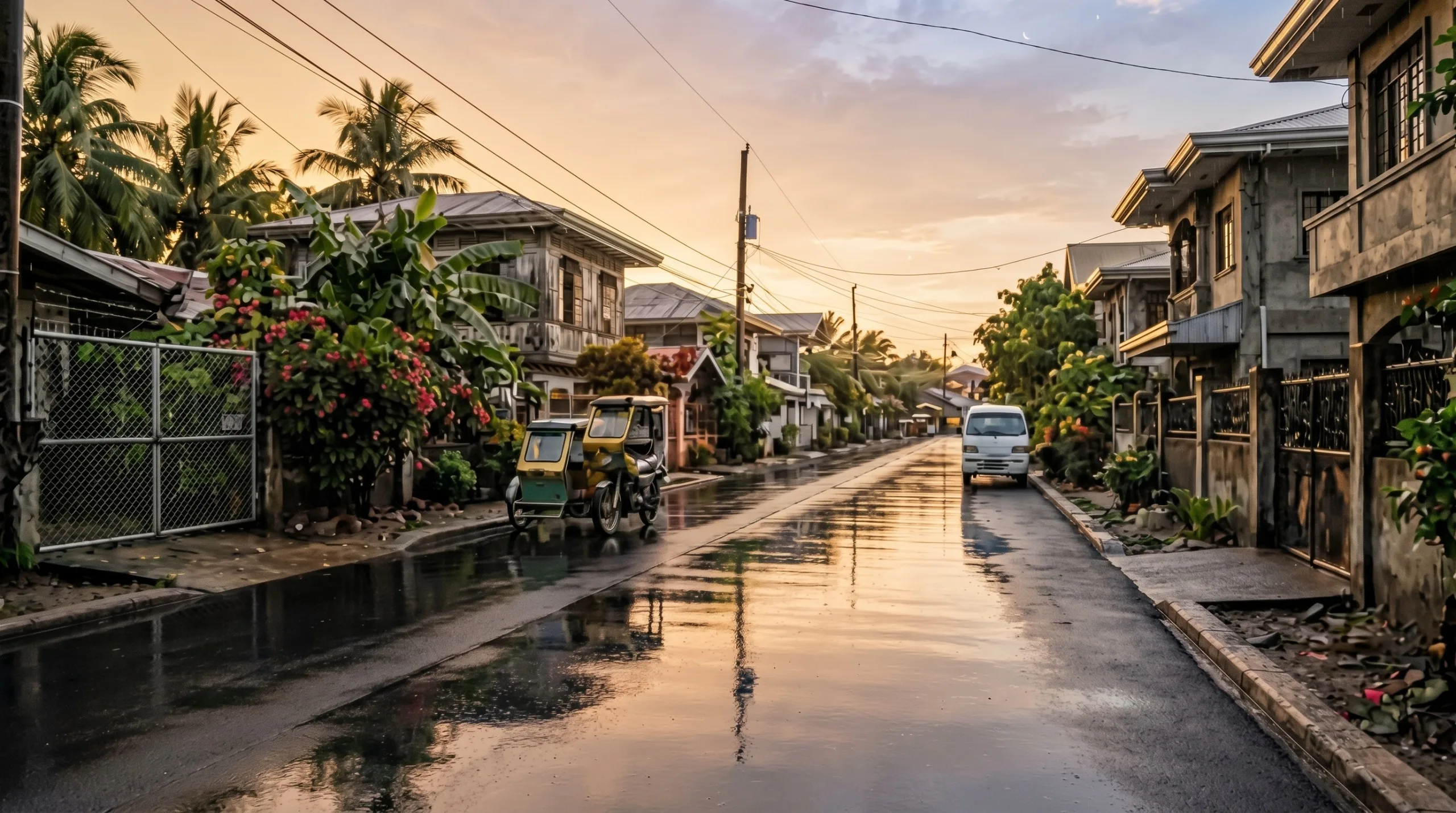
Look at Where the Water Goes
BACOLOD - One of the first things to check after heavy rain is how water moves around the property. Look at roadside drainage, gutters, canals, culverts, and areas where water appears to collect. Standing water near the property does not automatically mean the house is at risk, but it can be a reason to ask more questions about drainage and the surrounding terrain. For prospective buyers looking at homes around Mandalagan or Villamonte, it can be useful to walk around the immediate block and observe whether water has already cleared from the road. Check whether drainage openings are visible and unobstructed, and notice whether nearby roads appear significantly lower or higher than the property. Looking beyond the lot can provide a better picture of how the entire street handles rainfall.
Check the Road and Access Around the Home
Heavy rain can also reveal how easy it is to reach a property. A road that appears perfectly convenient during dry weather may have puddles, muddy shoulders, slippery surfaces, or slower-moving traffic after a downpour. Homebuyers should observe the condition of the street leading to the property as well as nearby intersections and routes toward major roads. In residential areas such as Alijis and Tangub, buyers can look at sidewalks, roadside drainage, driveways, road surfaces, and access points around the neighborhood. It is also worth checking whether pedestrians have a reasonably clear path and whether vehicles can enter and leave the area without difficulty. These details become part of everyday living, particularly for residents who regularly travel to work, school, markets, healthcare facilities, or commercial areas.
Inspect the Surroundings Beyond the Property Line
Rain can make other neighborhood conditions easier to notice. Check nearby vacant lots, construction areas, retaining walls, fences, trees, waterways, and properties that sit at different elevations. Observe whether soil has been washed onto the road, whether leaves or debris are blocking drainage openings, or whether water appears to be flowing toward the property from another direction. For buyers considering properties in Handumanan, Mandalagan, Villamonte, Alijis, Tangub, or other Bacolod barangays, a post-rain inspection can also be an opportunity to speak with nearby residents or ask the seller, developer, homeowners' association, barangay, or appropriate city office about drainage maintenance and recurring neighborhood concerns. Buyers should not treat one rainy-day visit as proof of future conditions, but it can help identify questions that deserve further checking before making a property decision. Looking at the house, the street, and the wider neighborhood together gives a more complete picture of what living in the property could be like.
