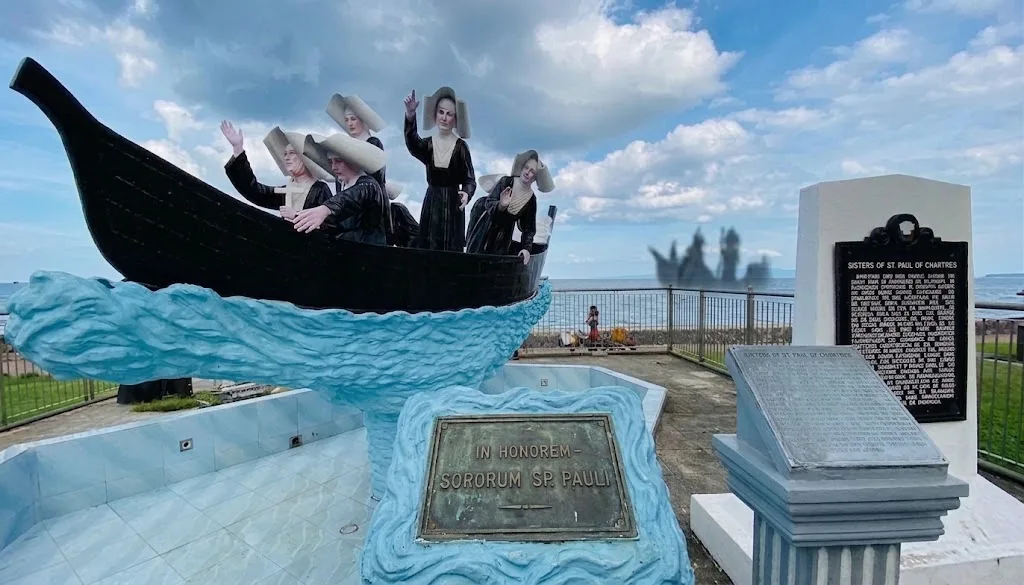
Along the scenic Rizal Boulevard in Dumaguete City, a meaningful landmark quietly tells the story of education, faith, and community service—the Sisters of St. Paul of Chartres Monument. The monument commemorates the arrival of the Sisters of St. Paul of Chartres in Dumaguete and their lasting contribution to the people of Negros.
A Monument to a Historic Arrival
The story goes back to October 29, 1904, when the first Sisters of St. Paul of Chartres arrived in Dumaguete at the invitation of Monsignor Frederic Z. Rooker, Bishop of Jaro, Iloilo. They came with the mission of helping educate the youth of Negros. The group included sisters from France, the United States, Portugal, and China, along with the first Filipino member, Maria Echavez, who became known as Sr. Ambroisine.
From Education to Community Service
The sisters' work quickly became an important part of Dumaguete's history. On January 9, 1905, they opened the Instituto de San Pablo, or St. Paul Academy, beginning a long tradition of education in the city. Over the years, the Sisters of St. Paul of Chartres expanded their mission beyond education. The historical marker notes that the congregation eventually established and managed numerous schools, hospitals, and charitable institutions throughout the Philippines. Their legacy remains closely connected to St. Paul University Dumaguete, which traces its origins to the sisters' arrival in the city in 1904.
A Landmark Along Rizal Boulevard
Today, the monument stands along Rizal Boulevard, making it a convenient historical stop for visitors exploring Dumaguete's waterfront. The site features a monument and a National Historical Commission of the Philippines historical marker, which provides visitors with the story behind the sisters' arrival and their contributions. The marker was installed on October 28, 2004.