


CEBU CITY — When power interruptions strike during manual load dropping, distribution utilities often bear the brunt of consumer complaints. Yet the question remains: can a distribution utility solve the problem on its own? The answer lies in understanding how electricity travels from power plants to homes.
The Framework Behind the System
At the center of the Philippine power industry is the Electric Power Industry Reform Act of 2001, or EPIRA. Republic Act 9136 provides the framework for restructuring the sector, including the privatization and sale of National Power Corporation assets. The law emerged from the power crisis of the early 1990s.
During that period, the government-owned NPC entered agreements with independent power producers to address shortages. These deals increased generation but added financial obligations. The Asian Financial Crisis magnified the debt when the peso's value plummeted. These problems, along with the need for a reliable and competitive industry, drove the passage of EPIRA in 2001.
Four Sectors, One System
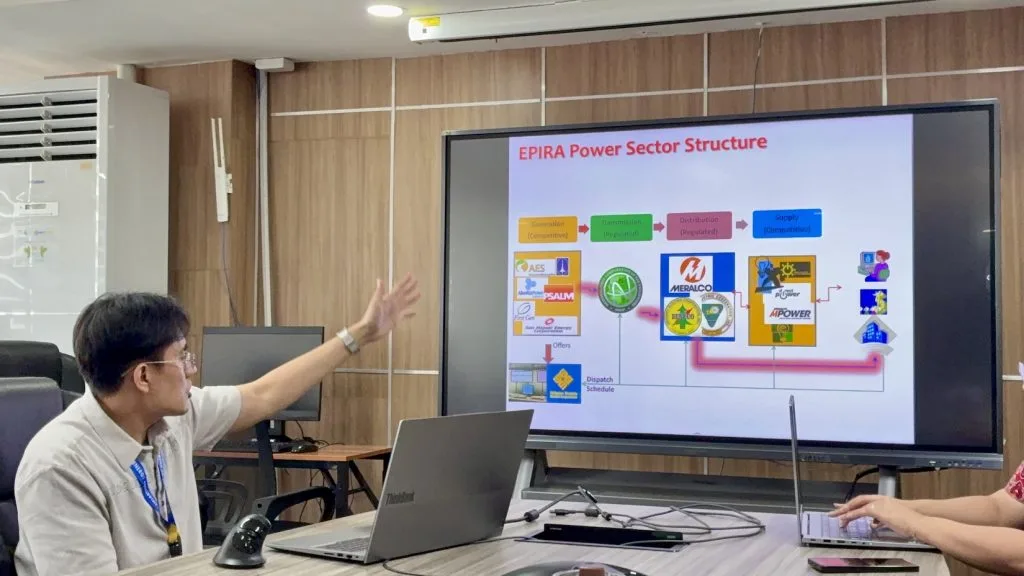
Under EPIRA, the power industry was organized into four sectors: generation, transmission, distribution, and supply. Power plants generate electricity from coal, natural gas, hydropower, geothermal, solar, and wind. This electricity does not travel directly to homes but enters the transmission system first.
The National Grid Corporation of the Philippines operates and maintains the transmission system, including power lines and substations carrying large amounts of electricity across the grid. Distribution utilities then take electricity from the transmission grid and deliver it through local networks. In Central Visayas, these include Visayan Electric Company, Mactan Electric Company, Bohol Light Company, and several electric cooperatives.
Where Load Dropping Fits In
When available electricity falls short of demand, the transmission system operator may direct distribution utilities to reduce their load by a set amount. Utilities then temporarily switch off selected feeders or areas. Affected areas may be rotated to spread the interruption.
This explains why a distribution utility may cut power even when the cause is a supply shortage in the wider system. The utility carries out the load dropping but is not responsible for the shortage. Interruptions caused by problems in a utility's own lines and equipment, however, remain its responsibility.
System Losses and Consumer Bills
System loss is another component affecting consumers. Some electricity is lost as it moves through transmission and distribution lines. Under current rules, allowable system losses are recovered through charges on electricity bills.
In his 2026 State of the Nation Address, President Ferdinand R. Marcos Jr. called for amendments to EPIRA, including measures addressing system-loss charges and the VAT on them. In September 2026, the Bureau of Internal Revenue issued Revenue Memorandum Circular 97-2026, removing VAT on system-loss charges within the cap approved by the Energy Regulatory Commission.
Why EPIRA Still Matters
More than two decades after its passage, EPIRA remains central to issues involving electricity prices, reliability, competition, and consumer protection. The law was meant to promote a reliable, secure, and affordable power supply while encouraging competition and private sector participation.
Understanding EPIRA clarifies why a distribution utility cannot always fix a power interruption alone. Generation produces the power, transmission moves it across the grid, distribution brings it to consumers, and supply handles the sale. When one part falters, consumers feel the effects.
