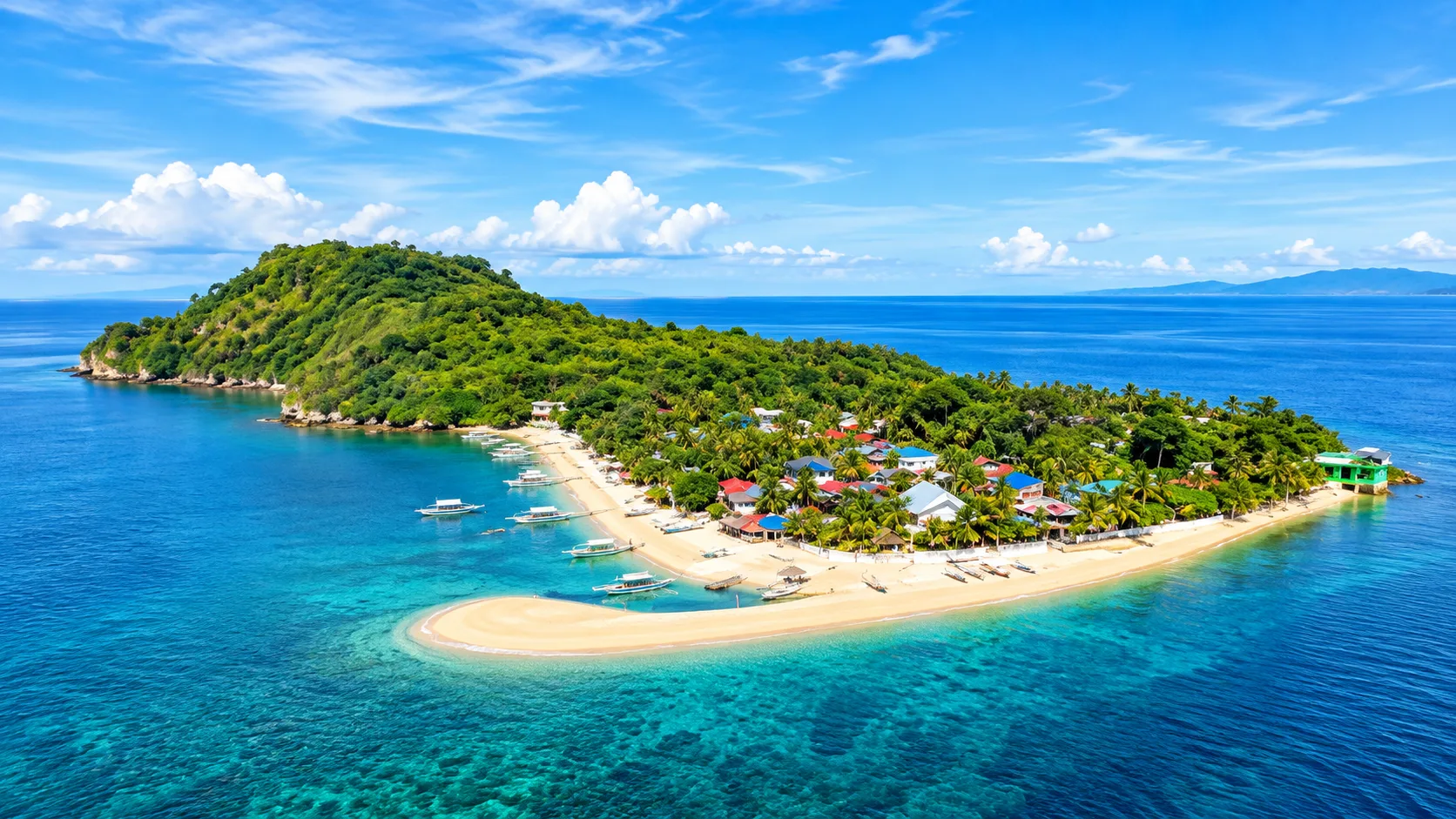
HINDANG, LEYTE — Outdoor enthusiasts and island hoppers seeking raw natural beauty in Eastern Visayas are turning their sights toward Himokilan Island, the largest and northernmost landmass in the famed Cuatro Islas archipelago.
A Protected Paradise Shaped Like A Floating Boot
Spanning approximately 50 hectares (120 acres) in Barangay Himokilan, Hindang, the island is distinct for its unique geography resembling a floating boot. While neighboring islets Digyo, Mahaba, and Apid fall under the jurisdiction of Inopacan municipality, Himokilan is governed independently by Hindang, giving it a quiet, residential charm anchored by a close-knit community of 523 residents.
Recognizing its ecological value, the Department of Environment and Natural Resources (DENR) declared Himokilan Island a Protected Seascape and Landscape on April 23, 2000. The sanctuary status preserves its diverse ecosystems, ranging from lush interior hills to coral reefs teeming with marine life.
Activities And Key Highlights
Unlike flatter sandbar islets in the chain, Himokilan features varied topography suitable for both land and sea adventures:
Cave Exploration: The island harbors secret caves inhabited by native bat colonies, offering adventurous visitors unique spelunking opportunities.
Trekking And Trail Hiking: Interior trails wind through rolling hills, providing panoramic views across the Camotes Sea.
Snorkeling And Water Recreation: Pristine white-sand beaches give way to clear turquoise waters ideal for swimming and snorkeling among vibrant coral formations.
Island Hopping Rates And Local Guidelines
Tourists planning a trip to Himokilan can charter local outrigger boats with standardized rates established for day-use and overnight excursions:
Up to 10 passengers: ₱2,500
11 to 20 passengers: ₱3,000
21 to 30 passengers: ₱4,000
Overnight Surcharge: ₱500 extra for overnight boat retention
Visitors are advised that separate local government unit (LGU) maintenance and environmental fees apply upon landing due to Hindang’s independent administration of the island. Sustainable travel practices and Leave No Trace principles are strictly encouraged to preserve the island's delicate eco-system.