Long before Dumaguete became known for its seaside boulevard, universities, and vibrant cultural scene, the city was a settlement that needed strong defenses against raids from the sea. One important chapter in its history dates back to 1754, when a church and convent were established within a fortified complex designed to protect the community.
A Church Built Within a Fortress
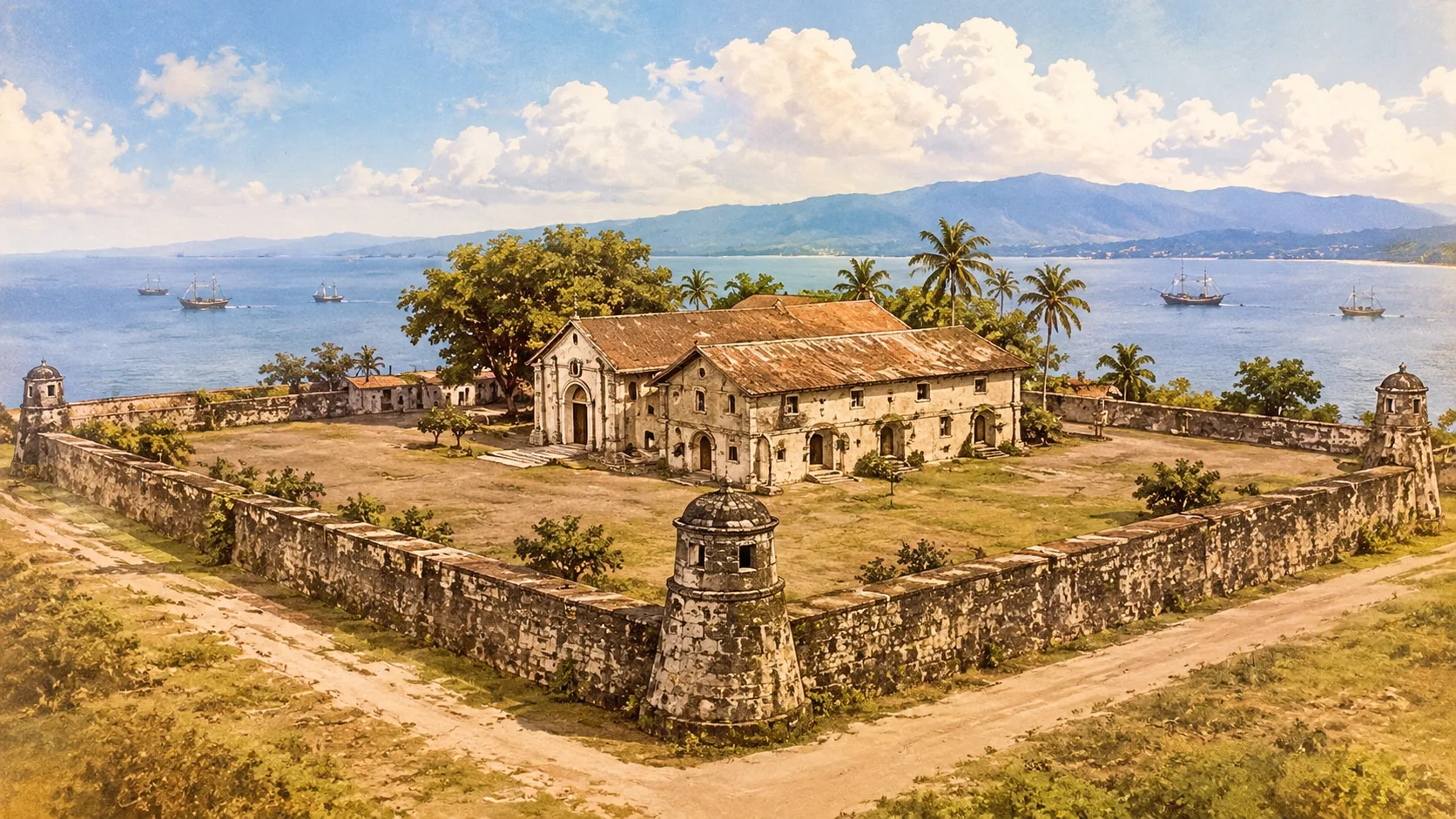
In 1754, the construction of a church and convent became part of an effort to strengthen Dumaguete against attacks by marauders coming from the south. According to the historical account shared by Dumaguete City of Literature, the religious buildings stood inside a fortification with four towers positioned for defense. The fortress was built under the leadership of Fr. José Manuel Fernández de Septién, who served in Dumaguete from 1754 to 1776. The structure was more than a place of worship and religious administration. It also provided a place of refuge for residents during a period when coastal communities faced the threat of raids.
Four Towers Protected the Settlement
The fortified complex featured four towers at its corners, forming part of a defensive system around the church and convent. These structures helped protect the settlement and served as watchpoints against possible attacks. Historical accounts describe the fortification as having strong stone towers and defensive features. Over time, much of the original structure disappeared, but one part of its history remains visible through the iconic Dumaguete Belfry, also known as the Campanario de Dumaguete.
The Story Behind Dumaguete's Famous Belfry
Today, the Dumaguete Belfry stands beside St. Catherine of Alexandria Cathedral, serving as one of the city's most recognizable landmarks. However, its historical connection goes beyond its role as a church bell tower. The first levels of the present belfry were built during the 1760s on the remains of one of the original watchtowers. Later, during the administration of Fray Juan Félix de la Encarnación in the 1870s, additional levels were constructed, giving the structure much of its present form. This connection makes the belfry an important reminder of the city's earlier defensive system and the people who helped shape its development.