An Older Building Given a New Colonial Face
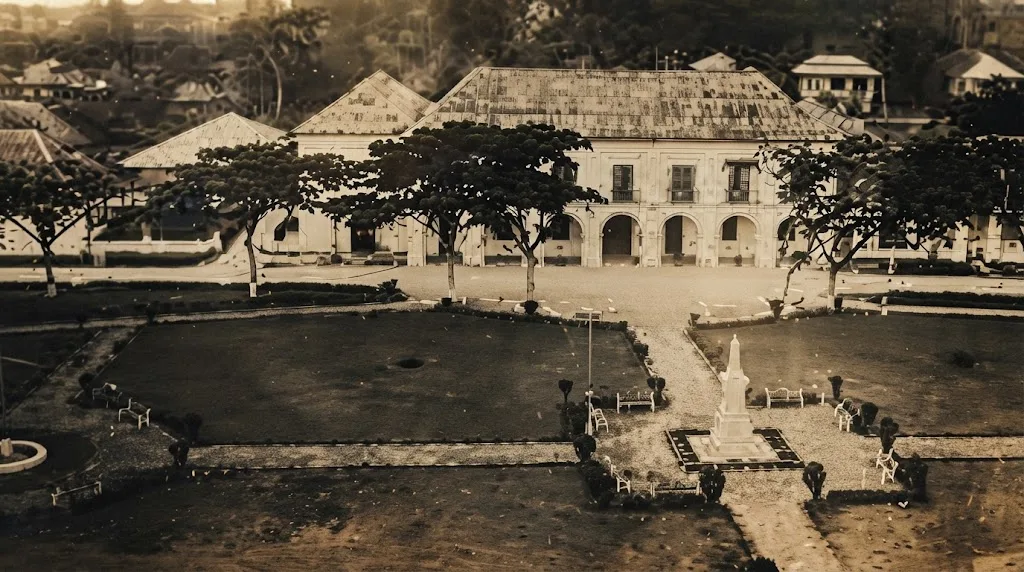
BOHOL - The building's origins can be traced to the Spanish period, when adobe was an important construction material for substantial structures in the Philippines. During the early 20th century, its appearance was altered with precast neoclassical ornaments, giving the older structure a distinctly different architectural character. Columns, moldings, and other classical-inspired details became part of the building's public image, reflecting the architectural preferences associated with the new American administration. The result was a building where an earlier Spanish-era structure and a newer colonial aesthetic could be seen together.
The Colors Behind the Famous Old Photograph
A particularly interesting detail emerges from photographs of the Provincial Capitol taken during the 1960s. Contrary to the impression that the entire structure was painted plain white, the building was actually described as having a Tuscan yellow pigment, with its decorative elements painted white to create visual contrast. That combination would have given the façade a warmer appearance while allowing the neoclassical details to stand out. The photograph therefore preserves more than the shape of the building—it also provides clues about how its color scheme contributed to its architectural character during that period.
A Building That Recorded Changing Times
The Provincial Capitol's changing appearance demonstrates how colonial architecture in Bohol was not necessarily fixed in one period or style. Its adobe foundation connected it to the Spanish era, while its later neoclassical treatment reflected the political and architectural influence of the American period. Looking at the structure across photographs from the early 20th century to the 1960s makes it possible to see how architecture could be modified to represent changing institutions and ideas of authority. Rather than simply being an old government building, the former Capitol can be understood as an architectural record of Bohol's transition between two colonial periods and the changing visual identity of Tagbilaran.