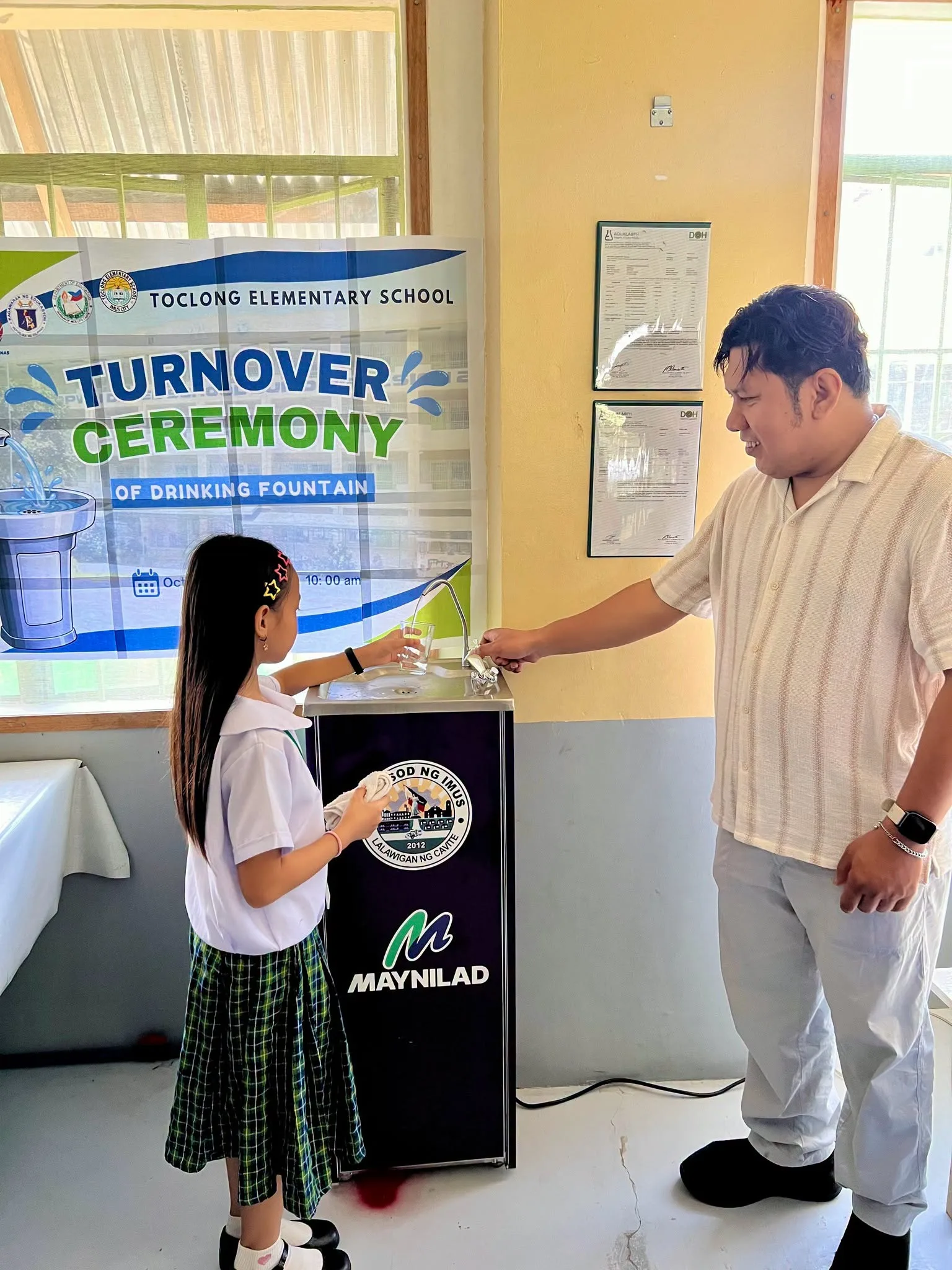
IMUS CITY, CAVITE — Clean, safe drinking water shouldn't be a luxury inside a classroom—and in the city of Imus, it's becoming a permanent fixture. As students return to their daily study tracks, a significant health and utility upgrade has officially arrived at two prominent local campuses. On October 1 and 2, 2026, the local engineering team led by City Engineer Chris Sarno successfully completed the installation of commercial-grade refrigerated drinking fountains at both Estanislao Elementary School and Toclong Elementary School.
A Community Win from a Master Public-Private Pact
Accepting the units on behalf of their student bodies, School Principals Jo Aquino and Cristina Ante joined hands with representatives from Maynilad Water Services, Inc. and DepEd SDO Imus to immediately open the tap on free, clean drinking water. The deployment highlights a major community win originating from a master pact forged earlier this year. Back in June, Maynilad officially committed a batch of 16 heavy-duty water filtration systems to the local government unit, testing the initial wave directly at Imus National High School. This collaboration between the city government, the private water concessionaire, and the Department of Education demonstrates how strategic partnerships can address practical needs in public schools while promoting sustainability and student welfare.
Saving Families Money While Protecting the Environment
By distributing the remaining specialized units across the city's public school grid, local leaders are targeting a very practical problem: saving families from the daily expense of bottled water while actively reducing single-use plastic waste across school grounds. For many households, the cost of buying bottled water for their children adds up over the school year, and the environmental impact of discarded plastic bottles is a growing concern. The installation of refrigerated drinking fountains provides a convenient and eco-friendly alternative, ensuring that students have access to clean, cold water throughout the day without the need for single-use plastics. It proves that building an ideal environment for the next generation isn't just about textbooks and technology—it's about locking down the fundamental resources that keep students healthy, hydrated, and focused on their future.