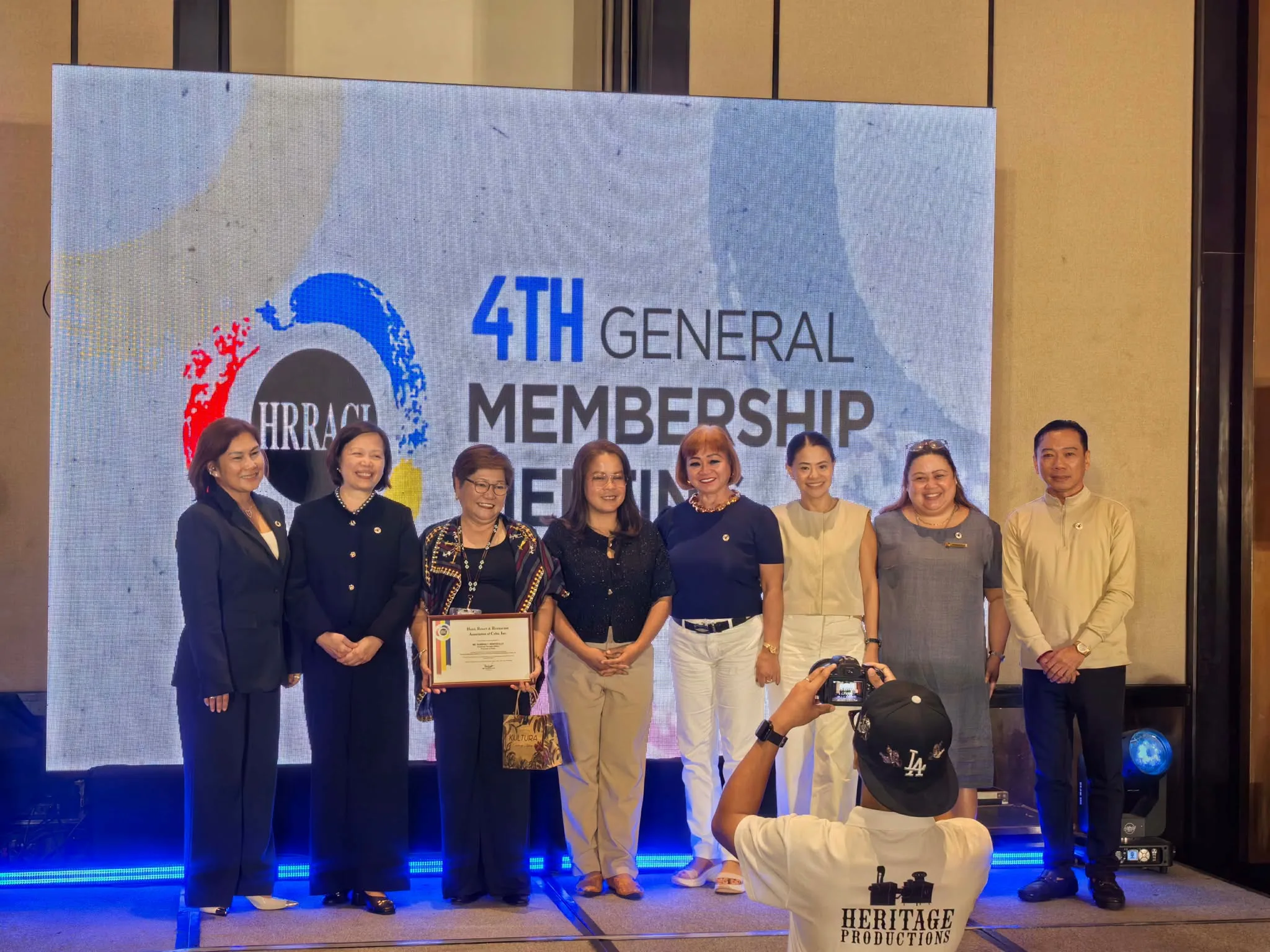
CEBU — The Cebu Provincial Tourism Office (CPTO) brought its strategic vision directly to the hospitality industry during the 4th General Membership Meeting of the Hotel, Resort & Restaurant Association of Cebu, Inc. (HRRACI) at Seda Ayala Center Cebu. Provincial Tourism Officer Rowena Lu Y. Montecillo presented accomplishments and future plans, emphasizing that strong partnerships are the engine of sustainable tourism growth.
A Year of Delivering Results
Montecillo detailed the office's milestones from June 2025 to July 2026 under the leadership of Governor Pamela S. Baricuatro. The reactivation of the Provincial Tourism Council was a cornerstone achievement, bringing together national agencies, local governments, tour operators, airlines, and hotel owners to solve ground‑level challenges collaboratively. This multi‑sector body now meets regularly to address everything from infrastructure gaps to marketing strategies.
Another major push was capacity building for the tourism workforce. The CPTO delivered structured training programs in food safety, sanitation, costing, and service excellence across multiple municipalities. Resort staff, food entrepreneurs, and local tourism officers gained practical skills that directly enhance the visitor experience. The province also launched consumer protection initiatives such as the "Turista iWAS Scam" campaign to shield travelers from fraudulent online booking schemes.
A Roadmap for Sustainable Growth
Looking ahead, Montecillo outlined priority initiatives designed to keep Cebu competitive in a rapidly evolving global market. The office is analyzing shifts in key international visitor demographics, particularly from South Korea and Japan, to tailor experiences that meet changing expectations. Adapting to regional competitors like Vietnam by offering high‑value, authentic travel experiences remains a central focus.
Digital infrastructure and payment modernization are also on the agenda. Montecillo stressed that hotels and resorts must integrate seamless payment systems to match international standards. Sustainability runs through every initiative, with a commitment to ensuring that tourism dollars flow into local communities across northern and southern Cebu.
Why Industry Collaboration Matters
Montecillo brought over four decades of public sector experience to her message, having previously served as DOT Regional Director and head of the Industry Manpower Development Division. She told HRRACI members that private sector feedback is essential for effective governance. Grassroots progress, she argued, cannot happen without involving every sector in the planning process.
HRRACI, as the premier private hospitality group, provides irreplaceable insight into ground realities. The open dialogue between government and industry leaders during the meeting reflects a maturing partnership. By synchronizing destination marketing, workforce development, and policy support, both sides aim to build a resilient tourism ecosystem.
Positioning Cebu for the Global Stage
The collaboration arrives at a pivotal moment as Cebu navigates post‑pandemic market realignments and intensifying regional competition. Montecillo expressed confidence that the province, with its strong industry ties and strategic planning, is well‑positioned to strengthen its lead as one of Southeast Asia's most sought‑after island destinations. The meeting closed with a shared commitment to turn plans into measurable outcomes for communities, businesses, and visitors alike.