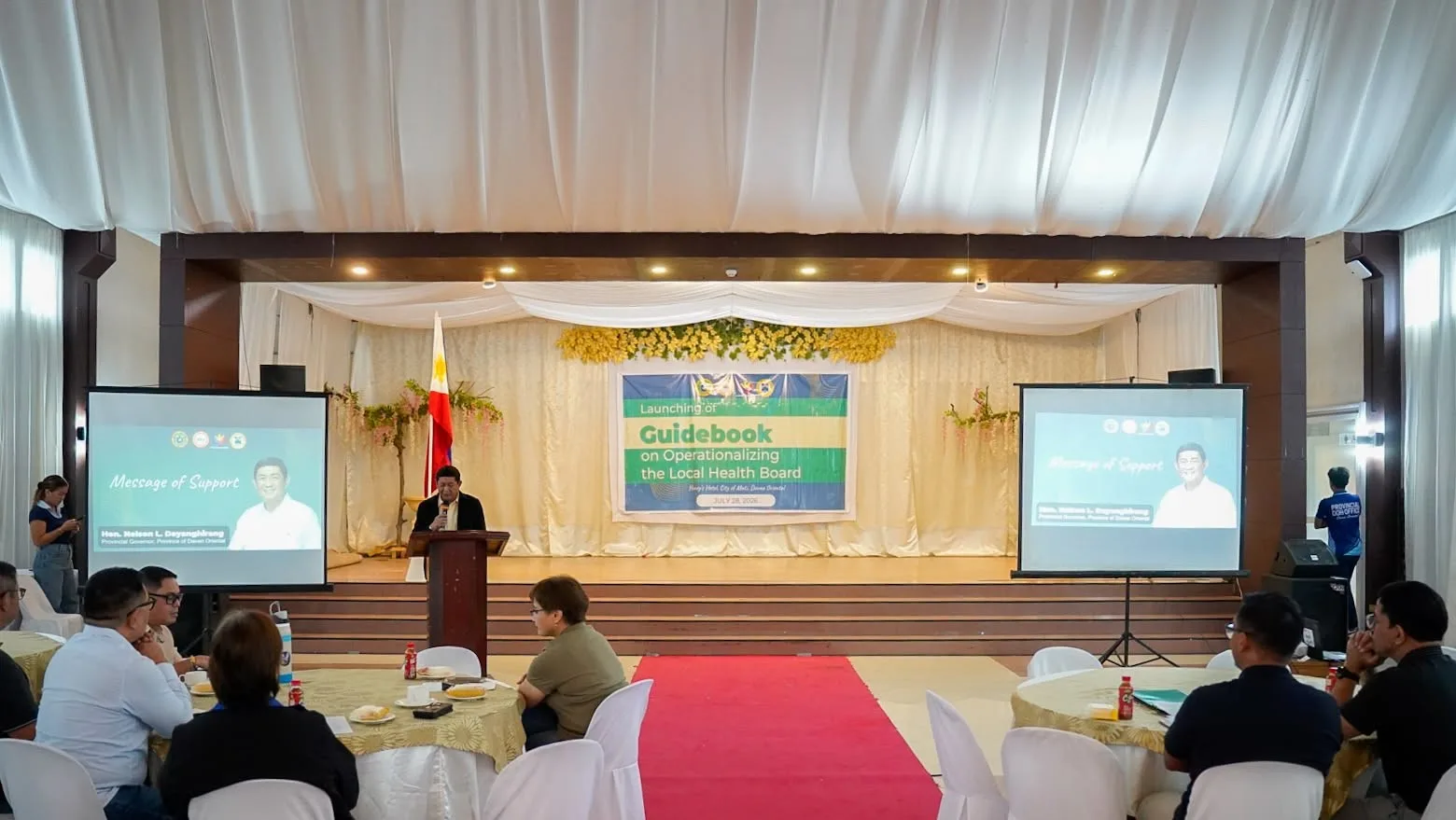
MATI CITY, Davao Oriental — The Provincial Government of Davao Oriental launched a comprehensive Guidebook on Operationalizing the Local Health Board on July 28, 2026, at Honey’s Hotel. The document empowers municipalities to transform health councils into proactive, policy‑driven bodies that deliver better services to every Oryental Dabawenyo.
A Blueprint for Local Health Governance
The guidebook provides clear legal foundations, organizational structures, and operational responsibilities for Local Health Boards (LHBs). It equips local executives and health officers with a practical reference to streamline decision‑making and resource allocation. This blueprint replaces ambiguity with a structured framework tailored to community needs.
Participants included municipal mayors, provincial health officials, and representatives from the Department of Health (DOH) and the Department of the Interior and Local Government (DILG). The launch was followed by an orientation that walked attendees through every chapter of the guidebook. The hands‑on approach ensured that theory translated into immediate, actionable knowledge.
From Advisory Bodies to Active Partners
Governor Nelson L. Dayanghirang underscored that quality healthcare requires more than infrastructure and personnel. He stressed that effective governance, strategic planning, and strong collaboration are essential to building a responsive health system. His message challenged LHBs to move beyond passive advisory roles.
The governor urged board members to embrace their positions as active partners in shaping policies, identifying local priorities, and ensuring that health programs yield tangible improvements. He reminded them that every decision they make directly affects the lives of their constituents. The call to action set a determined tone for the day’s workshops.
Workshops and a Pledge of Commitment
Following the orientation, participants joined interactive workshops on provincial and municipal health planning. They drafted action plans aligned with national health reforms and the unique needs of their communities. The sessions fostered collaboration across municipalities, breaking down silos that often delay progress.
The event culminated in a collective pledge of commitment. Each local government representative vowed to institutionalize transparent, accountable, and people‑centered health governance. The pledge symbolized a shared resolve to turn the guidebook’s principles into lasting institutional practices.
Aligning with Universal Health Care
The guidebook directly supports the Universal Health Care (UHC) Act by clarifying how LHBs can integrate health systems and manage pooled resources. It promotes evidence‑informed decision‑making, ensuring that budget allocations are driven by local health data rather than guesswork. This alignment positions Davao Oriental as a leader in UHC implementation.
By investing in the operational capacity of its Local Health Boards, the province strengthens the foundation of its entire health system. The guidebook not only improves governance but also builds public trust. For Davao Oriental, a well‑governed health system means healthier families, more productive communities, and a brighter future.