DAVAO CITY — Maritime stakeholders from across Mindanao rallied behind the proposed reconstitution of the National Maritime Polytechnic (NMP) as an attached agency of the Department of Migrant Workers (DMW) during a public consultation on June 18, 2026. The gathering underscored a shared urgency to modernize training for Filipino seafarers.
A Unified Voice from Mindanao
The consultation, held at the DMMA College of Southern Philippines, drew government agencies, local government units, maritime schools, industry partners, and seafarers themselves. They collectively endorsed a draft Executive Order that would grant NMP greater autonomy under the DMW. The support manifested in a signed Manifesto of Support.
Davao City Councilor Al Ryan Alejandre voiced strong backing for NMP’s expansion, especially the planned Regional Training Center in Davao. He emphasized that Mindanao, a major source of seafarers, deserves a world‑class training hub. The assembly validated that the region is ready to host advanced maritime education.
Operational Autonomy for a Changing Industry
NMP Executive Director Victor Del Rosario explained that becoming an attached agency, rather than merely a subordinate unit, would streamline bureaucracy. This shift would give the institution wider operational flexibility to respond quickly to the evolving demands of the global maritime industry. It would also improve inter‑agency coordination.
Currently, NMP operates under the DMW by virtue of Republic Act No. 11641, which created the department in 2021. However, Del Rosario argued that full agency status is necessary to unlock the institution’s potential. The proposed reform would align NMP’s governance with the fast‑paced nature of international shipping standards.
Bringing World‑Class Training Closer to Home
A cornerstone of the expansion is the establishment of an NMP Regional Training Center in Davao City. Land at the Davao Regional Government Center was secured in 2018 and formally conveyed in 2023. This year, the Development Academy of the Philippines‑Mindanao will begin the feasibility study for the project.
For thousands of Mindanaoan seafarers, a local training center would slash travel costs and time away from family. Instead of journeying to NMP’s main campus in Tacloban or to Manila, they could upgrade their certifications right in Davao. This accessibility is expected to increase the number of highly qualified mariners from the region.
Modernizing with Record Investments
The push for reconstitution is backed by significant financial muscle. NMP secured its highest budget ever for the fiscal year, totaling ₱427 million. These funds are already at work constructing a new ratings’ dormitory, rehabilitating the officers’ dormitory, and building a dedicated training pool.
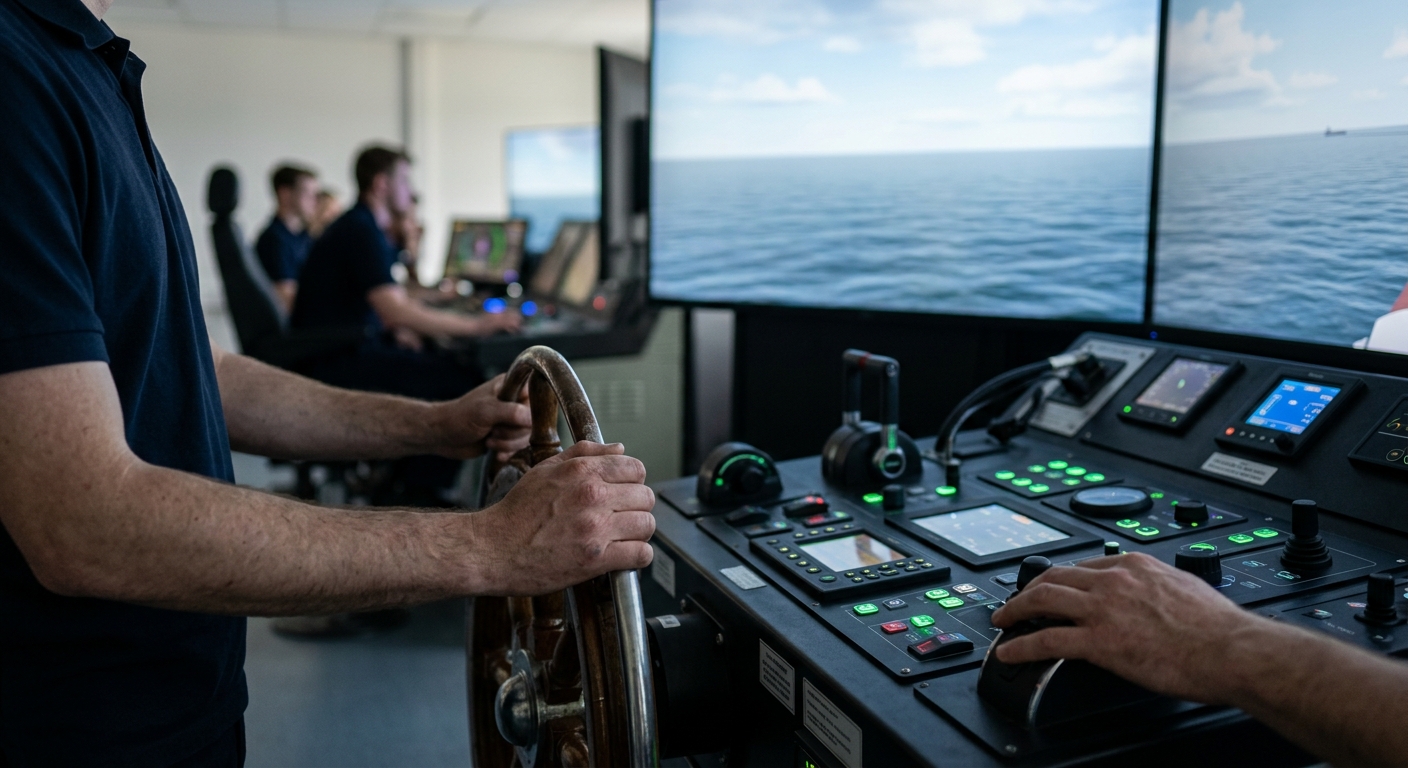
Beyond brick‑and‑mortar, the budget supports cutting‑edge simulation technology. A ₱40‑million Full Mission Bridge Simulator, a ₱10‑million Liquid Cargo Handling Simulator, and upgraded engine room software now replicate real‑world scenarios with high fidelity. These tools ensure Filipino seafarers remain compliant with the stringent Standards of Training, Certification and Watchkeeping.
Securing the Philippines’ Maritime Legacy
The Philippines remains the world’s leading supplier of seafarers, a title that demands constant investment. By strengthening NMP, the government signals that it values the contribution of over 400,000 Filipino mariners who power global trade. Their remittances form a critical pillar of the national economy.
The Davao consultation was the second of four nationwide, following an earlier leg in Palo, Leyte. Upcoming sessions in Cavite and Metro Manila will further refine the proposal before it reaches Malacañang. The maritime community’s message is clear: invest in training, and Filipino seafarers will continue to be the global standard.