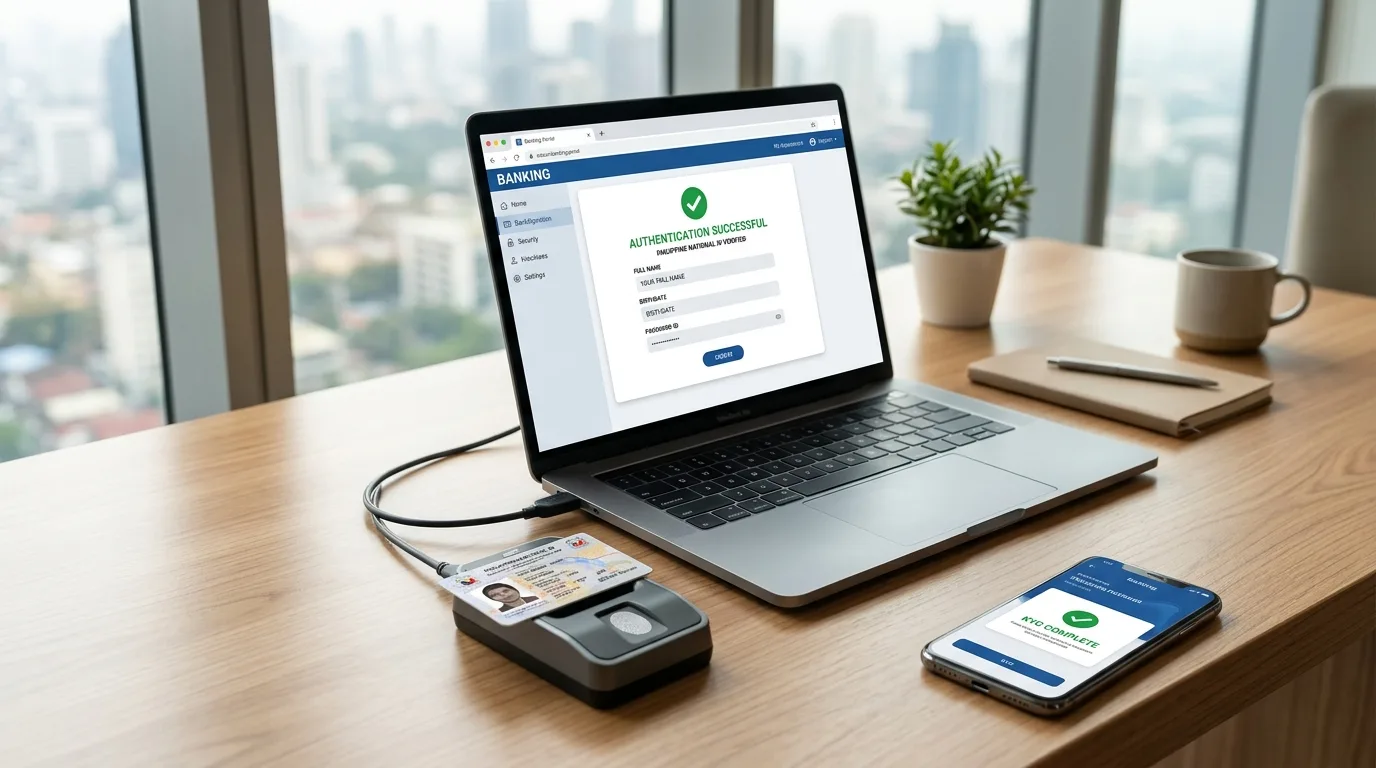
MANILA — The Bangko Sentral ng Pilipinas (BSP) has issued new regulatory guidelines requiring banks, digital lenders, and e-wallet operators across the country to integrate with the Philippine Identification System (PhilSys). By leveraging the central National ID database, the monetary authority aims to strengthen electronic Know-Your-Customer (e-KYC) processes, prevent identity theft, and curb online financial scams.
Real-Time Biometric and Database Matching
Under the new framework, financial institutions must connect to the National ID Authentication Services (NIDAS) and its eVerify platforms. The integration allows digital platforms to authenticate a user’s identity in real time using automated facial recognition, demographic matching, and official credential checks against database records maintained by the Philippine Statistics Authority (PSA).
For everyday consumers, this system eliminates the need to submit multiple secondary physical IDs or wait days for manual identity approval. A single scan of a physical or digital National ID allows users to complete verification instantly when opening bank accounts, applying for credit, or setting up digital wallets.
A Phased Rollout for Financial Institutions
To ensure a smooth transition, the central bank has established a phased timeline based on institutional scale. Institutions with large retail customer bases and extensive digital onboarding operations—such as major commercial banks and leading e-wallet services—are given a three-month window to implement the integration.
All other universal, thrift, rural, and cooperative banks, alongside licensed payment system operators, will have up to six months to achieve full compliance. Financial institutions can still adopt a risk-based approach, keeping secondary identification methods available for clients who have not yet obtained or presented a National ID.
Closing the Door on Mule Accounts and Scams
The mandatory integration directly targets the proliferation of fake accounts, unauthorized account buy-and-sell schemes, and money mule networks used by cybercriminals. By tying account creation to tamper-proof biometric checks from a unified government database, financial providers can verify that the individual registering an account is genuinely who they claim to be.
The mandate aligns with the national goal of increasing financial inclusion while safeguarding the integrity of digital transactions. As millions of Filipinos conduct daily payments through mobile applications, stronger identity verification safeguards the nation’s rapidly expanding cashless ecosystem.