


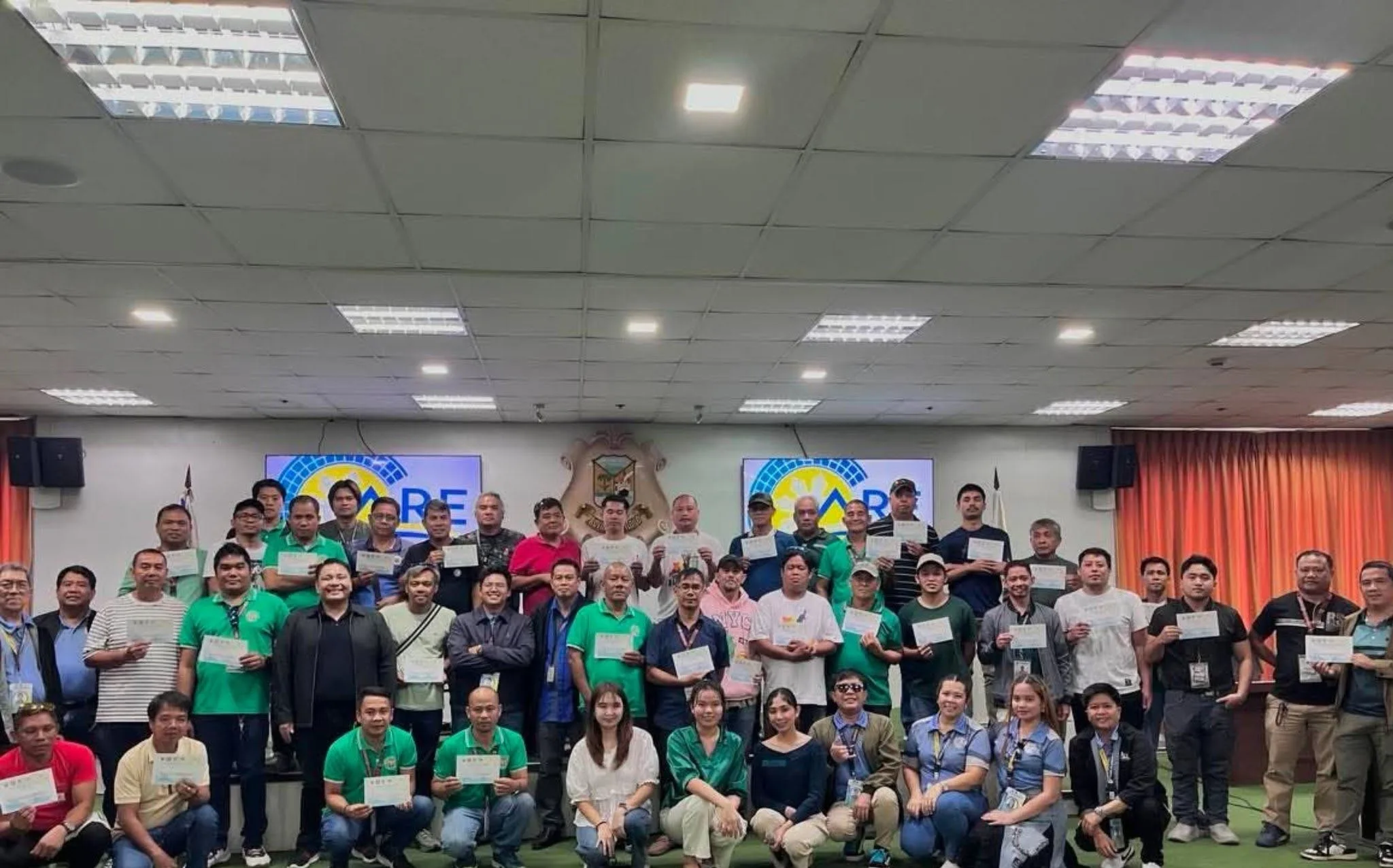
ILOILO CITY — Forty‑three service vehicle drivers of the Iloilo Provincial Capitol Complex completed a certification course on energy‑efficient driving and vehicle maintenance on July 23, 2026. The joint training by the Department of Energy (DOE) and TESDA aims to shrink fuel expenses and meet the government’s mandatory energy reduction targets.
A Training for Efficiency
The drivers gathered at the Sangguniang Panlalawigan Session Hall to learn how their daily habits affect the province’s fuel budget. The course blended the DOE’s Government Energy Management Program (GEMP) principles with TESDA’s defensive driving curriculum. The goal is to embed energy consciousness into every trip made by government vehicles.
By the end of the session, each driver understood that idling engines, sudden acceleration, and poor tire maintenance are not just safety issues—they are costly leaks in public funds. The training turned routine driving into a measurable contribution to fiscal discipline. The province expects these new skills to immediately lower consumption and extend vehicle lifespans.
Lectures from Energy and Safety Experts
Engr. Jan Lawrence T. Saso of the DOE Visayas Field Office walked participants through the core principles of GEMP. He explained how systematic fuel tracking and eco‑driving techniques can achieve the required 10 percent reduction in government energy use. The drivers learned that efficiency begins long before the ignition key turns.
TESDA’s John Laurence E. Garanganao then took the floor, focusing on defensive driving and preventive maintenance. He stressed that checking tire pressure, monitoring engine health, and avoiding aggressive maneuvers are simple acts with massive cumulative savings. The combination of safety and efficiency created a holistic training that protects both lives and budgets.
Engr. Jose Mari Bornales of Northern Iloilo State University’s renewable energy center broadened the discussion to the province’s wider sustainability goals. He linked the drivers’ daily work to decarbonization and the adoption of clean energy solutions. The message was clear: every liter of fuel saved is a step toward a greener, more economically resilient province.
Driving Down Costs, Driving Up Savings
Fuel is one of the largest operational expenses for any local government fleet. By training the drivers who operate these vehicles daily, the provincial government attacks that expense at its source. The immediate benefit is a leaner fuel bill that frees up resources for other essential public services.
The skills acquired extend beyond the provincial motor pool. Drivers now possess nationally recognized TESDA certifications that enhance their professional profiles and open doors for career advancement. This investment in human capital ensures that the efficiency gains are sustainable and not dependent on a single batch of trainees.
The training also introduces a culture of accountability and measurement. Drivers will monitor their own fuel consumption, report anomalies early, and take pride in their contribution to the province’s fiscal health. This shift from passive operator to active energy manager is the program’s lasting legacy.
Part of a Greener Provincial Agenda
The certification program aligns with Governor Arthur Defensor Jr.’s #MoRProGRes ILOILO vision, which emphasizes ecological development and responsive governance. The Provincial Government Environment and Natural Resources Office, led by Atty. Cesar Emmanuelle P. Buyco, Jr., organized the training through its Energy Efficiency and Conservation Desk.
The partnership with DOE, TESDA, and NISU‑CARE demonstrates how inter‑agency collaboration can turn national mandates like Republic Act 11285 into tangible local results. The capitol’s initiative sets a benchmark for other LGUs seeking to reduce operational costs while advancing environmental stewardship. Forty‑three drivers are now equipped not just to transport, but to lead by example on the road to a more efficient government.
