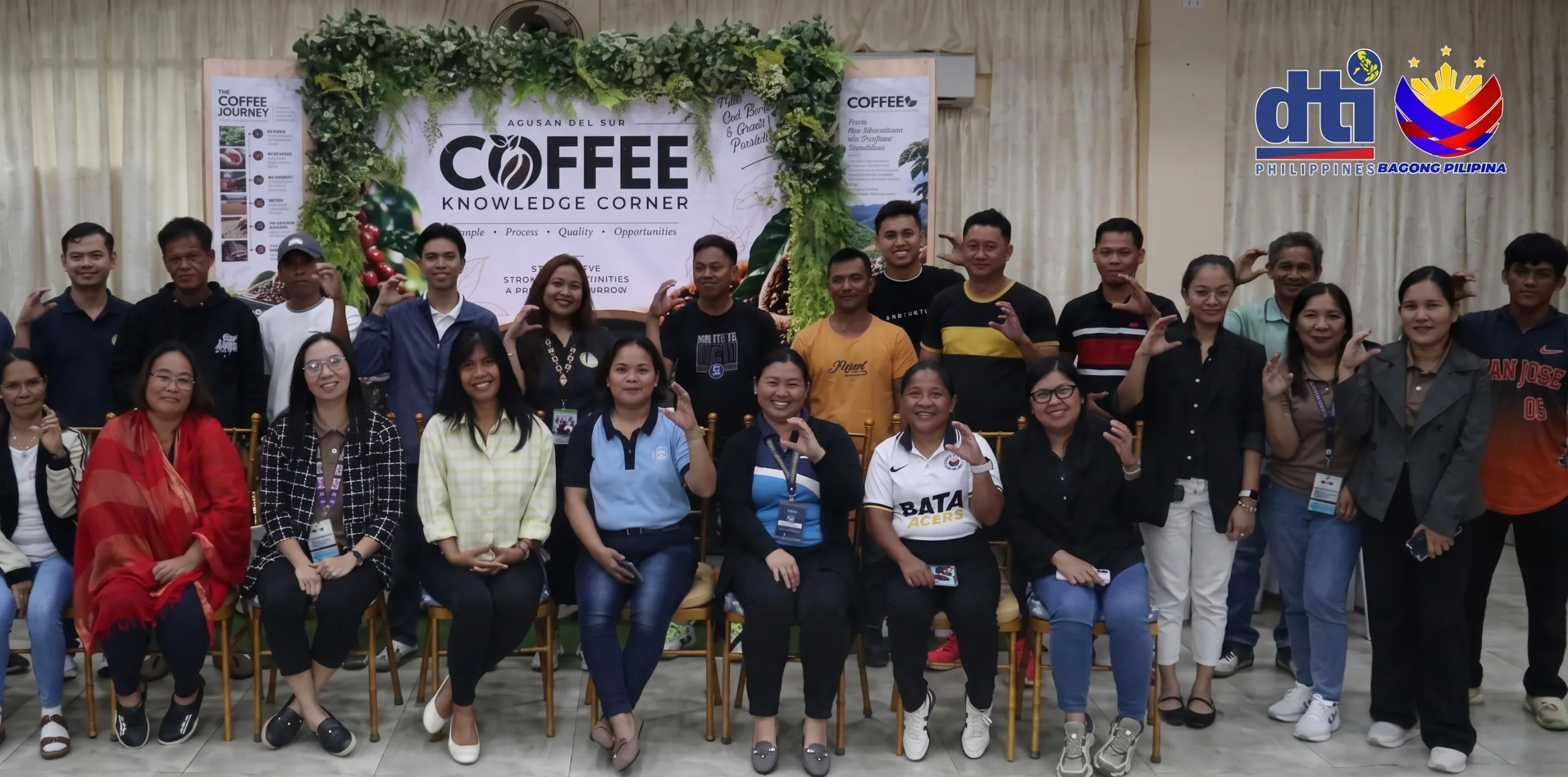
SAN FRANCISCO, AGUSAN DEL SUR — The second day of the Agusan del Sur Coffee Stakeholders Convergence at Mabes Savory Place moved from discussion to structure. After an opening day devoted to coffee production, post-harvest management, product quality, market opportunities, and institutional support, participants turned to the proposed organization of an Agusan del Sur Coffee Industry Council and the drafting of an initial action agenda. The gathering was convened by the Department of Trade and Industry–Agusan del Sur through the RAPID Growth Project.
A Coffee Table in a Multi-Sector Room
The event is billed as a coffee convergence, and the council proposal is coffee-specific on paper. But the RAPID Growth Project does not treat coffee as an isolated commodity. The project supports five agricultural industry clusters in the Caraga Region: coffee, coconut, cacao, calamansi, and banana, and its convenings have routinely brought together farmer organizations working across those crops. The convergence reflects that broader architecture. The question the coffee council will have to answer is not whether it will be a coffee body, but how it will relate to the multi-stakeholder frameworks already operating in the province. Whether it emerges as a distinct entity or as a coffee-focused track inside a wider agricultural coordination structure is a design question the participants themselves are working through.
The Value of a Shared Table
What distinguishes a convergence from a routine meeting is the composition of the room. Coffee farmers who work the slopes of Agusan del Sur's uplands sit alongside entrepreneurs who roast and package, academics who train and research, and agencies that provide support and regulation. Each brings a different vantage point on the same value chain. A farmer gains insight into what buyers look for. A processor learns where supply constraints begin. An agency sees where its programs land and where they miss. The convergence creates the conditions for that exchange, and the council, in whatever form it takes, is meant to sustain it beyond a single event.
A Sector Learning to Govern Itself
The deeper significance of the gathering lies in what it represents for the province's agricultural stakeholders as a whole. Industries that organize themselves tend to negotiate better, plan further ahead, and respond more effectively to shocks. Whether the coffee council becomes a standalone body or a pillar within a multi-sector council, the convergence is a first deliberate step toward self-governance for an industry that has long depended on external initiatives to move forward. The cross-sector nuance does not diminish that step. It simply places it in the context of a province that is organizing its high-value crops together, not one at a time.