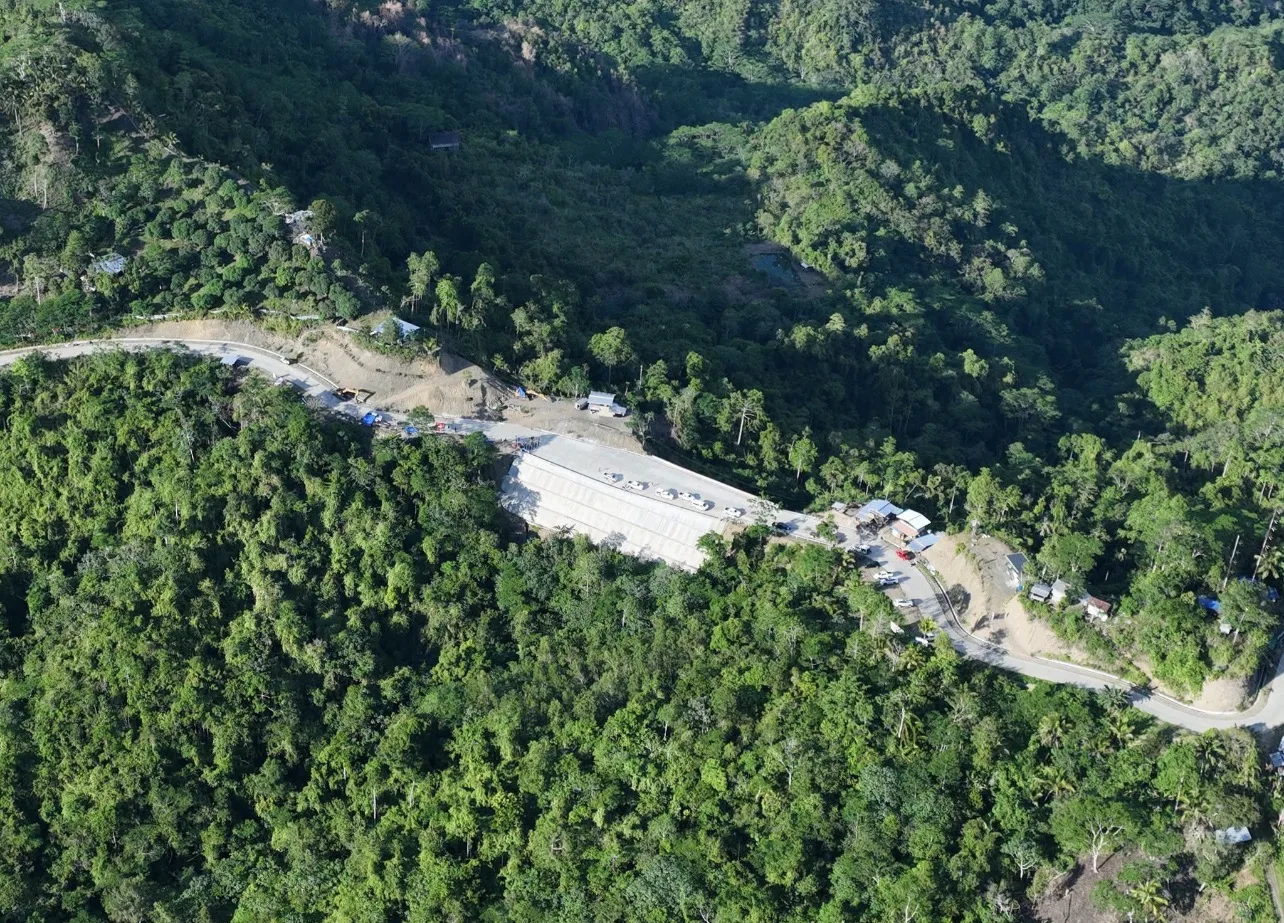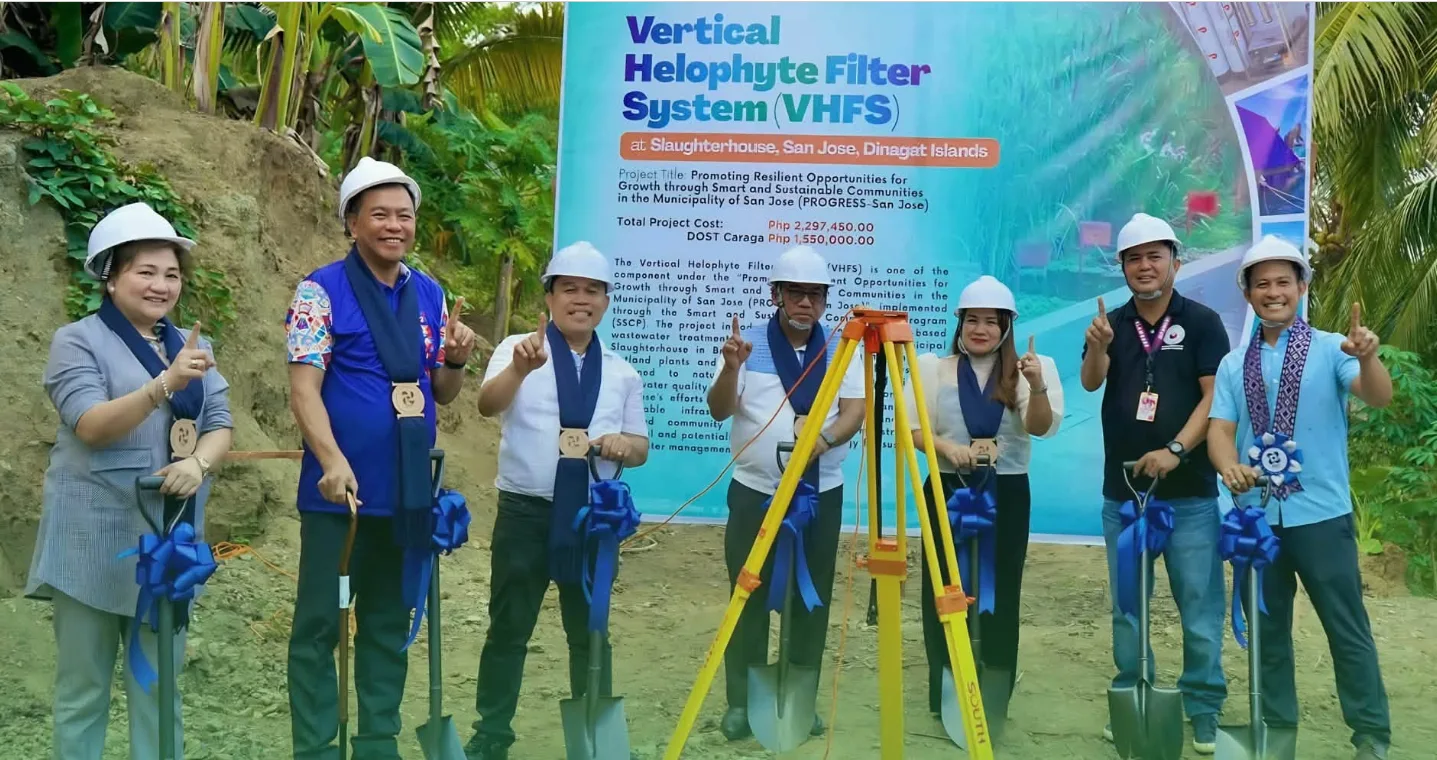
SAN JOSE, DINAGAT ISLANDS — The groundbreaking for a Vertical Helophyte Filtration System (VHFS) at the San Jose municipal slaughterhouse in Barangay Mahayahay marks more than the installation of a wastewater treatment facility. It signals a shift in how the local government approaches pollution: not as a problem to be diluted and discharged, but as a load to be processed before it reaches the environment. The project, led by the Department of Science and Technology, introduces a nature-based system designed to intercept contaminants at the source.
How the System Works
The VHFS is a constructed wetland compressed into a vertical stack. Wastewater flows through layers of gravel and soil planted with helophytes, species adapted to waterlogged conditions. As the water percolates downward, the filter media traps suspended solids, while microorganisms living in the root zone break down organic matter and nutrients. The plants themselves transfer oxygen into the filter bed, sustaining the microbial communities that do the biological work. The result is effluent that meets environmental standards before it is discharged, reducing the pollution load that would otherwise reach nearby waterways and coastal waters.
Why It Matters in a Water-Scarce Province
The project carries particular weight in Dinagat Islands, where water scarcity has become a chronic condition. The province has been under a state of calamity since August 2026 due to El Niño-driven drought, with thousands of families relying on emergency water deliveries and filtration units. In that context, protecting the quality of remaining water sources is not an abstract environmental goal. It is a survival imperative. Slaughterhouse effluent, if left untreated, can seep into groundwater and surface water, compounding a crisis that has already left communities vulnerable to waterborne illness.
A Local Solution to a Local Problem
The VHFS is not an imported, high-maintenance mechanical plant. It is a low-cost, plant-driven system that can be built and sustained with local materials and local labor. DOST has deployed the technology in slaughterhouses across the Davao Region, where it has demonstrated removal rates of 99 to 100 percent for suspended solids and 95 to 99 percent for fecal coliform. The San Jose installation adapts that model to the specific conditions of the island: its climate, its wastewater profile, and its maintenance capacity. If it performs as designed, it will provide the municipality with a working template for treating other high-strength waste streams, from public markets to food processing facilities.
A Small Facility With a Larger Message
The San Jose slaughterhouse is a modest municipal facility, but the project it hosts carries a message that extends beyond its walls. Environmental protection does not always require massive infrastructure or imported technology. Sometimes it requires a well-designed system, a willing local government, and the patience to let plants and microorganisms do their work. For Dinagat Islands, that message arrives at a moment when the province can least afford to neglect its water resources, and it offers a practical path toward protecting them.