


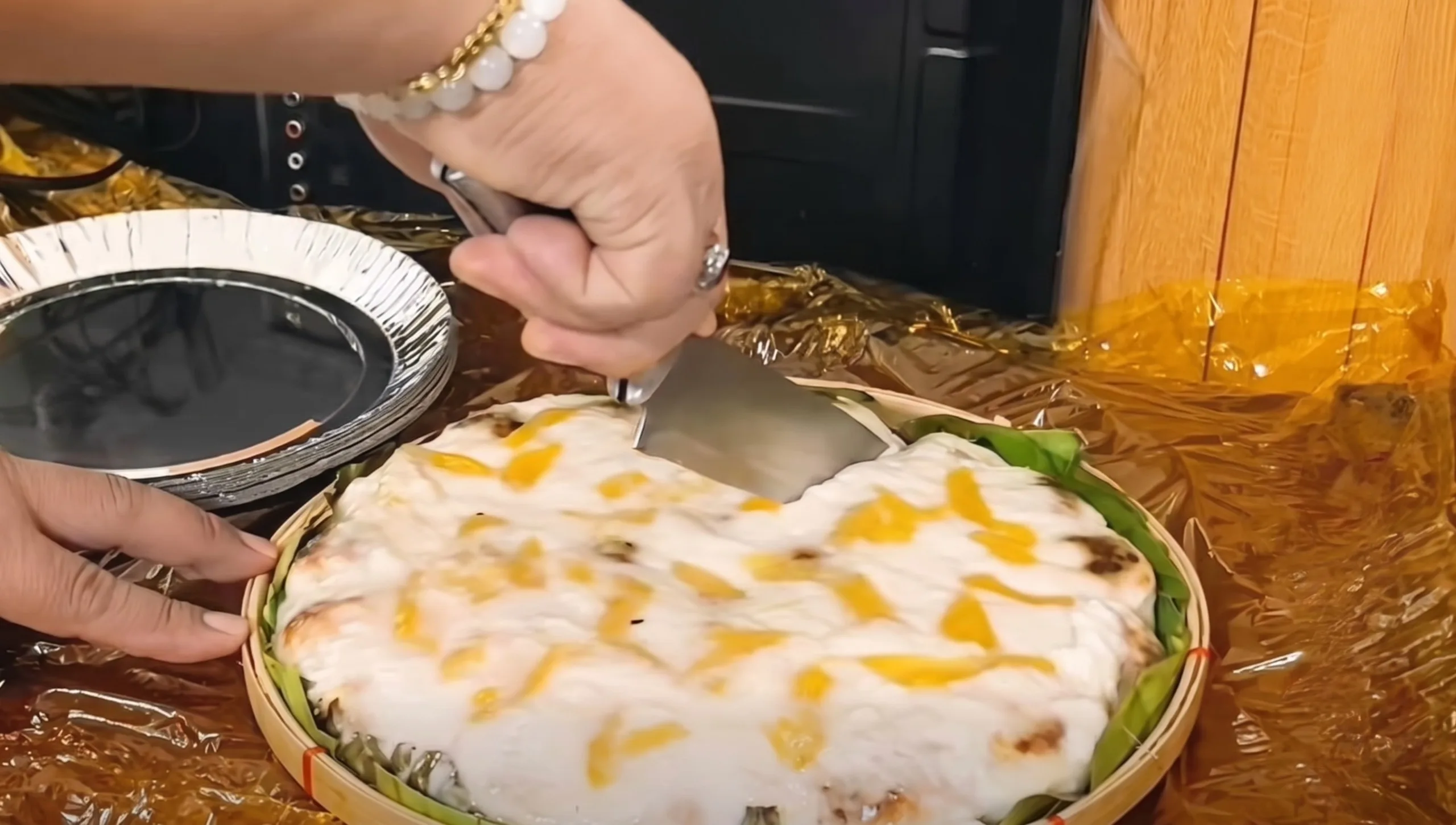
CAVITE - Food has a remarkable way of carrying history on its plate—or in this case, inside a banana leaf. In the province of Cavite, a rare and beloved delicacy called Bibingkoy tells a story of survival, reinvention, and local pride that spans from the dark days of World War II to the bustling modern kitchens of General Trias.
A Culinary Trilogy in One Bite
Bibingkoy is a fascinating puzzle to the uninitiated. It is not just one Filipino rice cake; it is a harmonious trinity of three iconic snacks. It possesses the soft, sticky chewiness of tikoy, the sweet, earthy mung bean (monggo) filling of a buchi, and the fire-baked aroma of a traditional bibingka. Made from ground glutinous rice dough, each piece is painstakingly stuffed with sweetened mashed mung beans. They are arranged closely together in a shallow metal pan, looking like a sheet of soft, pillowy rolls. The resulting texture is a delightful contrast of chewy and soft, with the sweet bean filling adding an earthy depth to every bite.
Born in War, Baked in Tradition
The roots of Bibingkoy trace back to Cavite City during the Japanese occupation in the 1940s. Amidst wartime scarcity and rationing, a resourceful local cook named Aling Ika (Dominica Torres-Alejandrino) created a filling, affordable snack using what was available. Unlike modern pastries baked in convenient gas ovens, authentic Bibingkoy relies on a traditional baking method. It is placed in a heavy metal round pan and cooked over open coals, with a metal lid filled with glowing embers placed directly on top. This dual-heat technique gives the kakanin its signature look: an incredibly soft, gooey base contrasted by a beautifully charred, rustic crust.
The Sweet, Creamy Finish and General Trias Legacy
While the baked sticky cake is delicious on its own, what truly elevates the Bibingkoy is its accompanying sauce. Before serving, a warm, thick syrup made of sweetened coconut milk, chewy tapioca pearls (sago), and strips of fragrant jackfruit (langka) is generously poured over the cake. The savory-sweet coconut cream seeps into the toasted cracks of the dough, creating a rich, multi-layered dessert experience.
Though it was born in Cavite City, the love for Bibingkoy eventually traveled and deeply rooted itself in the heritage of General Trias (GenTri). Over the decades, GenTriseños embraced and adapted the delicacy, passing down closely guarded family recipes through generations. Today, it stands as a living testament to Cavite's vibrant gastronomy—a resilient sweet treat that survived wartime struggles to become a timeless symbol of community and comfort.
