The combination of upstream flood-control projects, industrial park development, and housing initiatives demonstrates a comprehensive approach to economic growth that benefits both businesses and communities across Pampanga.
Strengthening Resilience Through Flood-Control Infrastructure
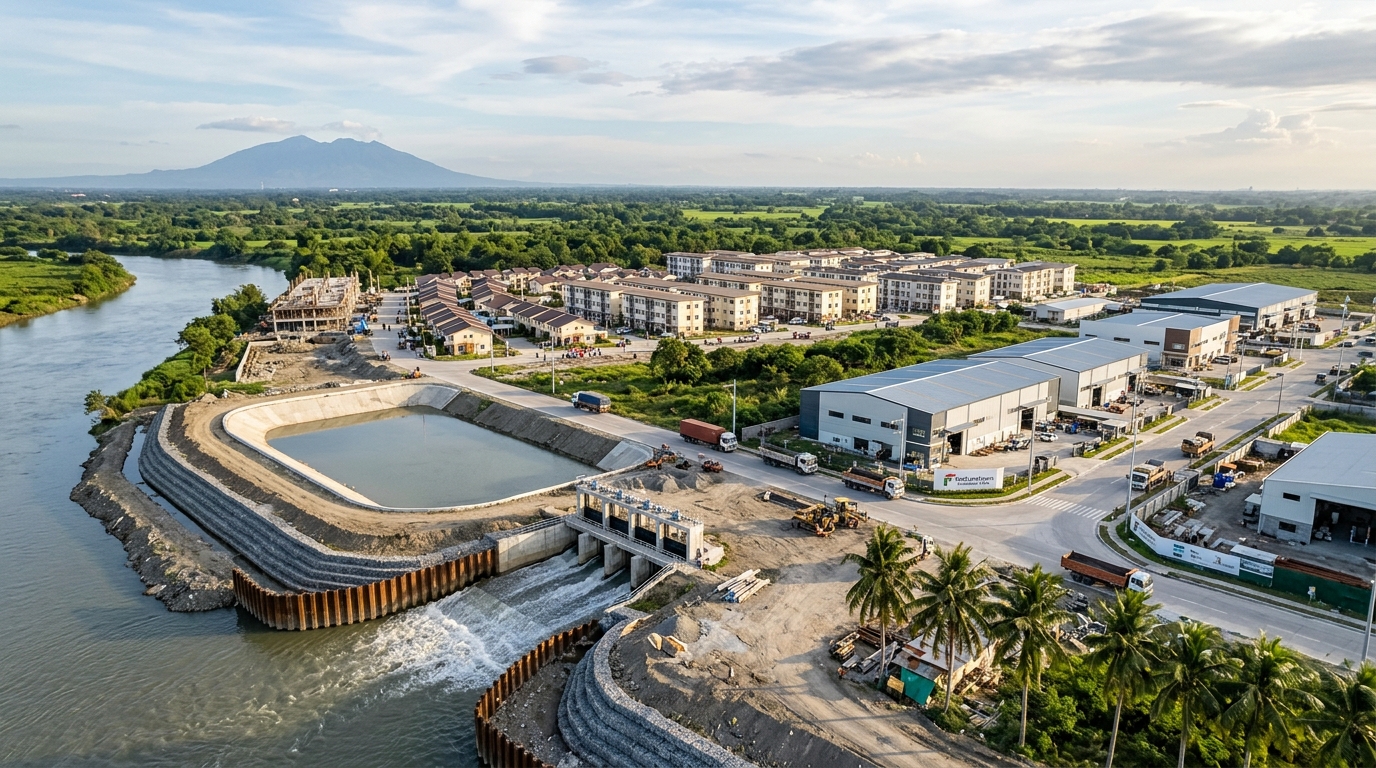
The Department of Public Works and Highways (DPWH) is advancing upstream flood-control interventions along the Pampanga River in line with President Ferdinand R. Marcos Jr.'s directive to protect vulnerable communities . Public Works Secretary Vince Dizon announced that five dams and detention basins will be constructed upstream starting in 2027, which will significantly reduce the volume of water flowing downstream and protect flood-prone areas in Arayat, Mexico, and San Fernando . The DPWH is also expediting the installation of gabions in Barangay Candating and 24-meter sheet piles in Barangay Cupang to reinforce riverbanks and prevent erosion. These infrastructure projects provide the stability and security that businesses need to invest confidently in the region, knowing that their operations and workforce are protected.
Creating Jobs and Economic Activity Through Industrial Development
Complementing these flood-control measures, the Board of Investments (BOI) has approved a P630-million domestic industrial park in Mexico, Pampanga, developed by Fortunetown Properties Corp. . Spanning approximately 24 hectares, the industrial park is designed to provide serviced industrial land and facilities for manufacturing, logistics, and warehousing-related enterprises . Trade Secretary and BOI Chairperson Cristina Roque emphasized that the project will create opportunities for businesses to expand and generate jobs while supporting the decentralization of economic activity outside Metro Manila . The industrial park is scheduled to commence commercial operations in June 2026 and is expected to generate employment during both construction and operational phases . This development reinforces Central Luzon's position as a major manufacturing and logistics hub outside Metro Manila.
Addressing Housing Needs While Boosting Local Employment
In a parallel initiative, the BOI has approved two mass housing projects with a combined investment of approximately P1.35 billion, undertaken by Borland Development Corp. . These projects are expected to deliver more than 1,700 economic and affordable housing units targeting informal settlers and families seeking homeownership opportunities . Construction is set to begin in June 2026, and the BOI emphasized that these projects will generate jobs during both the construction and operational phases . The housing developments are aligned with the government's socialized housing requirements and are part of the BOI's priority sectors under the Strategic Investment Priority Plan.
A Comprehensive Strategy for Sustainable Growth
These interconnected initiatives demonstrate how infrastructure, industrial development, and housing work together to create a self-sustaining economic ecosystem. Central Luzon's economy grew by 4.46% in 2025, outpacing the National Capital Region's 4.35%, according to the Philippine Statistics Authority . This synchronized approach ensures that investments are translated into tangible outcomes on the ground, creating business-ready spaces that support job growth and strengthen domestic value chains . As Clark's Business Interdependence System continues to strengthen localized supply chains and improve operational resilience within the Freeport, generating P4.55 billion in internal trade during its first year, the province is proving that comprehensive development strategies benefit both businesses and communities alike.