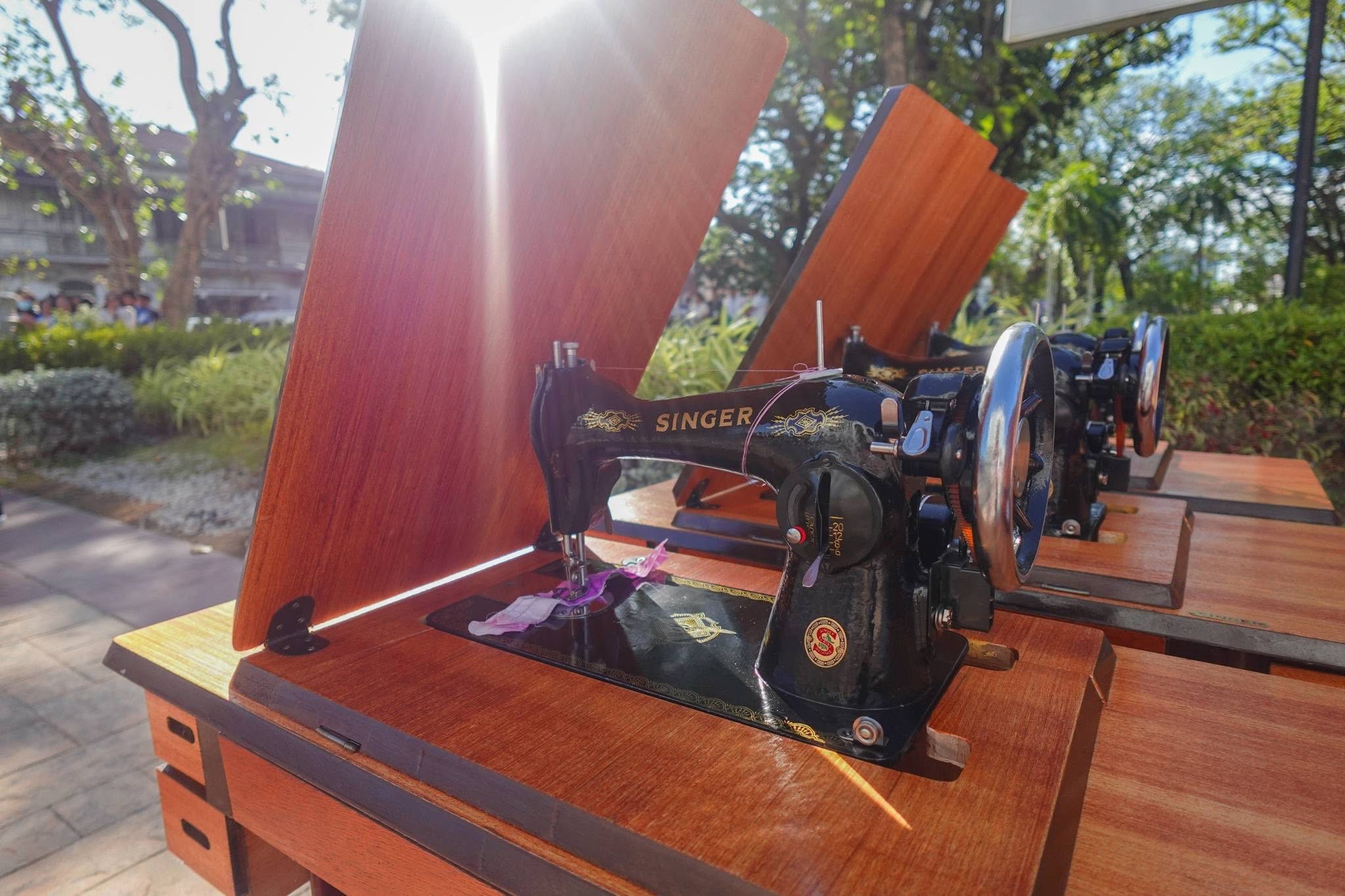
ILOILO CITY — Angat Buhay turned over 24 Singer sewing machines, two zigzagger machines, two edger machines, and 60 starter sewing kits to women of the WISE program at Iloilo City Hall, equipping them to build sustainable enterprises from recycled textiles. The turnover ceremony marked a concrete step in strengthening livelihoods while advancing the circular economy.
From Waste Pickers to Skilled Artisans
The beneficiaries came from Barangay Lanit in Jaro and Barangay San Juan in Molo, many of whom previously earned a living sorting through garbage. The new sewing machines give them the tools to transform discarded fabrics into marketable products. This shift from waste handling to skilled manufacturing restores dignity and opens a pathway to financial independence.
The starter kits include threads, needles, scissors, and other essentials so the women can begin production immediately. Each participant received hands-on orientation on machine operation and basic maintenance. The goal is to ensure that every woman can walk into her new workspace and start sewing with confidence.
A Global Partnership Powering Local Change
The initiative is part of Project SALOG, which stands for Strengthening Adaptive Livelihoods and Organizing Grassroots Circular Enterprises. It is funded by the European Union under the EU-PH Green Economy Partnership and implemented by the UNDP Philippines, with DILG as co-lead. This international backing transforms a simple sewing workshop into a model for inclusive, climate-resilient development.
Iloilo City was chosen as one of only ten pilot local government units across the Philippines for this circular economy portfolio. The selection recognizes the city’s established commitment to waste reduction and its designation as a UN Zero Waste City. The sewing machines sit at the intersection of global climate finance and grassroots community action.
Weaving a Circular Textile Economy
The WISE program operates on a circular principle: nothing goes to waste. Discarded clothing, fabric scraps, and pre-loved textiles become the raw material for new products. The sewing machines allow the women to stitch these reclaimed fabrics into bags, home décor, accessories, and eventually high-value garments.
This model reduces the volume of textile waste heading to landfills while creating green jobs. It also addresses the environmental footprint of fast fashion by extending the life of existing materials. Every stitch represents a small victory against the throwaway culture that strains the planet.
The program’s ambition reaches beyond simple repair work. With additional training from designers like PJ Arañador, the women have already moved into crafting high-end Filipiniana and Barong garments. The sewing machines serve as the foundation upon which these advanced skills are built.
Scaling Impact Through Community Ownership
Angat Buhay’s model relies on collective action and community-driven solutions. The turnover ceremony included local officials, partner agencies, and the women themselves, reinforcing a sense of shared ownership. When communities feel invested in a project, its chances of long-term success multiply.
The women will form cooperatives that pool resources and share orders, ensuring steady production. Profits from sales will cycle back into purchasing more materials and maintaining the equipment. This self-sustaining loop minimizes dependence on external funding and keeps the enterprise running beyond the initial grant period.
A Brighter, More Sustainable Future
The sewing machines are more than metal and plastic; they are engines of hope. For mothers who once worried about putting food on the table, they offer a reliable source of income. For a city striving to meet its zero-waste targets, they provide a practical solution that merges economic and environmental goals.
As the hum of sewing machines fills the workrooms of Lanit and Molo, Iloilo City demonstrates that sustainability and livelihood can go hand in hand. The WISE women are not just stitching fabrics—they are sewing together a stronger, greener, and more resilient community.