


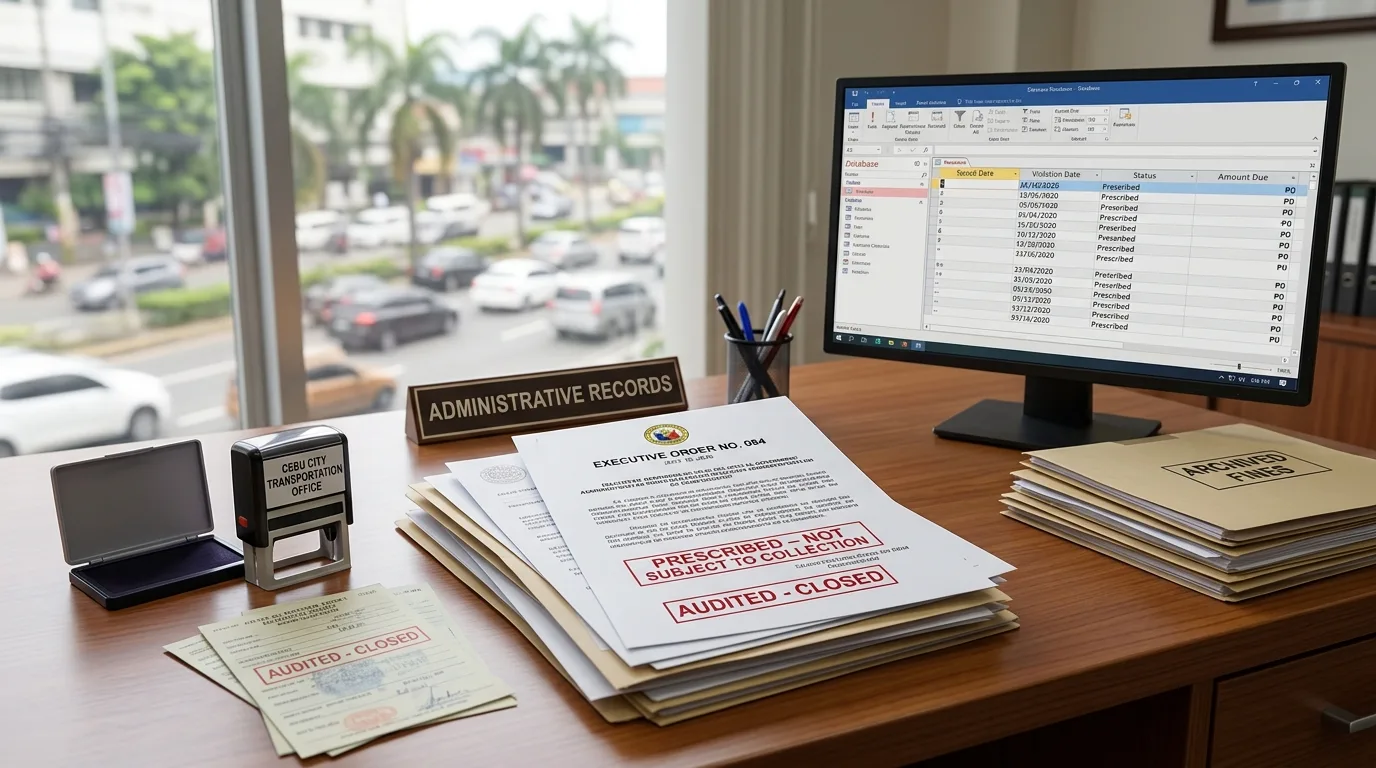
Cebu — Motorists and public utility vehicle drivers in Cebu City are seeing a significant change in how traffic violations are handled. Under a new directive, fines for traffic violations that have already "prescribed"—or lapsed under the law—are no longer collectible. Mayor Nestor Archival issued Executive Order No. 084 on July 10, 2026, which formally orders the Cebu City Transportation Office to stop demanding payment for these outdated fines and to purge them from the city’s records.
Ending the Collection of Stale Violations
The executive order stems from a legal opinion by the CCTO’s own Legal and Investigation Section, which identified that many recorded traffic violations had long lapsed. Under Article 90 of the Revised Penal Code, most traffic offenses are classified as light offenses that prescribe after just 60 days, unless authorities formally interrupt that period by filing a criminal complaint with the City Prosecutor’s Office. Because the city failed to take this step for numerous cases, the criminal liability for these violations has been effectively extinguished by operation of law. The order warns that continuing to collect on these items could leave the city government vulnerable to legal claims of illegal exaction, as there is no valid legal basis to demand payment.
A New Standard for Auditing and Enforcement
The CCTO has been given 60 calendar days from the effectivity of the executive order to complete a comprehensive audit and reclassification of all existing traffic violation records. Once the audit is finalized, these prescribed violations will be marked as “PRESCRIBED – NOT SUBJECT TO COLLECTION.” Moving forward, these specific records will no longer appear on billing statements, prevent the renewal of CCTO identification cards for PUV drivers, or serve as a basis for holding impounded vehicles. While these old violations can still be used to track a driver's historical record for administrative proceedings, the city is strictly prohibited from requiring any payment for them.
Tightening Future Compliance
Mayor Archival emphasized that this executive order is not a general amnesty for all unpaid fines; it applies strictly to those that have already prescribed. The CCTO is required to continue collecting fines for any violations that remain within the 60-day window or those where the prescriptive period was successfully interrupted by a timely filed complaint. Furthermore, to prevent this backlog from recurring, traffic enforcers have been directed to immediately issue citation tickets upon apprehension and ensure strict adherence to the city’s 72-hour settlement period. The city government is also actively exploring a potential linkage with the Land Transportation Office to ensure that future unsettled violations can be properly reflected in a driver’s administrative status, subject to national laws.
