


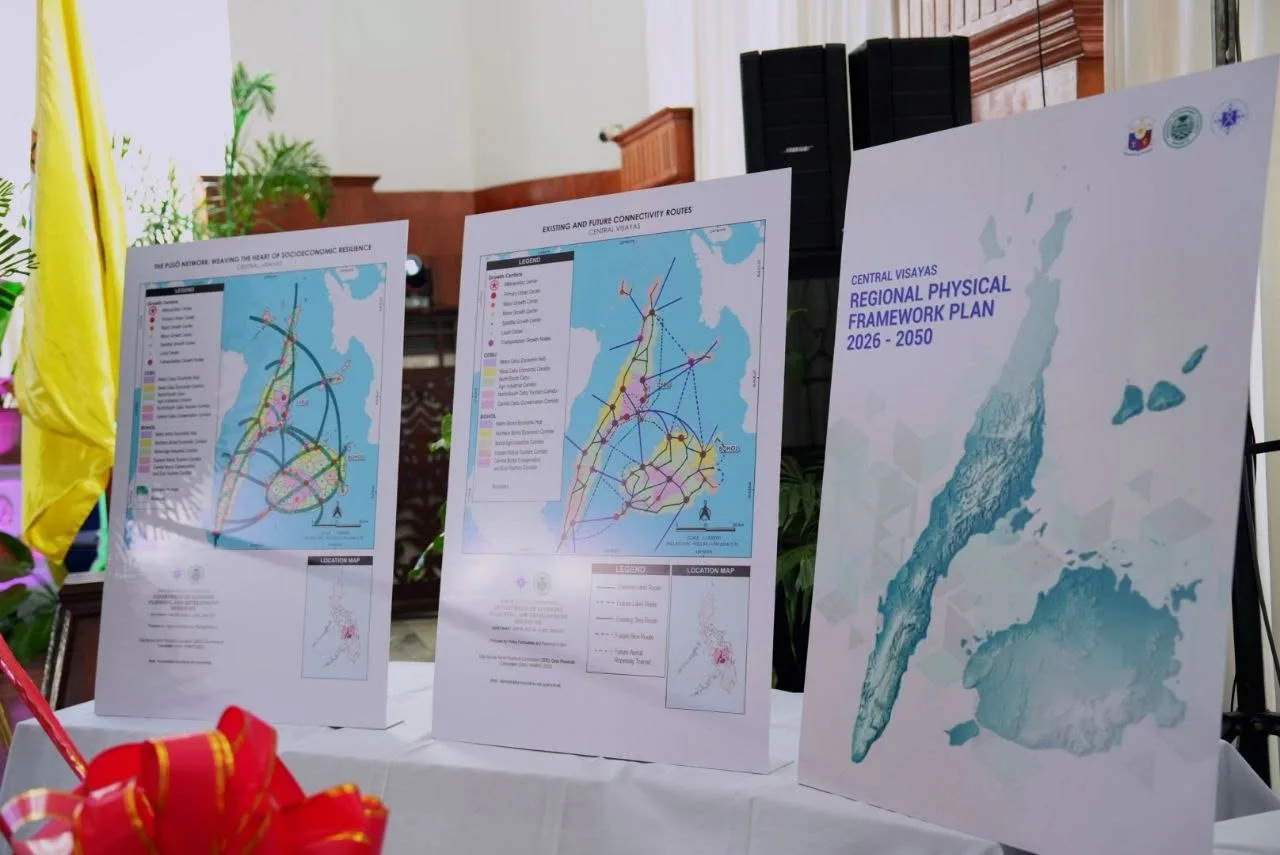
CEBU CITY — Central Visayas is actively pushing to spread economic growth beyond its traditional metropolitan centers. The strategy, outlined during a roadshow at the Cebu Provincial Capitol on October 27, 2026, aims to strengthen secondary cities and municipal growth hubs across the region.
Shifting Growth Beyond Metro Cebu
Acting Governor Stanley Caminero emphasized the Capitol's commitment to participatory governance. By consulting stakeholders, the region ensures that investment priorities are aligned with spatial development plans, identifying growth centers and transport networks to improve public services for all Cebuanos and Boholanos.
The updated Regional Development Plan 2023-2028 and the long-term physical framework aim to ease the severe concentration of economic activity. By directing investments toward strategically located rural and urban communities, the government hopes to foster more balanced and inclusive development across the islands.
The Puso Network and Infrastructure
At the core of the Regional Physical Framework Plan 2026-2050 is the Puso Network. Inspired by traditional hanging rice, this model symbolizes interconnected communities. It links major urban areas through three principal axes, including the North-South Cebu corridor and the maritime Bohol-Cebu links.
To support this network, several massive infrastructure projects are being prioritized to bolster regional mobility. These include the Panglao Island-Tagbilaran City Connector Offshore Bridge, the Metro Cebu Urban Mass Rapid Transit, and the Cebu Trans-Central Tunnel, opening immense opportunities for real estate expansion.
The South Cebu-Bohol axis specifically reflects the crucial maritime links across the Bohol Strait. These targeted enhancements are designed to facilitate the seamless movement of people, goods, and services, directly boosting property values in coastal municipalities and port areas.
Designated Growth Centers and Corridors
The plan establishes a clear hierarchy of settlements based on services and population. While Cebu City, Mandaue, and Lapu-Lapu remain the primary metropolitan centers, Tagbilaran, Bogo, Carcar, and Naga are envisioned as vital primary urban centers driving local commerce.
Furthermore, the framework clusters local government units into specific economic corridors. The West Cebu Economic Corridor and the North and South Cebu agri-industrial and tourism corridors will guide investment priorities, ensuring that neighboring LGUs coordinate their infrastructure and commercial developments effectively.
Major and minor growth centers, along with satellite hubs, will complement these primary cities by providing subregional services. This creates a ripple effect, stimulating local economies and sustaining rural production, which is highly attractive for commercial and residential real estate ventures.
Guiding Long-Term Property Investments
For property developers and investors, the RDP 2023-2028 Midterm Update and the 2050 spatial framework offer a clear roadmap for future projects. The push for decentralized concentration means opportunities will emerge in emerging municipal hubs, moving away from congested urban cores.
The emphasis on balancing environmental protection with economic growth in the conservation corridor also signals a shift toward sustainable real estate practices. This comprehensive planning ensures that the region's property market remains resilient, inclusive, and highly attractive to institutional capital in the coming decades.
